
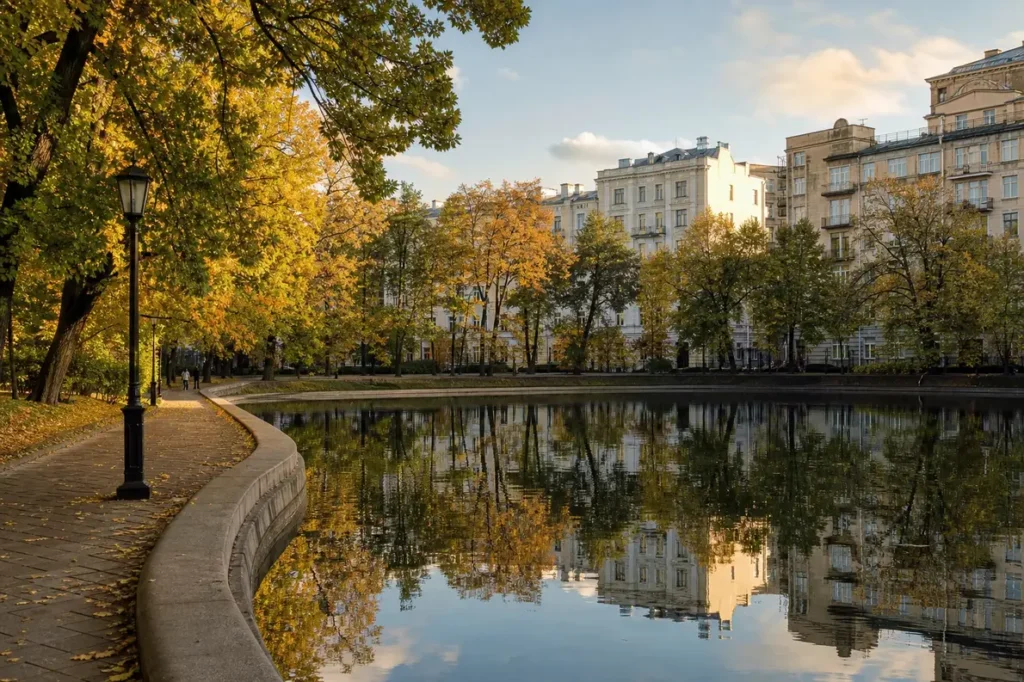
A literary walk from the Bulgakov Museum and Patriarch's Ponds past the church where Pushkin married to the Maly Theatre and Theatre Square.
Explore the literary and theatrical side of Moscow on a walking tour inspired by Mikhail Bulgakov and the city portrayed in his writing. This route suits literature enthusiasts, first-time visitors and travellers interested in historic architecture. Allow approximately 90 to 110 minutes, including time for listening, photographs and short pauses. Begin at the Bulgakov Museum, continue to Patriarch's Ponds and the Great Ascension Church, then walk towards Maly Theatre and Teatralnaya Square. Along the way, discover streets associated with Russian literature, distinctive Moscow landmarks and the theatrical traditions that helped shape the city's cultural identity.
The route at a glance
- Bulgakov Museum Moscow
- Patriarch's Ponds Moscow
- Great Ascension Church Moscow
- Maly Theatre Moscow
- Teatralnaya Square
- 1
Bulgakov Museum Moscow
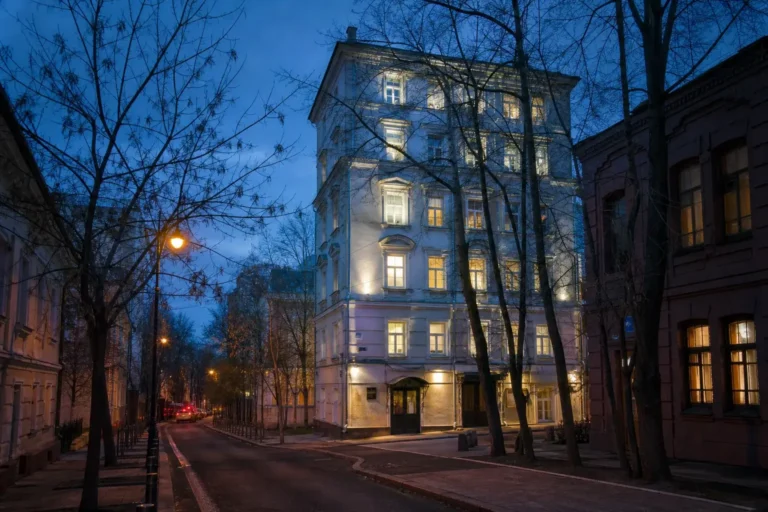
We begin at the Bulgakov Museum in house number ten on Bolshaya Sadovaya Street. It occupies apartment fifty, where the writer Mikhail Bulgakov lived in the early years after he came to Moscow, and which he later turned into a setting in The Master and Margarita. The stairwell of the building is covered with graffiti, including lines from the novel and drawings of its characters. Take a moment to look at the entrance before we set off.
- 2
Patriarch's Ponds Moscow
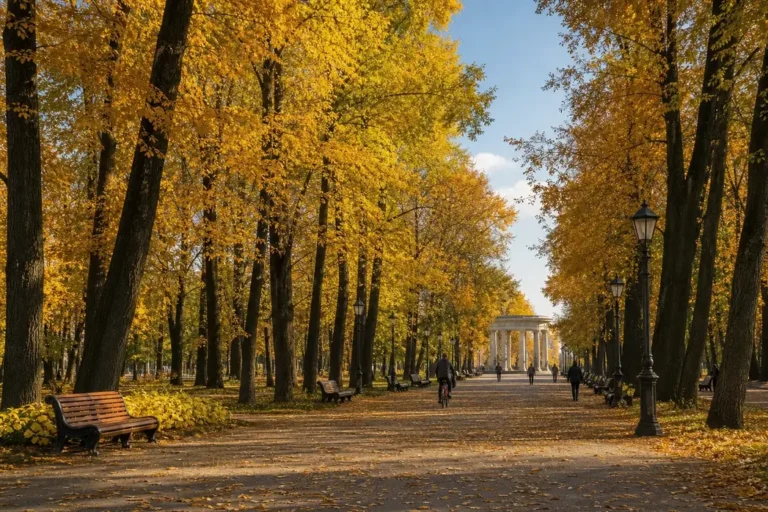
A short walk brings you to Patriarch's Ponds, the setting of the opening chapter of The Master and Margarita. The name goes back to a Patriarch of the Russian Church, who had fish ponds dug here for his table, and the area is now a quiet park surrounded by cafes and old houses. Find a bench and imagine the scene from the novel's first pages. Then walk south toward Nikitskiye Vorota Square.
- 3
Great Ascension Church Moscow
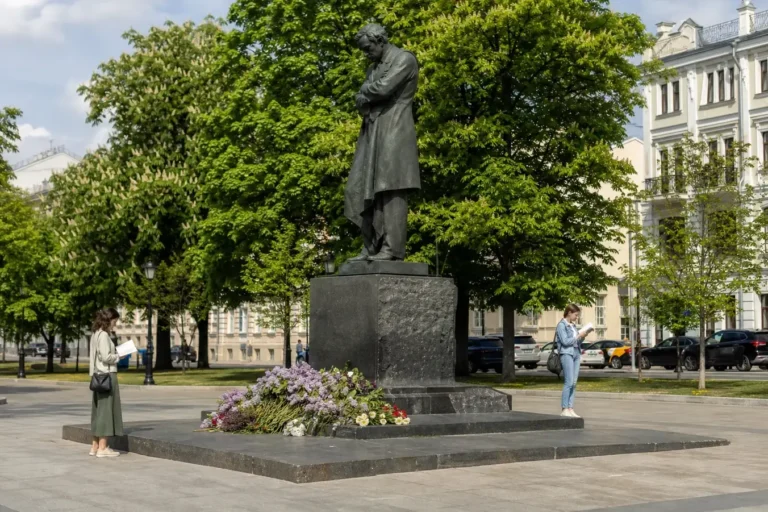
On Nikitskiye Vorota Square stands the Great Ascension Church, one of the largest parish churches in the center of Moscow. This is where the poet Alexander Pushkin married Natalia Goncharova. The building is attributed either to the architect Matvey Kazakov or to Ivan Starov, and historians still discuss it. The church is called great to tell it apart from a smaller church of the same name nearby. Look at the facade and the tall bell tower.
- 4
Maly Theatre Moscow
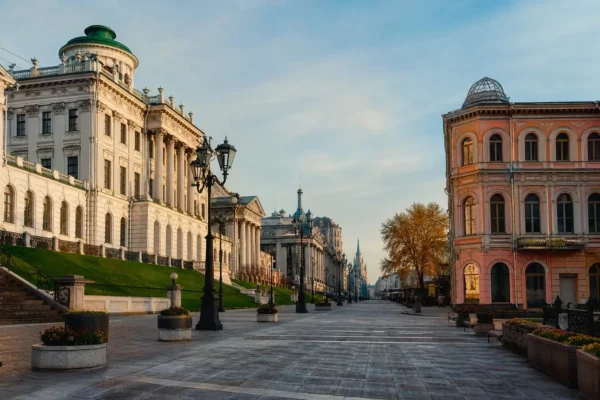
From the square, walk along Tverskoy Boulevard and Tverskaya Street toward the Kremlin. Your next stop is the Maly Theatre, whose name means the Small Theatre, a playful contrast with its famous neighbor, the Bolshoi. It is a drama theater, often called the House of Ostrovsky because many plays by Alexander Ostrovsky premiered here. Look at the facade, and notice how the theaters share one square in the middle of the city.
- 5
Teatralnaya Square
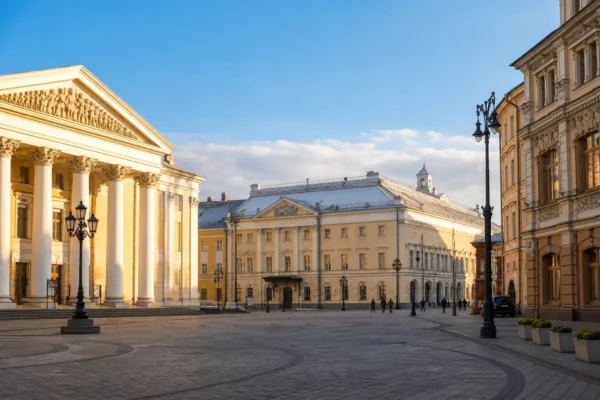
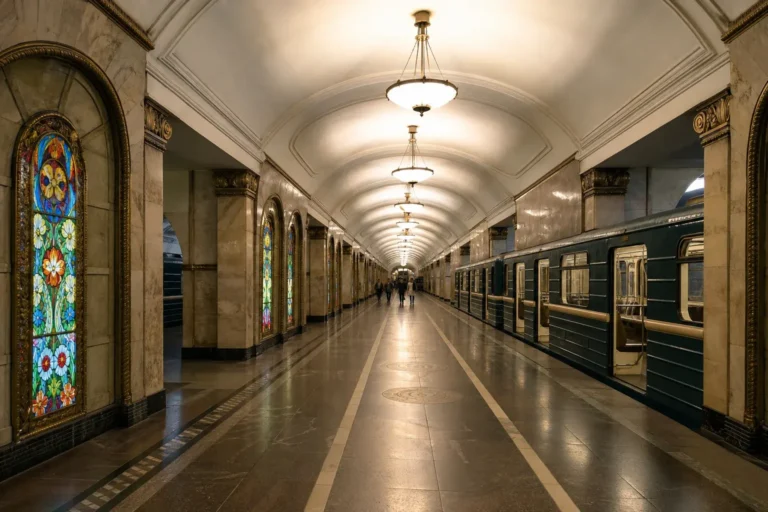
We end on Theatre Square, where Kuznetsky Most and Petrovka Street meet Theatre Drive. The Bolshoi Theatre stands here, with the Maly Theatre beside it. In the middle of the square there is a park, and a river still flows diagonally beneath it. The Metro stations Teatralnaya, Okhotny Ryad and Ploshchad Revolyutsii are close by, so this is a convenient place to finish. Take a last look at the theaters before you go.
Final thoughts
This walk has connected Bulgakov's literary Moscow with the city's historic streets, religious architecture and theatrical heritage. From the quiet surroundings of Patriarch's Ponds to the grand buildings around Theatre Square, each stop reveals a different cultural layer of the capital. After finishing at Teatralnaya Square, continue towards Kamergersky Lane, where the Chekhov Moscow Art Theatre offers another connection to Russian drama and the city's literary traditions.



 Ask Masha