

Black tea with lemon is not just a drink in Russia—it’s a fundamental part of hospitality and daily life. If you’re visiting Moscow or spending time with Russian friends, you’ll encounter this simple, warming drink everywhere: in homes, at train stations, and at dacha gatherings.
This guide walks you through making authentic Russian black tea with lemon the traditional way. The key is understanding that Russians brew strong, concentrated tea and then dilute it with hot water to your taste, rather than brewing a single cup. You’ll learn why lemon (never milk) is the classic companion, and how the flavour and ritual differ from tea customs elsewhere.
Quick answer: Brew strong black tea in a teapot, steep for 4–5 minutes, then pour a small amount of this concentrated tea into a cup and top with hot water. Add fresh lemon slices or wedges, and sugar or honey to taste if you prefer. Total time: 10–15 minutes. Cost: very budget-friendly, ₽.
At a Glance
| Type | Drinks |
|---|---|
| Local name | Чай с лимоном |
| Origin | Russia, 18th–19th centuries |
| Servings | 2–4 servings |
| Total time | 10–15 minutes |
| Difficulty | Easy |
History and Story of Black Tea with Lemon (Чай с лимоном)
Tea with lemon was offered to travellers in Russia during the 18th and 19th centuries to help with motion sickness. It was common custom, and still is, for Russian tea drinkers to sweeten their tea by adding fruit or jam to it. In times when sugar was not readily available or affordable the addition of fruit, either fresh or preserved, was a natural and relatively inexpensive way to create a special sweet treat. Lemon is the most commonly used condiment for black tea in Russia.
Ingredients
- Black tea leaves, loose or bags (Indian-style or Russian Caravan preferred)
- Fresh lemon
- Sugar or honey (optional)
- Teapot or kettle with a lid
- Cups or tea glasses
How Black Tea with Lemon (Чай с лимоном) Is Made
Step 1: Boil water and warm the teapot
Fill a kettle with water and bring it to a boil. While it heats, pour a little boiling water into an empty teapot, close the lid, shake it, and pour the water out. This warms the pot so the tea will steep properly.
Tip: Warming the teapot is a small step that keeps the tea at the right temperature longer.
Step 2: Add tea leaves to the teapot
Add black tea leaves to the warm teapot. Use one teaspoon of tea for each person you're serving, plus one extra teaspoon 'for the pot' (for example, if making tea for three people, use four teaspoons). Fill the teapot immediately with boiling water. If you're using very few teaspoons, don't fill the pot completely—keep the tea concentrated.
Tip: The 'one for the pot' rule is a traditional Russian measure that ensures proper strength.
Step 3: Steep the tea
Place the lid on the teapot and let the tea steep for 4–5 minutes. Don't rush this step; the longer steeping creates the strong, dark brew that is essential to Russian tea.
Tip: Strong tea is the foundation of this drink. Longer steeping won't make it bitter if you dilute it properly later.
Step 4: Prepare lemon and cups
While the tea steeps, slice fresh lemon into wedges or thin rounds. Place one or two lemon wedges into each teacup or tea glass. If you like, pour a little boiling water over the lemon to release its aroma.
Tip: Fresh lemon is far better than bottled lemon juice. The aroma matters as much as the taste.
Step 5: Pour the concentrated tea
Pour a small amount of the brewed tea (about one-quarter of the cup's volume) into each cup. This concentrated tea is called 'zavarka' in Russian and forms the base of your drink.
Tip: Start with less tea than you think you'll need; you can always add more once you taste it.
Step 6: Top with hot water
Fill the rest of the cup with hot water from the kettle. This dilutes the strong tea to drinking strength. Stir gently to combine.
Tip: The amount of hot water you add controls the strength. Add more water for a lighter tea, less for something stronger.
Step 7: Sweeten if you wish
Add sugar or honey to taste. Stir well. Many Russians sweeten their tea generously, but it's entirely optional. Taste before adding, as lemon itself provides tartness.
Tip: If serving to guests, offer sugar and honey on the side so each person can sweeten to their preference.
Variants
- Tea with jam instead of lemon: Replace fresh lemon with a spoonful of berry jam or fruit preserve, a traditional Russian variation.
- Tea with both lemon and honey: Add a spoonful of honey along with lemon wedges for a slightly sweeter, more mellow drink.
- Strong black tea with sugar only: Omit lemon entirely and serve with sugar or honey; still common in Russian homes.
- Tea with dried lemon: In winter or when fresh lemons are unavailable, use dried lemon slices (a practice in Russian tea culture for centuries).
Common Mistakes to Avoid
- Brewing weak tea and hoping hot water will strengthen it: Russian black tea must be strong from the start. Weak tea diluted with water tastes thin and watery. Always use the proper amount of leaves and steep long enough.
- Adding milk: Never add milk to Russian black tea with lemon. The lemon curdles milk and clashes with it. Serve it black, or not at all.
- Squeezing or cooking the lemon: Simply drop lemon wedges into hot tea. Squeezing releases too much bitter pith. Cooking the lemon makes it mushy and overpowers the tea.
- Using room-temperature or tepid water for topping: The hot water that tops the concentrated tea must be truly hot from the kettle. Lukewarm water won't carry the flavour properly and the tea will cool too quickly.
- Filling the cup entirely with concentrated tea: If you brew the entire cup as concentrated tea, it becomes undrinkably strong and bitter. The whole point of the Russian method is dilution—use only one-quarter to one-third of the cup with concentrated tea.
- Using old or stale tea leaves: Russian tea must be quality black tea—preferably loose leaf, not bags. Old tea or tea that has sat open loses flavour. Store tea in an airtight container away from light and strong smells.
How to Order and Eat It
Hold the cup or tea glass with both hands—a warm cup is comforting on a cold day, which is when Russians most often drink this tea. Drink slowly, sipping between bites of food or biscuit. The lemon wedge remains in the cup; take small bites of it between sips, or simply leave it at the bottom. Russians often drink tea with bread, biscuits, or jam pastries called ‘piroshki‘. Never add milk. If the tea is too strong, ask for more hot water from the kettle to dilute it further.
To order: Чай с лимоном, пожалуйста [Chai s limonom, pozhaluysta]
Moscow Vibes Tips
- Quality matters: Russian Caravan tea, a smoky blend that mimics the flavour of tea that travelled along historic trade routes to Russia, is a traditional choice and tastes excellent with lemon. But any quality loose-leaf black tea works well. Avoid cheap bags.
- Timing: Tea is a ritual, not a rush. Steep properly and never serve within the first few minutes. Cold tea that has been steeped properly is acceptable in Russia; rushed, weak tea is not.
- Water matters: If your tap water is heavily chlorinated or hard, use filtered or bottled water. Russians are particular about water quality for tea. Poor water shows immediately in the cup.
- The samovar is optional: While traditional Russian tea is made in a samovar (a brass vessel that keeps water hot), any teapot and kettle work perfectly. The method, not the equipment, makes it Russian.
- Guests and generosity: If serving tea to visitors, prepare extra hot water in the kettle so guests can dilute their tea exactly as they like it. Having a kettle on hand shows attentiveness and respect.
Explore Nearby Black Tea with Lemon (Чай с лимоном)
Related guides
 10 Best Places to Try Russian Food in Moscow: Classics and Canteens
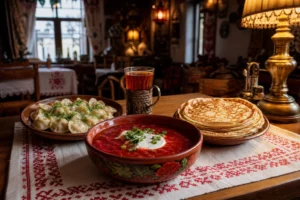
Main image: AI-generated illustration. It may not show the place exactly as it looks.
Browse more: All Food & Drink · All Other
FAQ
Can you use tea bags instead of loose leaf?
Yes, though Russians traditionally prefer loose leaf for better flavour and strength. If using bags, use one bag per person plus one extra, and let them steep for 5 minutes. Remove the bags carefully without squeezing, as squeezing releases bitter tannins.
Why is the tea so strong? Is it meant to be diluted?
Yes. Russian tea culture brews concentrated tea (zavarka) that is always diluted with hot water. This is the authentic method. It allows each person to control strength by adjusting the ratio of tea to water.
Can you add milk to Russian black tea with lemon?
No. Lemon and milk curdle together and clash in flavour. Russian tea with lemon is always served black, never with milk or cream.
What if you don't like lemon—are there alternatives?
Yes. Jam, honey, or sugar alone are all traditional options. Some Russians add a spoonful of jam instead of lemon. The drink remains the same base of strong black tea with your choice of sweetener or flavouring.
How do you know if the tea is brewed correctly?
The brewed tea should be very dark and strong—almost opaque. When diluted with hot water, it should turn to a clear amber or reddish-brown colour, not pale. If it looks pale even after dilution, you haven't steeped long enough.
Can you make Russian black tea with lemon in a regular mug?
Yes. You don't need special equipment. A kettle, a small teapot or even a large mug with a sieve can work. The method is what matters, not the vessel.
Is this the same as 'Russian Tea' sold as a drink mix?
No. Commercial 'Russian Tea' mixes are an American invention containing spices, citrus powders, and sugar. Traditional Russian black tea with lemon is simpler: just strong black tea, fresh lemon, and optional sugar or honey.
Why do Russians prefer lemon to other additions?
Historically, lemon was preserved and available year-round, even in winter. It also pairs excellently with strong black tea. The tartness balances the strength of the brew, and it has been the custom since the 18th century.
Discover More of Moscow with Our Travel Tips
Get practical Moscow travel tips, new destination guides and useful updates on attractions, opening hours and prices. Plan your visit with clear, helpful information delivered to your inbox.
Moscow Vibes is a one-person project. A coffee keeps it going
Looking for more on this? Pirozhki: How to Make Russian Hand Pies at Home (Russia Vibes)

Take this guide with you
Get a free PDF of this guide to print or read offline: key facts, tips and a map link on a few clean pages.
Report an issue on this page
Paying for your trip: please read
Payments and bookings between Russia and many other countries are currently restricted. In practice, cards issued in the EU, the UK, the US and several other countries often cannot be used in Russia, Russian cards usually cannot be used abroad, and some booking platforms, airlines and payment providers limit or pause their services for Russia. The situation changes frequently.
We do not give legal or financial advice, and this site does not encourage anyone to break any rule that applies to them. Whatever you plan, you are responsible for following the laws and regulations that apply to you, including those of your country of residence and citizenship.
Many travelers still organise their stay without problems. It is worth asking your bank or payment provider what is currently possible, contacting hotels, tour operators and carriers directly about the payment methods they accept, and checking which services are open to customers from your country. Clarify payment, cancellation and refund terms before you commit to a booking, and keep your plans flexible.
Partner links on this site may not be available in every country, and prices, availability and rules in our guides can differ from what you see when you book.
How we research and update our guides
About this guide: AI assistance and accuracy
This guide is created with the help of AI and is based on official sources where available. Mistakes can still happen. Opening hours, prices, rules and other details are given to the best of our knowledge as of the date shown and can change without notice. It offers general recommendations only, not professional, legal or travel advice. Please confirm important details with the official source before you travel; you are responsible for your own plans and decisions.
* Affiliate link: as an Amazon Associate we earn from qualifying purchases at no extra cost to you.