
The Moscow Easter Festival is a classical music festival founded in 2002 by the conductor Valery Gergiev together with the then mayor of Moscow. It opens on Orthodox Easter Sunday and runs for about a month, with symphonic, choral and chamber concerts by the Mariinsky Theatre orchestra, guest orchestras and soloists in Moscow and, in many editions, in other Russian cities.
It is a music festival, not a folk or church holiday, and it should not be confused with the Easter Gift Festival, the city’s charity festival, or with the Orthodox Easter services themselves. The dates move with Orthodox Easter, and the program, venues and ticket rules change each year, so check the official sources for the current edition.
Quick Facts
| Russian name | Московский Пасхальный фестиваль |
|---|---|
| Type | Recurring event |
| When | Every year, starting on Orthodox Easter Sunday and running for roughly a month into April or May; the opening date moves with the Orthodox Easter date, and the program and venues change each year. |
| Typical duration | About three to four weeks, from Orthodox Easter into early or mid-May, with Moscow concerts spread across that period. |
| Admission | Most concerts are ticketed, with tickets sold by the venues and the festival; prices vary by concert and were not verified. Some open-air concerts in past editions have been public events. |
| Best time to visit | Concerts are usually held in the evening, and some on weekend afternoons, from Orthodox Easter into April or May. The weeks around Easter and the May holidays are the busiest for tickets and hotels. Concert times and crowd patterns were not verified. |
| Last updated | October 7, 2026 |
Dates, programs and prices change from year to year. Always check the official website for the current edition.
Why Visit Moscow Easter Festival?
The festival brings one of Russia’s leading orchestras and its conductor into Moscow’s concert halls for several weeks every spring, with programs that have included complete cycles of symphonies by composers such as Prokofiev, alongside opera and choral works. Soloists from Russia and abroad join in many editions.
For a visitor, it is a high-level classical concert season that fits an Easter trip, with performances in historic halls such as the Great Hall of the Moscow Conservatory and the modern Zaryadye Concert Hall. Tickets are needed for most concerts, programs are the same in any language, and the schedule changes each year. Check the program shortly before you travel.
What to Expect at Moscow Easter Festival
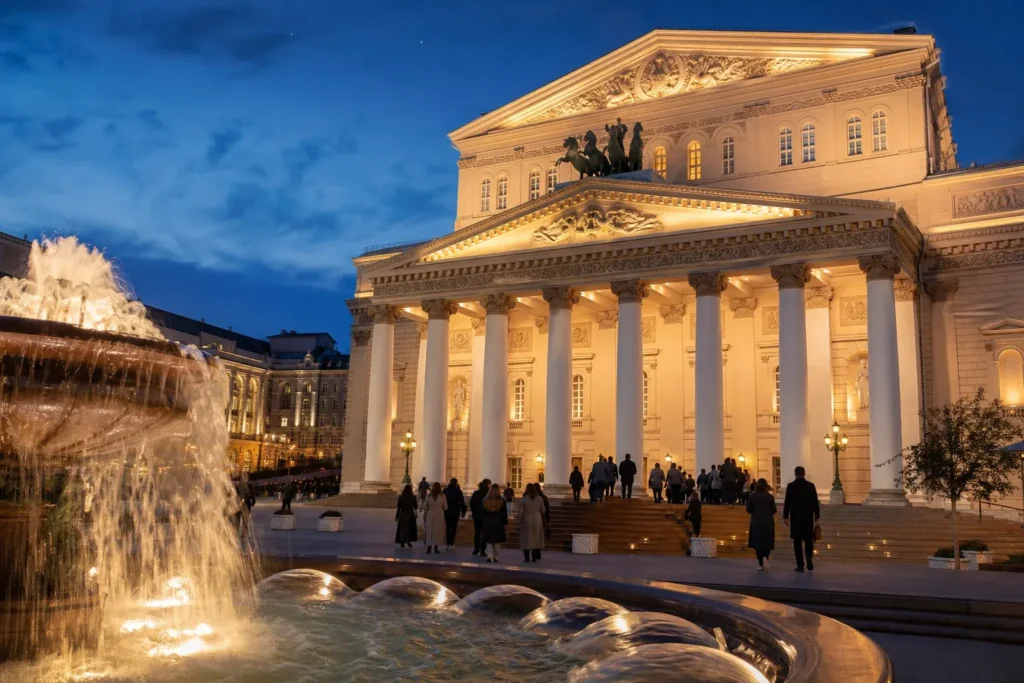
The festival opens on Orthodox Easter Sunday with a gala concert in a major Moscow hall, historically at the Bolshoi Theatre or a large concert hall, and then runs for about a month. The core is symphonic concerts by the Mariinsky Theatre orchestra under Valery Gergiev, sometimes joined by the orchestra of the Bolshoi Theatre, with guest soloists, choirs and chamber ensembles.
In many editions the program has included a cycle of works by one composer, operas and a large-scale public concert around Victory Day, and the festival has toured other Russian cities by train or concert tour, with Moscow concerts at venues such as the Moscow Conservatory’s Great Hall and the Zaryadye Concert Hall. The program changes each year. It is not a church service, although it begins on the Easter holiday.
Highlights of Moscow Easter Festival
The opening gala on Easter evening
The festival traditionally opens on the evening of Orthodox Easter Sunday with a gala concert in a major Moscow hall, in a recent edition at the Bolshoi Theatre, with the Mariinsky orchestra under Valery Gergiev. It is the festival's most formal evening and tickets sell fast. See the How to buy tickets for the Bolshoi Theatre guide and the Orthodox Easter in Moscow guide on this site.
Tip: Book early and check the venue, since the opening hall has changed between editions.
The Mariinsky orchestra with Valery Gergiev
The Mariinsky Theatre Symphony Orchestra, led by Valery Gergiev, who founded the festival in 2002, is at the center of the program, with symphonies, concertos and opera excerpts. The orchestra is known for broad repertoire from Beethoven and Brahms to Prokofiev and Shostakovich. In some editions it joins the orchestra of the Bolshoi Theatre.
Tip: Look at the program for composer cycles, which often run over several concerts.
The Great Hall of the Moscow Conservatory
The Great Hall of the Moscow Conservatory, on Bolshaya Nikitskaya Street, has been a regular festival venue, with symphonic concerts and guest soloists. It is one of Moscow's historic concert halls and has a famous acoustic. See the Bolshaya Nikitskaya guide on this site.
Tip: Arrive early, since the foyer and the cloakroom fill up before concerts.
The Zaryadye Concert Hall
The Zaryadye Concert Hall, in Zaryadye Park beside Red Square, is a modern hall that has hosted festival concerts in recent editions, and Valery Gergiev has chaired its board since 2018. The park around it is open to everyone. See the How to visit Zaryadye Park guide on this site.
Tip: Allow time to walk through the park before or after the concert.
The public concert around Victory Day
In some editions the festival has held a large public concert at the Poklonnaya Hill memorial complex around Victory Day, with the orchestras and a star soloist, outdoors in front of a big audience. The venue and format change by year. See the Victory Day in Moscow guide on this site.
Tip: Check whether the concert is ticketed or open, and dress for May weather.
Concerts beyond Moscow
The festival has often toured other Russian cities, in a recent edition about forty by charter train over four weeks, before and after its Moscow concerts. For a visitor this is useful only to understand that Moscow dates are a part of a longer tour, so dates vary. Check the program for the Moscow dates.
Tip: Look for the Moscow concerts specifically, since the tour dates differ.
What It Means for Your Visit
The festival is not a public holiday, so museums, shops and transport work as usual. The effects are local: the concert halls and their streets are busy before evening concerts, with queues at the cloakroom, and tickets for the most popular concerts sell out, particularly the opening gala and the concerts with leading soloists.
The first days coincide with Orthodox Easter, when churches and the city center are busy, and May holidays can raise demand for tickets and hotels. Check the official sources for the current dates, venues and tickets, since they change every year.
Atmosphere
On an April or May evening the foyers of the concert halls fill with people in formal clothes, programs in hand, and a murmur that quiets as the orchestra tunes. Inside, the hall lights dim, the conductor strides to the podium and the first notes fill the room.
The audience is attentive, with many regulars, and applause rolls long at the end of the program. Outside, spring has just arrived in Moscow, with cool air and bare or newly green trees. The crowd varies by concert and no figures were verified.
History of Moscow Easter Festival
The Moscow Easter Festival was founded in 2002 by Valery Gergiev, the artistic director of the Mariinsky Theatre in St. Petersburg, together with Yury Luzhkov, then the mayor of Moscow. Gergiev, who also founded the Stars of the White Nights festival in 1993, designed it as a classical music festival that begins on Orthodox Easter Sunday and features the Mariinsky Theatre orchestra and international soloists.
In its early years the festival included about a hundred or more events across Moscow and other cities within a couple of weeks, with symphonic, choral and chamber concerts and a closing public concert at the Poklonnaya Hill complex. In the 2010s the program included cycles dedicated to composers such as Prokofiev, with the complete symphonies and piano concertos.
The festival has often taken place in many cities, and its 25th anniversary edition was the largest in its history: over 29 days Valery Gergiev and a combined orchestra of the Mariinsky and Bolshoi theatres travelled more than 20,000 kilometers, performing in almost forty Russian towns and cities, including concerts in Moscow’s Zaryadye Concert Hall, according to the Mariinsky Theatre.
The festival begins on Orthodox Easter, so its start date moves each year, between early April and early May. Whether a given edition follows the same pattern is announced by the organizers each season.
Tickets and Booking for Moscow Easter Festival
Most concerts are ticketed, and tickets are sold by the venues and through the festival’s own channels, typically online and at the hall’s ticket office. The program is announced some weeks before Easter, and tickets for popular concerts, including the opening gala and concerts with star soloists, sell out early, so if a date is not yet on sale, the program has not been announced and it is worth checking again. Seats are assigned, and some venues require you to bring ID or the electronic ticket on your phone. Public outdoor concerts, where held, may be open or ticketed depending on the edition. Prices and categories change every year and were not verified.
- Payment: foreign Visa and Mastercard cards are reported not to work in Russia, so check the payment options on the official sites, and the sanctions rules of your own country may restrict some Russian payment services, so check this yourself.
Rates for Russian citizens and concessions differ, so check the festival’s official website and the website of each concert hall for all ticket categories and the current edition.
Get Tickets for Moscow Easter Festival
How to Get to Moscow Easter Festival
Each concert has its own venue. The Bolshoi Theatre is near Teatralnaya (Line 2) and Okhotny Ryad (Line 1). The Moscow Conservatory’s Great Hall on Bolshaya Nikitskaya Street is close to Biblioteka imeni Lenina and Okhotny Ryad, and the Zaryadye Concert Hall is in Zaryadye Park, reached from Kitay-Gorod (Lines 6 and 7). Exits and walking times were not verified, so check the address on your ticket.
- Metro: the metro guides on this site explain the lines and the last trains.
- Taxi: the taxi apps guide of this site explains the options.
Accessibility
No accessibility information was found for the festival as a whole. Each concert hall has its own access, lifts and seating, so check the website of the venue or contact it before you go.
Food Nearby
Cafes and restaurants around Teatralnaya Square, Bolshaya Nikitskaya Street and Zaryadye are open in the evening, though they fill up on concert nights. No individual venue was verified for this guide, so check opening hours on site.
What to Bring
Smart clothes for the concert, a warm coat for April evenings and the cloakroom, your electronic ticket on a charged phone and ID if required, and rubles in cash for the cloakroom or a snack, since foreign cards are reported not to work.
Best Views and Photo Spots of Moscow Easter Festival
The Bolshoi Theatre facade on Easter evening
The columns and the quadriga lit against a spring evening sky, with concertgoers on the steps. It marks the opening gala.
Best time: After dusk.
The Moscow Conservatory on Bolshaya Nikitskaya Street
The historic building with the monument to Tchaikovsky in front, seen from the street. It gives the setting of the Great Hall concerts. See the Bolshaya Nikitskaya guide on this site.
Best time: Late afternoon.
Zaryadye Park near the concert hall
The landscaped park with the Kremlin towers beyond, in spring light. See the How to visit Zaryadye Park guide on this site.
Best time: Before an evening concert.
Photography Rules
Photography and recording during concerts are normally not allowed, and halls set their own rules for photos in the foyers, usually without flash. Follow the signs and the staff's instructions, and do not use drones near the venues.
Family Suitability
The festival suits families with older children who can sit through a classical concert, and some programs are shorter. Evening starts, formal settings and the length of symphonic programs are limits for young children. Stroller access depends on the venue, and strollers may need to be left at the cloakroom.
Moscow Vibes Tips
- Do not confuse this festival with the Easter Gift Festival in Moscow, which is the city's free charity festival.
- Check the opening date against the Orthodox Easter date, since the festival begins on Easter Sunday.
- Look for composer cycles in the program, which spread over several evenings.
- Book the opening gala and star-soloist concerts as soon as tickets are on sale.
- Pair a concert with the Orthodox Easter in Moscow guide on this site, which covers the church service and food customs.
- Dress smartly and arrive early, since cloakrooms in April are crowded.
Explore Nearby Moscow Easter Festival
Sights near Moscow Easter Festival
 Zaryadye Park Moscow · typical visit: 1–2 hours; 3 hours with the pavilions
Main image: AI-generated illustration. It may not show the place exactly as it looks.
Related guides
 Bolshaya Nikitskaya: Conservatory, Pushkin’s Church and Mansions
Main image: AI-generated illustration. It may not show the place exactly as it looks.
 Tverskoy: Tverskaya Street, Bolshoi Theatre and Pushkin Square
Main image: AI-generated illustration. It may not show the place exactly as it looks.
 Kitay-Gorod: Walls, Varvarka Street and What to See
Main image: AI-generated illustration. It may not show the place exactly as it looks.
 Patriarch’s Ponds: The Master and Margarita Pond and Its Park
Main image: AI-generated illustration. It may not show the place exactly as it looks.
 Arbat: Old Arbat Street, Tsoi Wall and Pushkin’s Apartment
Main image: AI-generated illustration. It may not show the place exactly as it looks.
Browse more: All Entertainment · All Events & Holidays
FAQ: Moscow Easter Festival
When is the Moscow Easter Festival?
It starts on Orthodox Easter Sunday and runs for about a month.
Who founded it?
The conductor Valery Gergiev, with the then mayor of Moscow, in 2002.
Is it a religious event?
No, it is a classical music festival.
Where are the concerts?
In Moscow halls such as the Conservatory's Great Hall and the Zaryadye Concert Hall.
Which orchestra plays?
The Mariinsky Theatre orchestra, sometimes with the Bolshoi's.
Do I need a ticket?
For most concerts, yes; check the venue.
Is it the same as the Easter Gift Festival?
No, that is a free charity festival; see its guide.
Does it tour other cities?
Yes, in many editions, with Moscow concerts as part of it.
* Affiliate link: as an Amazon Associate we earn from qualifying purchases at no extra cost to you.
Discover More of Moscow with Our Travel Tips
Get practical Moscow travel tips, new destination guides and useful updates on attractions, opening hours and prices. Plan your visit with clear, helpful information delivered to your inbox.
Moscow Vibes is a one-person project. A coffee keeps it going
Last updated: October 7, 2026.
How we research and update our guides
About this guide: AI assistance and accuracy
This guide is created with the help of AI and is based on official sources where available. Mistakes can still happen. Opening hours, prices, rules and other details are given to the best of our knowledge as of the date shown and can change without notice. It offers general recommendations only, not professional, legal or travel advice. Please confirm important details with the official source before you travel; you are responsible for your own plans and decisions.
International sanctions affect payments between Russia and many other countries. In practice, cards issued in the EU, the UK, the US and several other countries often do not work in Russia, Russian cards usually do not work abroad, and some booking platforms, airlines and payment providers limit or suspend their services for Russia. The situation changes frequently. We do not give legal or financial advice, and this site does not encourage anyone to break or circumvent sanctions. Whatever you plan, you are responsible for following the laws and regulations that apply to you, including those of your country of residence and citizenship. Many travelers still organise their stay lawfully. It is worth asking your bank or payment provider what is currently permitted, contacting hotels, tour operators and carriers directly about the payment methods they accept, and checking which services are open to customers from your country. Clarify payment, cancellation and refund terms before you commit to a booking, and keep your plans flexible. Partner links on this site may not be available in every country, and prices, availability and rules in our guides can differ from what you see when you book.Paying for your trip: please read
Report an issue on this page

Take this guide with you
Get a free PDF of this guide to print or read offline: key facts, tips and a map link on a few clean pages.