
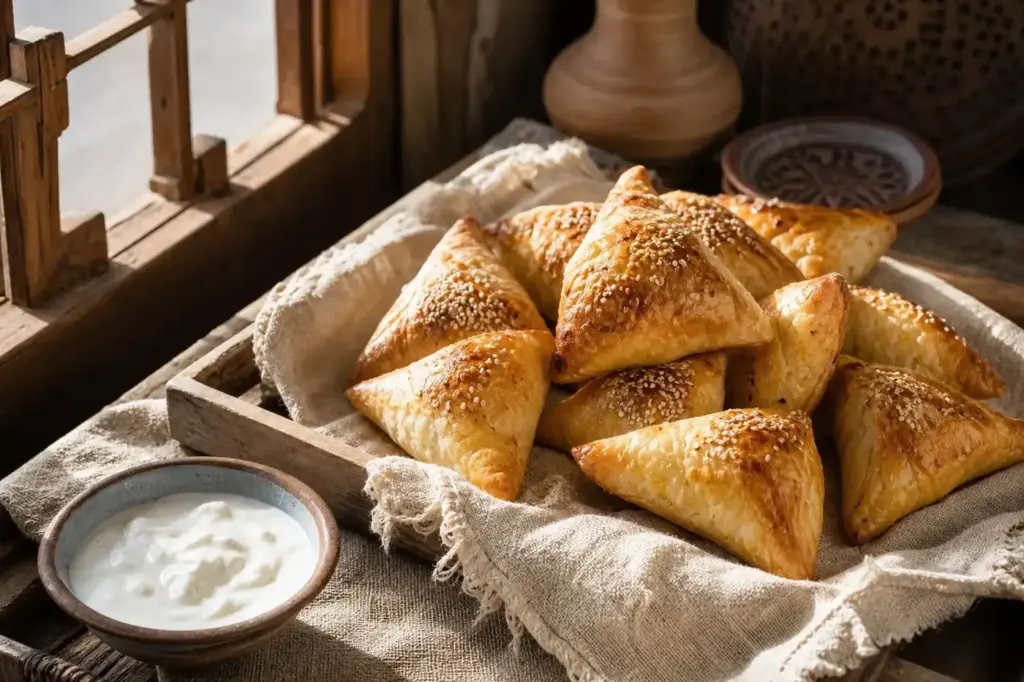
If you’re exploring Central Asian food in Moscow, samsa is the street snack you’ll find at Uzbek restaurants, kiosks and markets across the city. Central Asia’s signature pastries enjoy wide popularity in the Russian capital thanks to its many excellent Uzbek restaurants, food kiosks, and trucks. This recipe teaches you how to make authentic samsa at home, filled with seasoned ground meat and onion and wrapped in layered, flaky pastry.
You’ll need basic baking equipment and about 90 minutes total, including dough rest time. The result is a crispy, golden pastry with a juicy, aromatic filling—perfect as a snack or light meal.
Quick answer: Samsa are the Uzbek equivalent of a hand pie and among the most beloved street foods across Central Asia. This recipe makes 12 pieces in about 90 minutes (including dough rest). The most important part of this recipe is the layered dough, achieved through folding and butter, similar to puff pastry, to make the Samsa flaky after baking.
At a Glance
| Type | Dishes |
|---|---|
| Local name | Самса |
| Origin | Samsa is a savoury pastry in Central Asian cuisines, associated with Kazakh, Kyrgyz, Persian, Tajik, Turkish, Turkmen, Uyghur, and Uzbek cuisines. The dish spread throughout the region along Silk Road trade corridors via Persian culinary influences, deriving its name from the Middle Persian word sanbosag and sharing a common ancestral lineage with Middle Eastern sambousek and South Asian samosa. |
| Servings | 12 pieces (2–4 servings) |
| Total time | 90 minutes (including 30 minutes dough rest and 30 minutes baking) |
| Difficulty | Medium |
History and Story of Samsa (Самса)
Samsa is a savory baked filled pastry originating from Central Asia, consumed across Uzbekistan, Kazakhstan, Kyrgyzstan, Tajikistan, and Turkmenistan. The dish spread throughout the region along Silk Road trade corridors via Persian culinary influences. The samsa, having emerged in the Iranian media, was developed in the environment of the Central Asian Turks. Uzbek samsa recipes greatly enriched after the conquest of the territory of Central Asia by Russian Empire (1865–1917). Like all good Uzbek dishes, they came eventually to Russia, when Central Asia was incorporated into the sprawling Russian empire in the 19th century. While samsa may not be as popular as piroshki in Moscow, Central Asia’s signature pastries enjoy wide popularity in the Russian capital thanks to its many excellent Uzbek restaurants, food kiosks, and trucks.
Ingredients
- 400g plain flour
- 200ml warm water
- 1 teaspoon salt
- 80g lamb fat or vegetable shortening
- 500g minced lamb (with about 20% fat content preferred)
- 3 large onions, finely diced (about 400g)
- 1.5 teaspoons cumin seeds, lightly crushed
- 1 teaspoon black pepper
- 1 egg, beaten
How Samsa (Самса) Is Made
Step 1: Make the dough
Combine flour and salt in a large bowl. Add warm water gradually and knead for about 8 minutes until smooth and slightly elastic. The dough should not be sticky. Wrap in cling film and let rest for 30 minutes at room temperature. This resting time allows the gluten to relax and makes rolling easier.
Tip: The dough should be smooth but not wet; if it feels sticky, dust with a little extra flour.
Step 2: Laminate the dough
Divide the rested dough into two equal pieces. Roll each piece into a very thin rectangle, about 2mm thick, on a lightly floured surface. Spread softened lamb fat or vegetable shortening evenly over each rectangle. Roll tightly from the long side into a log, then cut the log into 6 equal discs (you'll have 12 discs total).
Tip: Work quickly when rolling to prevent the dough from drying out. If it becomes hard, let it rest for 5 minutes under a cloth.
Step 3: Shape the dough circles
Stand each disc on its cut edge (spiral side up) and gently roll it out into a circle about 12cm in diameter. The spiral of laminated dough will create layers that puff up during baking. Try to maintain even thickness and keep the edges slightly thinner than the center.
Tip: The lamination in these circles will produce the flaky, crispy texture that makes samsa special.
Step 4: Prepare the filling
In a bowl, combine the minced lamb with finely diced onion, crushed cumin seeds, black pepper and salt. Mix gently but thoroughly—the onion should be well distributed throughout to keep the filling juicy. The mixture will look loose and raw, which is correct; the filling cooks inside the sealed pastry.
Tip: Do not skip the onion; it creates the juicy center that defines a good samsa. Some recipes call for even more onion than meat.
Step 5: Fill and fold the pastries
Place about 40–50g of filling (roughly 3 tablespoons) in the center of each dough circle. Fold the circle in half over the filling to form a half-moon or triangle shape. Press the edges together firmly with your fingers or a fork to seal; samsa should not open during baking. Place each folded pastry on a baking sheet lined with parchment paper, with the seam side up.
Tip: Do not overfill; if too much filling is added, it will burst through the pastry seams during baking.
Step 6: Glaze and bake
Preheat the oven to 185°C (365°F). Brush each samsa with beaten egg wash. You can sprinkle with black cumin seeds or sesame seeds if you like. Bake for 25–30 minutes until the pastry is golden brown and crispy. The samsa should sound hollow when tapped on the bottom.
Tip: Do not open the oven door during baking; the pastries need steady heat to puff properly.
Step 7: Cool before serving
Remove samsa from the oven and let cool on a wire rack for at least 10 minutes. The filling is extremely hot inside, so waiting before eating prevents burns. Samsa can be stored in an airtight container in the refrigerator for up to 5 days and reheated in a 180°C oven for 8–10 minutes.
Tip: Serve hot or warm, ideally with tea, yogurt or a simple tomato and cucumber salad for a complete snack.
Variants
- Meat samsa with beef instead of lamb
- Chicken samsa, a lighter variation
- Vegetable samsa filled with potato and onion
- Pumpkin samsa, typically made in autumn when pumpkin is in season
- Cheese samsa with filling of cheese mixed with onion
Common Mistakes to Avoid
- Skipping the dough rest: This allows gluten to relax; skipping this step makes the dough tough and hard to roll. Always rest the dough for at least 30 minutes.
- Rolling dough too thick: Samsa should have thin, crispy pastry. If rolled too thick, the dough will be chewy instead of flaky. Aim for 2mm thickness when laminating and about 3mm when shaping the circles.
- Under-filling or over-filling: Too little filling makes the pastry taste bland; too much causes it to burst during baking. Use about 40–50g (3 tablespoons) per pastry.
- Not sealing the edges well: If edges aren't pressed firmly, the pastry will open during baking and the filling will escape. Use a fork or your fingers to seal completely.
- Using lean meat: Traditional samsa uses meat with fat content (usually around 20%) to keep the filling moist and flavorful. Very lean meat produces a dry, dense filling.
- Baking at too high a temperature: If the oven is too hot, the outside browns before the inside cooks. Use 185°C (365°F) for even, gentle baking.
- Eating immediately after baking: The filling is dangerously hot inside. Always let cool for at least 10 minutes before eating to avoid burns to the mouth and tongue.
How to Order and Eat It
It is shaped into triangles or squares, and served hot as a popular street food, often with a simple dipping sauce, salad, or yogurt. The texture of a samsa is just the right amount of chewy, and the hot fillings with their robust spices are always a delightful surprise. A large samsa makes a delicious lunch or hearty snack, and a plate of steaming samsas will always be hailed with enthusiasm at autumn and winter outdoor events. Samsa is eaten by hand, dipped in plain yogurt or accompanied by fresh vegetables like cucumber and tomato salad.
To order: Самса пожалуйста [Samsa pozhaluysta]
Diet and Allergens
- Contains gluten
- Contains meat (lamb)
Where to Try Samsa (Самса)
 Uryuk Uzbek, Caucasian, European
Main image: AI-generated illustration. It may not show the place exactly as it looks.
 Uzbekistan Uzbek, Arab, Pan-Asian, Azerbaijani
Main image: AI-generated illustration. It may not show the place exactly as it looks.
Moscow Vibes Tips
- Buy minced lamb from a butcher rather than pre-packaged if you want the best result: ask for meat with about 20% fat content. This fat keeps the filling moist and flavorful; very lean meat produces a dry texture.
- In Moscow, you can buy fresh samsa at Uzbek restaurants, kiosks in food markets like Danilovsky Market, or from street vendors outside metro stations. Look for places serving Central Asian food to ensure freshness.
- If making samsa in advance, freeze the uncooked, filled pastries on a baking sheet before storing in bags. Bake directly from frozen, adding 5–10 minutes to the baking time, and you'll have fresh samsa ready to heat up at any time.
- The key to flaky samsa is laminated dough: the layers of fat between thin sheets of dough create steam pockets that make the pastry puff and crisp. Don't skip the lamination step or rush through it.
- Moscow summers and winters are ideal times to enjoy samsa: it's a portable snack for autumn and winter outdoor events, and lighter when served warm (not piping hot) during spring and summer.
Explore Nearby Samsa (Самса)
Related guides
 10 Best Places to Try Russian Food in Moscow: Classics and Canteens
Main image: AI-generated illustration. It may not show the place exactly as it looks.
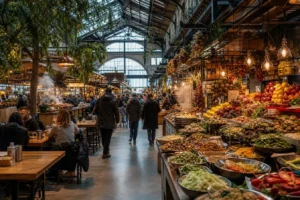 10 Best Food Markets and Food Halls in Moscow: Where to Eat Indoors
Main image: AI-generated illustration. It may not show the place exactly as it looks.
Browse more: All Food & Drink · All Other
FAQ
What is the difference between samsa and samosa?
Samsa is a traditional Central Asian pastry that is usually baked and filled with meat, onions, and spices, while Samosa is more common in South Asian cuisine and is often fried with a variety of fillings.
Why does samsa have that flaky texture?
A layered, laminated dough similar to rough puff pastry gives the exterior a shatteringly flaky texture, while the filling of coarsely minced lamb, abundant raw onion and cumin cooks inside to create a juicy, aromatic centre.
Can I make samsa with chicken or beef instead of lamb?
The most common filling for traditional samsa is a mixture of minced lamb and onions, but chicken, minced beef and cheese varieties are also quite common from street vendors.
What other fillings are used for samsa?
Samsas with other fillings, such as potato or pumpkin (usually only when in season), can also be found.
Is samsa traditionally baked or fried?
In the countries of Kazakhstan, Kyrgyzstan, Tajikistan, Turkmenistan, Uzbekistan, Turkey and Iran, samsas are almost always baked. In contrast to South Asian samosas they are rarely fried.
What was the original cooking method for samsa?
The traditional samsa is often baked in the tandoor, which is a special clay oven.
Can I freeze samsa dough?
Yes. Freeze the uncooked, filled pastries on a baking sheet before transferring to freezer bags. Bake directly from frozen, adding 5–10 minutes to the baking time for perfectly crispy results.
Where can I buy samsa in Moscow?
Central Asia's signature pastries enjoy wide popularity in the Russian capital thanks to its many excellent Uzbek restaurants, food kiosks, and trucks. Food markets, Uzbek cafés and street vendors near metro stations commonly sell fresh samsa.
Discover More of Moscow with Our Travel Tips
Get practical Moscow travel tips, new destination guides and useful updates on attractions, opening hours and prices. Plan your visit with clear, helpful information delivered to your inbox.
Moscow Vibes is a one-person project. A coffee keeps it going
Looking for more on this? Pirozhki: How to Make Russian Hand Pies at Home (Russia Vibes)

Take this guide with you
Get a free PDF of this guide to print or read offline: key facts, tips and a map link on a few clean pages.
Report an issue on this page
Paying for your trip: please read
Payments and bookings between Russia and many other countries are currently restricted. In practice, cards issued in the EU, the UK, the US and several other countries often cannot be used in Russia, Russian cards usually cannot be used abroad, and some booking platforms, airlines and payment providers limit or pause their services for Russia. The situation changes frequently.
We do not give legal or financial advice, and this site does not encourage anyone to break any rule that applies to them. Whatever you plan, you are responsible for following the laws and regulations that apply to you, including those of your country of residence and citizenship.
Many travelers still organise their stay without problems. It is worth asking your bank or payment provider what is currently possible, contacting hotels, tour operators and carriers directly about the payment methods they accept, and checking which services are open to customers from your country. Clarify payment, cancellation and refund terms before you commit to a booking, and keep your plans flexible.
Partner links on this site may not be available in every country, and prices, availability and rules in our guides can differ from what you see when you book.
How we research and update our guides
About this guide: AI assistance and accuracy
This guide is created with the help of AI and is based on official sources where available. Mistakes can still happen. Opening hours, prices, rules and other details are given to the best of our knowledge as of the date shown and can change without notice. It offers general recommendations only, not professional, legal or travel advice. Please confirm important details with the official source before you travel; you are responsible for your own plans and decisions.
* Affiliate link: as an Amazon Associate we earn from qualifying purchases at no extra cost to you.