

Borscht is a soup visitor should try in Moscow, whether you cook it yourself or find it in restaurants and canteens across the city. This guide walks you through making an authentic version at home if your accommodation has a kitchen, or shows you what to expect when you order it.
How to make authentic borscht at home takes about 60–90 minutes from start to finish. The recommended approach is to build a simple broth with meat or bones, then layer in vegetables in stages so each one cooks at the right pace. The most important step is adding vinegar at the end—it transforms the soup from flat to properly tangy and bright.
Quick answer: Borscht is native to Ukraine and an integral part of the cuisines of several countries in Eastern and Central Europe. The core method: make or use ready broth, sauté onions and garlic, add long-cooking vegetables (beets, carrots, potatoes, cabbage) in stages, season with vinegar and salt, finish with sour cream and dill. Total time is 60–90 minutes depending on whether you make broth from scratch.
At a Glance
| Type | Dishes |
|---|---|
| Local name | Борщ |
| Origin | Although borscht is important in Russian and Polish cuisines, Ukraine is frequently cited as its place of origin. Exactly when and where borscht appeared is something of a mystery; but it was probably first made in what is now Ukraine, somewhere between the fifth and ninth centuries AD. Back then, it was a simple broth cooked from cow-parsnips, a plant commonly found in hedgerows and fields. Ukrainians added beets in the 16th century, making them nutritious, sweet and colorful. |
| Servings | 4 servings |
| Total time | 60–90 minutes |
| Difficulty | Easy |
History and Story of Borscht (Борщ)
The soup’s name is thought to be derived from the Slavic word for the cow parsnip, or common hogweed, or from a fermented beverage derived from that plant. The more-palatable cultivated beet eventually replaced the wild cow parsnip as the basis of the soup. This early borscht was eaten mostly by the rural poor. Even as late as the 15th century, by which point it had spread into modern Poland and Belarus, it was looked down upon as a ‘peasant’ food. It was rarely, if ever, eaten by nobles. By the 19th century, it gained popularity in Russia through cultural exchange, becoming embedded in Slavic culinary traditions. By the end of the 19th century, borscht had spread as far as Persia, France and, by virtue of Ashkenazi Jews immigrating there, the United States.
Ingredients
- 500 g beets, peeled and grated or diced
- 300 g green or red cabbage, shredded
- 200 g potatoes, peeled and diced
- 150 g carrots, grated or diced
- 1 medium onion, chopped
- 2–3 cloves garlic, minced
- 1–1.5 litres beef, chicken or vegetable broth (or water with stock cube)
- 2–3 tablespoons vinegar (white or red wine)
- Salt and pepper to taste
- 1–2 tablespoons tomato paste or ketchup (optional but traditional)
- Fresh dill and sour cream for serving
How Borscht (Борщ) Is Made
Step 1: Make or prepare your broth
If making broth from scratch, simmer beef bones or meat with onion, carrot, celery, bay leaf and peppercorns for 45 minutes to 1.5 hours, then strain. If using ready broth (fresh or from a cube), heat 1–1.5 litres in a large pot.
Tip: If you have no broth, water with a stock cube works. Beef gives richer flavour; chicken or vegetable broth is lighter but still good.
Step 2: Sauté aromatics
Warm a little oil or butter in a separate pan. Add chopped onion and sauté until translucent (2–3 minutes). Add minced garlic and cook another minute. This builds flavour foundation for the soup.
Tip: Do not skip this step even though it seems small—it prevents raw onion taste in the finished soup.
Step 3: Add long-cooking vegetables
Pour the hot broth into a large pot. Add grated beets, diced potatoes, shredded cabbage, and grated carrots. Bring to a boil, then lower heat and simmer covered for 20–25 minutes until potatoes and beets are tender but still hold their shape.
Tip: Add potatoes and beets together so they finish at the same time. Grating beets and carrots instead of dicing speeds cooking and distributes colour evenly.
Step 4: Combine and season
Stir the sautéed onion and garlic into the soup pot. If using tomato paste or ketchup, add 1–2 tablespoons now and stir to blend. Simmer another 5 minutes. Taste and add salt and pepper.
Tip: Tomato paste adds depth but is not essential. Many simpler versions skip it.
Step 5: Add vinegar and finish
Remove the pot from heat. Stir in 2–3 tablespoons vinegar (start with 2 and adjust to taste). This is the critical step that transforms the soup from bland to bright and tangy. Taste again and adjust salt, pepper or vinegar as needed.
Tip: Do not skip vinegar. It defines borscht's character. Red wine vinegar gives deeper flavour; white vinegar is sharper.
Step 6: Serve
Ladle into bowls. Top each serving with a generous dollop of sour cream (about 1–2 tablespoons) and a small handful of fresh dill. Serve hot with rye bread or black bread on the side if available.
Tip: Sour cream and dill are not optional—they are essential toppings that balance the acidity and add freshness.
Variants
- Ukrainian borscht is divided into three types: the classic bright red variety with beets, a springtime herbal green version, and a cold version reminiscent of chłodnik.
- Borscht typologies include color-based variants such as red (beetroot), green (sorrel or spinach), white (rye fermented), and clear variations.
- White Borscht is a tasty Easter soup in Eastern Europe that is full of sausage, eggs, potatoes, and other ingredients that bring a lot of religious symbolism to each bite of this delicious soup.
- As springtime approaches in Eastern Europe, the soup that kept its inhabitants warm throughout the chilly winter months is replaced with a cold version known as green borscht that combines hard-boiled eggs with sorrel, garlic, nettles, spring onions, and peas.
Common Mistakes to Avoid
- Do not skip the addition of vinegar. This truly transforms the borsch, as it should be slightly tangy and sour. Many first attempts taste flat because the acid component is weak or missing.
- Do not rush the vegetables. Adding everything to raw broth at once leads to uneven cooking—beets and potatoes stay hard while cabbage turns to mush. Follow the stage method.
- Do not use beetroot juice if you cannot peel and grate fresh beets. Canned beet juice makes the soup watery and thin. If using canned beets, drain them well and add late in cooking.
- Do not overstir while simmering. Stirring breaks up vegetables and clouds the broth. Stir only when adding ingredients or checking seasoning.
- Do not use cold sour cream straight from the fridge as a topping to very hot soup—the contrast shocks the flavour. Room-temperature or slightly warmed sour cream blends better.
- Do not assume all vinegars work equally. Strong malt or cider vinegar can overpower. White or red wine vinegar gives the most balanced tang.
How to Order and Eat It
Borscht is always served hot in a deep bowl, never in a cup. Top with a generous dollop of sour cream—swirl it in if you like, or leave it in a cloud on top. Sprinkle fresh dill over each spoonful. The combination of tangy broth, cool sour cream and bright herb flavour is essential to the experience. Serve with thick slices of dark rye bread, black bread or a boiled potato on the side; locals often place a whole peeled garlic clove on the plate to bite into between spoonfuls as a palate cleanser.
To order: Борщ, пожалуйста [Borscht, pozhaluysta]
Diet and Allergens
- Contains beef or pork if made with meat stock
- Vegetarian version possible with vegetable broth
Where to Try Borscht (Борщ)
 Mari Vanna Russian
Main image: AI-generated illustration. It may not show the place exactly as it looks.
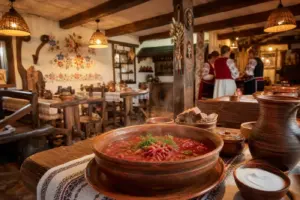 Korchma Ukrainian and Slavic
Main image: AI-generated illustration. It may not show the place exactly as it looks.
 Multikultura Russian, Spanish, Azerbaijani and Israeli, from the Josper oven and the kitchen
Main image: AI-generated illustration. It may not show the place exactly as it looks.
 Gorynych Russian and European, cooked over fire, with Neapolitan pizza
Main image: AI-generated illustration. It may not show the place exactly as it looks.
 Matryoshka Restaurant Traditional Russian
Main image: AI-generated illustration. It may not show the place exactly as it looks.
 SAVVA Contemporary Russian
Main image: AI-generated illustration. It may not show the place exactly as it looks.
 Ruski Russian, with a seafood and European accent
Main image: AI-generated illustration. It may not show the place exactly as it looks.
 Oblomov Traditional Russian
Main image: AI-generated illustration. It may not show the place exactly as it looks.
Moscow Vibes Tips
- If you have a kitchen, borscht freezes well for 2–3 months in a sealed container. Make a batch, portion it, and reheat on the stove or microwave individual bowls over several days. Flavour improves the next day as ingredients marry.
- The ratio of broth to vegetables matters. Too much broth and the soup tastes watery; too little and it becomes a stew. Aim for vegetables to fill about one-third of the pot and broth to cover generously. Adjust in the bowl with more broth or sour cream as you eat.
- Fresh dill is not optional if you want authentic flavour. Dried dill loses its brightness. Buy a small bunch (they are cheap) and chop it just before serving. If dill is impossible to find, a tiny pinch of fennel seed is a distant substitute, but not recommended.
- The beet-staining risk is real. Wear gloves when peeling and grating beets to avoid pink fingertips. If you stain a cutting board, lemon juice or vinegar removes the colour faster than scrubbing.
- Do not use boiling hot sour cream from the fridge as a final topping—let it sit at room temperature for 15 minutes, or gently warm it. This prevents it from curdling slightly when it hits the hot broth and ensures smooth, rich flavour.
- Moscow canteens (столовая) and Soviet-style restaurants often serve borscht every day, especially on weekday lunches. It is one of the cheapest and most reliable hot dishes to find. Look for signs advertising 'борщ' and eat around midday (noon–2 pm) for the best selection.
Where to Find Borscht (Борщ) in Moscow
Related guides
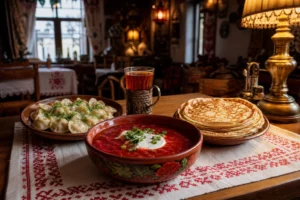 10 Best Places to Try Russian Food in Moscow: Classics and Canteens
Main image: AI-generated illustration. It may not show the place exactly as it looks.
 10 Best Food Markets and Food Halls in Moscow: Where to Eat Indoors
Main image: AI-generated illustration. It may not show the place exactly as it looks.
 Danilovsky Market Moscow: Food Hall, Hours and What to Eat6 min on foot from Tulskaya metro, Open daily 08:00–21:00
Main image: AI-generated illustration. It may not show the place exactly as it looks.
 Izmailovo Vernissage Market Moscow: Hours, Souvenirs and Flea Market11 min on foot from Partizanskaya metro, Open daily 09:00–18:00
Main image: AI-generated illustration. It may not show the place exactly as it looks.
Browse more: All Food & Drink · All Other
FAQ
What is borscht?
Borscht is a sour soup common in Eastern Europe, made with meat stock, vegetables and seasonings, most often associated with the Ukrainian variant made with red beetroots that give the dish its distinctive red color. It is defined by tangy flavour (from vinegar), sweetness (from beets), and sour cream as a traditional topping.
Is borscht Ukrainian or Russian?
Although borscht is important in Russian and Polish cuisines, Ukraine is frequently cited as its place of origin. It is deeply embedded in Russian cuisine today, but the dish originated in Ukraine and is considered part of Ukrainian heritage.
Can I make borscht vegetarian?
Yes. Use vegetable broth or water with a stock cube instead of meat broth. The method stays the same. Many families make vegetarian versions for fasting days. The soup loses some richness without meat broth, but vinegar, beets and sour cream still make it flavourful.
Why is vinegar so important?
Vinegar balances the sweetness of the beets and gives borscht its characteristic tang. Taste before serving and adjust as needed. Without it, borscht tastes flat and one-dimensional. This is the most common mistake home cooks make.
Can I use canned or fresh beetroots?
Fresh beets are best—grate half and dice half for best texture and flavour. Pre-cooked canned beets work if fresh are unavailable, but add them near the end of cooking (last 5 minutes) to avoid mushiness. Bottled beet juice alone makes the soup taste thin and watery.
What can I serve with borscht?
Dark rye or black bread is traditional. A boiled potato placed in the bowl or served on the side is also common. Some people place a whole peeled garlic clove on the plate and bite it between spoonfuls. Borscht is a complete light meal on its own.
Is there a faster version?
Yes. Use ready broth (fresh or cube) instead of making it from scratch, and use pre-peeled frozen beets if available—this cuts total time to 45 minutes. The method is the same. Flavour is good but not quite as deep as a slower version with homemade broth.
What allergens does borscht contain?
Traditional borscht is made with beets, cabbage, carrots, potatoes, onions, tomatoes, garlic, and fresh dill simmered in broth, with many families adding beef, pork, or sausage depending on regional and family traditions. Borscht may contain pork or beef depending on the broth used. Check with the restaurant or cook if you have dietary restrictions.
Discover More of Moscow with Our Travel Tips
Get practical Moscow travel tips, new destination guides and useful updates on attractions, opening hours and prices. Plan your visit with clear, helpful information delivered to your inbox.
Moscow Vibes is a one-person project. A coffee keeps it going

Take this guide with you
Get a free PDF of this guide to print or read offline: key facts, tips and a map link on a few clean pages.
Report an issue on this page
Paying for your trip: please read
Payments and bookings between Russia and many other countries are currently restricted. In practice, cards issued in the EU, the UK, the US and several other countries often cannot be used in Russia, Russian cards usually cannot be used abroad, and some booking platforms, airlines and payment providers limit or pause their services for Russia. The situation changes frequently.
We do not give legal or financial advice, and this site does not encourage anyone to break any rule that applies to them. Whatever you plan, you are responsible for following the laws and regulations that apply to you, including those of your country of residence and citizenship.
Many travelers still organise their stay without problems. It is worth asking your bank or payment provider what is currently possible, contacting hotels, tour operators and carriers directly about the payment methods they accept, and checking which services are open to customers from your country. Clarify payment, cancellation and refund terms before you commit to a booking, and keep your plans flexible.
Partner links on this site may not be available in every country, and prices, availability and rules in our guides can differ from what you see when you book.
How we research and update our guides
About this guide: AI assistance and accuracy
This guide is created with the help of AI and is based on official sources where available. Mistakes can still happen. Opening hours, prices, rules and other details are given to the best of our knowledge as of the date shown and can change without notice. It offers general recommendations only, not professional, legal or travel advice. Please confirm important details with the official source before you travel; you are responsible for your own plans and decisions.
* Affiliate link: as an Amazon Associate we earn from qualifying purchases at no extra cost to you.