
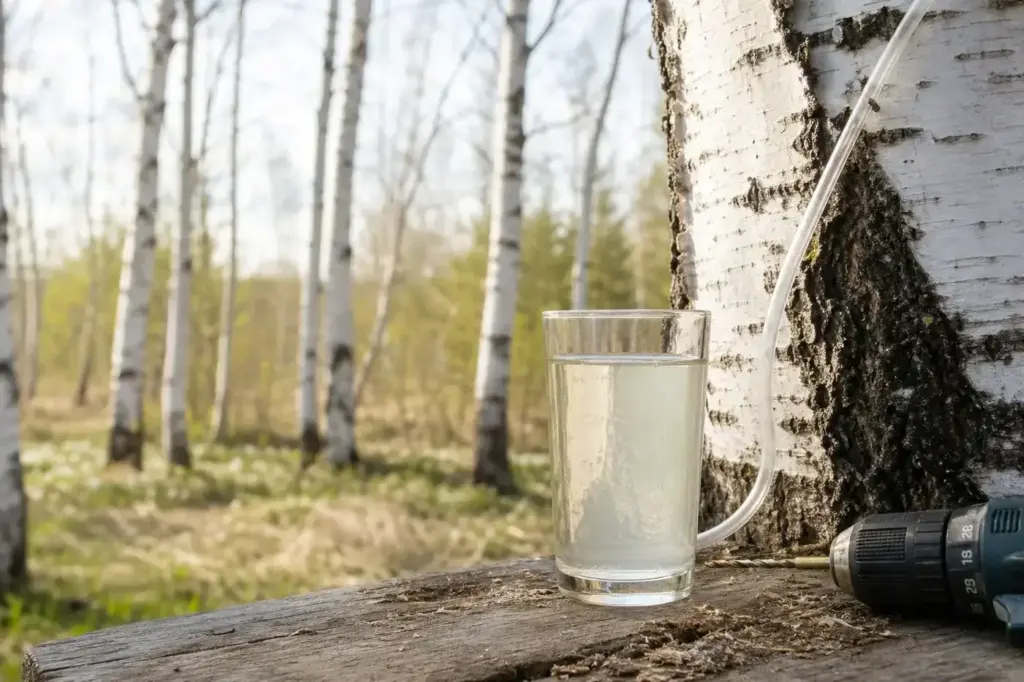
Birch sap appears in Moscow during early spring as a seasonal delicacy among locals and a curiosity for visitors. Known as берёзовый сок (byeryozovyi sok) in Russian, this is a clear liquid tapped from birch trees during the brief window when winter thaws and leaves have not yet appeared. This article shows you what birch sap is, how it tastes, and where to find it or make it during Moscow’s spring season.
Fresh birch sap is drunk straight or fermented into a light, sparkling drink. The season is short—only three to five weeks in mid-spring—which makes it ephemeral and prized. Most visitors encounter it only if they happen to visit during these weeks or know to seek it in Moscow markets.
Quick answer: Birch sap flows from birch trees in early spring (late March to May). Drill a shallow hole into a healthy birch tree trunk at least 20 cm in diameter, insert a tube, and collect the sap into a bucket. Strain and drink fresh within days, or ferment for a longer-lasting fizzy drink. Total collection time is 1–4 hours depending on sap flow; fermentation takes 1–3 weeks.
At a Glance
| Type | Drinks |
|---|---|
| Local name | Берёзовый сок |
| Origin | Eastern Europe and Russia; traditional in boreal regions of the Northern Hemisphere since pre-industrial times. |
| Servings | 2–4 servings per litre of sap |
| Total time | Collection: 2–4 hours; fresh drinking: immediate; fermented: 10–21 days |
| Difficulty | Easy |
History and Story of Birch Sap (Берёзовый сок)
Birch tree juice drinking and harvesting is an old tradition in Russia, with the main season occurring in spring. Birch tree water is a traditional beverage in Belarus, Ukraine, Russia, Lithuania, Latvia, Estonia, Finland and other parts of Northern Europe, and parts of Northern China. Russians love their birch trees both visually and gastronomically, and enjoy drinking what they call birch juice—the light, sweet sap of the trees—which tastes like bottled spring. Production peaked in the 1970s–80s but declined sharply after the Soviet collapse. Today, collection remains a spring ritual for families and a way to mark the seasonal transition.
Ingredients
- 1–2 litres fresh birch sap (collected from trees)
- 1/4 teaspoon dry yeast (for fermentation)
- 1 tablespoon fresh lemon juice
- 1 small handful raisins (optional, for fermentation)
How Birch Sap (Берёзовый сок) Is Made
Step 1: Find a healthy birch tree
Choose a mature birch tree with a trunk diameter of at least 20 cm and healthy, unblemished bark. Look for trees with a full crown of branches—they have better sap flow. Avoid trees in protected areas or urban parks. In Moscow, birch groves appear in parks like Kuzminki or Sokolniki, though harvesting in city parks is restricted. Consider asking permission on private land or collecting in designated forest areas outside the city.
Tip: Sap flows best when patches of snow still remain on the ground and daytime temperatures are above 10°C.
Step 2: Drill a collection hole
Drill a hole about 3–4 cm deep into the tree trunk at a height of 60–100 cm from the base, at a slight upward angle. Use a drill bit about 1 cm in diameter. Do not use reverse on the drill; pull the bit out going forward. Drill only one hole per tree to minimize damage. Blow away any debris from the hole.
Tip: Drill in the morning or when temperatures are warmest for faster sap flow.
Step 3: Insert collection tube and bucket
Push one end of a thin plastic tube (about 1 cm diameter) firmly into the hole, 2–3 cm deep. Attach the other end to lead into a clean bucket or container. The sap will flow along the tube due to surface tension. Cover the bucket opening loosely with cloth to keep insects and dirt out while allowing air circulation as the container fills.
Tip: If sap does not drip within 10–20 seconds, the tree may not be flowing; plug the hole and try another tree.
Step 4: Collect and strain the sap
Check the bucket every 2–3 hours and collect the sap. A healthy flowing tree yields 1–3 litres per day. Pour the collected sap through a fine sieve or cheesecloth to remove leaves, bark, insects and debris. Keep the sap cool (below 4°C) immediately after collection. Sap begins fermenting naturally within 2–3 days at room temperature, so use fresh sap quickly or refrigerate.
Tip: Fresh sap is best consumed or processed within 24 hours of collection for the cleanest taste.
Step 5: Drink fresh or ferment
To drink fresh: chill the strained sap and serve cold in small glasses. The taste is lightly sweet with a faint hint of leaves. To ferment: pour the sap into a clean glass jar, add yeast, a squeeze of lemon juice and a few raisins. Cover loosely and leave in a cool, dark place. Bubbles will form as fermentation begins; this takes 1–2 weeks. When fermentation slows, bottle and seal. Fermented sap becomes lightly sparkling, slightly sour, and stores longer.
Tip: Fermented sap tastes like a natural, unsweetened lemonade and is refreshing served chilled.
Step 6: Close the tree hole after collection
After the collection season ends (usually by late May), plug the hole with a wooden stopper, cork, or seal it with natural clay mixed with lime or tree wound dressing. This prevents infection and allows the tree to heal. Do not leave the hole open.
Tip: Proper sealing protects the tree's health and is a sign of ethical foraging.
Variants
- Fresh sap: chilled and served as a spring tonic within 24 hours of collection.
- Fermented sap (beriozovitsa): lightly fermented with yeast, lemon and raisins; becomes sparkling and slightly sour after 1–3 weeks.
- Birch kvass: a traditional Russian fermented beverage made from birch sap with similar preparation to fermented sap.
- Birch syrup: the sap reduced by prolonged boiling until it thickens into a concentrated syrup, though this requires 100+ litres of sap for small yields.
Common Mistakes to Avoid
- Tapping trees outside the spring season (March–May): sap only flows when soil thaws and before leaves emerge. Outside this window, the tree will not yield sap.
- Using trees that are too small or unhealthy: a trunk must be at least 20 cm in diameter, and the tree should be vigorous with no visible fungal growth or mold. Tapping weak trees damages them unnecessarily.
- Leaving the collection hole unsealed after the season ends: this invites infection and decay. Always plug or seal the hole before leaving.
- Drinking sap that has been stored too long at room temperature: fresh sap begins fermenting after 2–3 days and becomes increasingly acidic and bitter. Refrigerate immediately or use within 24 hours for the best taste.
- Collecting in public parks or protected areas: urban parks in Moscow forbid sap collection. Seek permission on private land or go to designated forest areas outside the city.
- Drilling too deep or making the hole too large: shallow holes (3–4 cm) close more easily and damage the tree less than deep ones. Avoid multiple holes in one tree.
How to Order and Eat It
Birch sap is drunk in small glasses or cups, usually chilled. Fresh sap tastes lightly sweet with a delicate, slightly green flavour. The flavour is faintly sweet, with the barest hint of wintergreen whispers and perhaps a bit of ‘green’ flavour, a bit like leaves or grass. Fermented sap is more tart and fizzy. Drink it slowly as a refreshing beverage, especially in warm weather. It was historically consumed as a spring tonic believed to cleanse and revitalize the body after winter. A small cup is usually enough due to its distinctive taste.
To order: Берёзовый сок, пожалуйста [Byeryozovyi sok, pozhaluysta]
Where to Try Birch Sap (Берёзовый сок)
 Bjorn New Nordic and Scandinavian, with regional Russian products
Main image: AI-generated illustration. It may not show the place exactly as it looks.
Moscow Vibes Tips
- Buy bottled birch sap in Moscow markets and health food shops if you cannot collect it yourself. The season is short (late March to May), and fresh sap sells quickly. Fermented versions last longer on shelves.
- If visiting Moscow outside spring, fermented or preserved birch sap products may still be available in shops specializing in traditional Russian foods, though fresh sap will not be available.
- Locals often tap trees in their own gardens or with friends' permission on private land outside Moscow. Never collect in city parks—urban authorities protect trees and forbid harvesting.
- Taste preferences vary widely. Some visitors find fresh birch sap too subtle or grassy; fermented versions taste more like light, tart lemonade and may be more approachable.
- Pack the collection kit (drill, tube, bucket) if you plan to forage; it is not sold at Moscow tourist shops. Hardware stores carry the basic tools.
Where to Find Birch Sap (Берёзовый сок) in Moscow
Related guides
 Kuzminki Park Moscow: Golitsyn Estate, Ponds and How to Get ThereOpen 24 hours
Main image: AI-generated illustration. It may not show the place exactly as it looks.
 Sokolniki Park Moscow: Entrances, Rose Garden and Winter Rink13 min on foot from Sokolniki metro, Open 24 hours
Main image: AI-generated illustration. It may not show the place exactly as it looks.
 Neskuchny Garden Moscow: Free Entry, Orlov Summer House and PondsOpen 24 hours
Main image: AI-generated illustration. It may not show the place exactly as it looks.
 Izmailovsky Park Moscow: Free Entry, Ferris Wheel and Royal EstateOpen 24 hours
Main image: AI-generated illustration. It may not show the place exactly as it looks.
Browse more: All Food & Drink · All Other
FAQ
Is birch sap alcoholic?
Fresh birch sap contains no alcohol. Naturally fermented sap becomes very lightly fizzy and may contain trace amounts of alcohol (less than 1%), similar to kvass. Intentionally fermented sap with added yeast can develop more alcohol, but traditional sap remains nearly non-alcoholic.
When exactly does birch sap season occur in Moscow?
The harvest season begins after the vernal equinox on March 20 and runs during the period of active sap movement, which begins with thaws and ends with budding. In Moscow, this typically falls between late March and early May, usually peaking in April. The exact dates vary by year and weather. Birch sap must be collected in early spring before any green leaves have appeared, and the collection period is only about a month per year.
Where can I buy birch sap in Moscow?
During the spring season, fresh or fermented birch sap appears in Russian food markets, health food shops, and some supermarkets. Look for it in markets like Danilovsky or specialty shops selling traditional foods. Outside spring, bottled or fermented versions may still be available but will be limited. Ask shop staff; availability is sporadic and depends on the season.
Can I collect birch sap in Moscow parks?
Anyone can freely and for free collect birch sap in the forest for their own needs, except in protected and specially protected areas, as well as urban parks. Harvesting in Moscow's city parks is forbidden to protect the trees. Look for permitted areas outside the city.
What does birch sap taste like?
When fresh, it is a clear and colourless liquid, often slightly sweet with a slightly silky texture. Some describe it as faintly sweet water with a subtle hint of leaves or grass. After two to three days, the sap starts fermenting and the taste becomes more acidic. Fermented sap tastes more like tart, fizzy lemonade.
How long does birch sap last?
Fresh sap must be consumed or processed within 24 hours and stored cold. After two to three days, the sap starts fermenting and the taste becomes more acidic. Fermented sap, thanks to lacto-fermentation, can be stored at room temperature for weeks or months. Bottled commercial versions have longer shelf lives.
Can I make birch sap at home if I do not have a birch tree?
No. Birch sap comes directly from birch trees during the spring thaw and cannot be recreated chemically at home. You must collect it from a living tree. If you do not have access to birch trees or lack time, buy bottled versions from shops during the season.
Is birch sap safe to drink?
Yes, fresh sap collected from a healthy tree is safe. Strain it to remove debris and insects. Avoid sap from trees near roads (air pollution) or with visible disease. Keep it cold immediately after collection. If fermenting at home, use clean equipment and follow basic hygiene to prevent contamination.
Discover More of Moscow with Our Travel Tips
Get practical Moscow travel tips, new destination guides and useful updates on attractions, opening hours and prices. Plan your visit with clear, helpful information delivered to your inbox.
Moscow Vibes is a one-person project. A coffee keeps it going
Looking for more on this? Beef Stroganoff: Authentic Russian Recipe and Cooking Method (Russia Vibes)

Take this guide with you
Get a free PDF of this guide to print or read offline: key facts, tips and a map link on a few clean pages.
Report an issue on this page
Paying for your trip: please read
Payments and bookings between Russia and many other countries are currently restricted. In practice, cards issued in the EU, the UK, the US and several other countries often cannot be used in Russia, Russian cards usually cannot be used abroad, and some booking platforms, airlines and payment providers limit or pause their services for Russia. The situation changes frequently.
We do not give legal or financial advice, and this site does not encourage anyone to break any rule that applies to them. Whatever you plan, you are responsible for following the laws and regulations that apply to you, including those of your country of residence and citizenship.
Many travelers still organise their stay without problems. It is worth asking your bank or payment provider what is currently possible, contacting hotels, tour operators and carriers directly about the payment methods they accept, and checking which services are open to customers from your country. Clarify payment, cancellation and refund terms before you commit to a booking, and keep your plans flexible.
Partner links on this site may not be available in every country, and prices, availability and rules in our guides can differ from what you see when you book.
How we research and update our guides
About this guide: AI assistance and accuracy
This guide is created with the help of AI and is based on official sources where available. Mistakes can still happen. Opening hours, prices, rules and other details are given to the best of our knowledge as of the date shown and can change without notice. It offers general recommendations only, not professional, legal or travel advice. Please confirm important details with the official source before you travel; you are responsible for your own plans and decisions.
* Affiliate link: as an Amazon Associate we earn from qualifying purchases at no extra cost to you.