
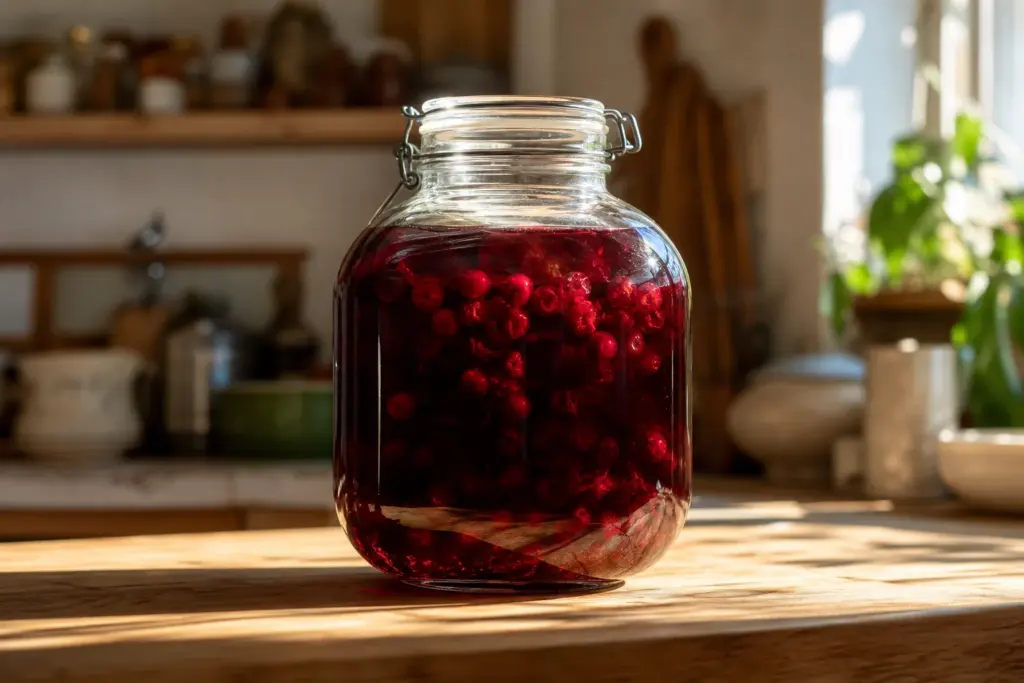
Nalivka was a popular alcoholic drink in 18th-century Russian cuisine. Cherry nalivka, or vishniak, represents one of the most accessible ways to make this traditional home liqueur if you have access to fresh or frozen cherries. Unlike commercial spirits, nalivka uses simple ingredients and develops its flavour through patient infusion rather than distillation.
This guide shows you how to prepare cherry nalivka in a home kitchen. You will learn the classic method, variations with pits and spices, and practical tips for storage and serving. The recommended approach uses vodka, fresh cherries and sugar for straightforward results in 1–2 months.
Quick answer: The simplest method layers washed cherries in a bottle, covers them with vodka, and leaves the mixture to infuse for 1–2 months at room temperature. Strain into clean bottles and store in a cool place; add sugar to taste before serving. Total preparation time is about 10 minutes plus infusion.
At a Glance
| Type | Alcoholic drinks |
|---|---|
| Local name | Вишнёвая наливка |
| Origin | Russia, popular since the second half of the 16th century |
| Servings | Makes approximately 1.5 litres; serves 8–12 as a dessert or aperitif |
| Total time | 10–15 minutes active preparation; 1–2 months infusion time |
| Difficulty | Easy |
History and Story of Cherry Nalivka (Вишнёвая наливка) [Alcoholic]
In the eighteenth century, nalivka was one of several accompanying drinks served in Russian cuisine alongside kvas, beer, vodka and other traditional beverages. Cherry nalivka, called vishniak, was historically the most prized version, known as the ‘tsar nalivka’ and unsurpassed among fruit varieties. In Ukrainian Cossack times, fruit was traditionally soaked in horilka for at least two months, and cherry nalyvka was the most popular variety, frequently given as a gift by Cossack leaders and exported to the Russian Empire and Crimean Khanate. The drink has remained a staple of homemade Russian and Eastern European hospitality.
Ingredients
- 1.5–2 kg fresh or frozen cherries, ripe and firm
- 1 litre good-quality vodka
- 300–600 g white or brown sugar
- Optional: clove, cinnamon, nutmeg or citric acid for flavour
- One wide-mouth glass jar or bottle with a lid
- Cheesecloth or a fine-mesh strainer for filtering
How Cherry Nalivka (Вишнёвая наливка) [Alcoholic] Is Made
Step 1: Select and prepare the cherries
Wash and dry cherries thoroughly. Remove any bruised or damaged fruit. You can leave the pits in or remove them before use; pits add a subtle almond bitterness but also make straining easier if removed. Work efficiently so the cherries do not oxidise; aim to complete this step and move to the next within an hour of washing.
Tip: Use frozen cherries if fresh are unavailable; thaw them slightly and measure the juice that releases so you can adjust the final liquid balance.
Step 2: Layer cherries and sugar in the jar
Place cleaned cherries in a large glass jar, filling it approximately two-thirds full. Alternate cherries with sugar in layers about 5 cm deep. Add any optional spices (clove, cinnamon, nutmeg) between layers if desired. You are creating a base for both flavour and juice extraction.
Tip: Do not compress the cherries; they release juice naturally as they ferment, and tight packing prevents even infusion.
Step 3: Pour in vodka and seal
Fill the bottle with vodka until the fruit is covered. Leave about 2 cm headspace at the top. Seal the jar tightly. The sealed environment allows the cherries' natural sugars to draw moisture from the fruit, gradually creating a syrup.
Tip: Use a vodka that is neutral and clean-flavoured; expensive vodka is unnecessary, but cheap or heavily flavoured spirits will dominate the drink.
Step 4: Store and let infuse
Leave the jar to infuse for 1–2 months at room temperature. Store in a location away from direct sunlight. The liquid will gradually deepen in colour and develop cherry aroma. After 2–3 weeks, you can taste a small amount to check progress; the flavour will continue to develop.
Tip: Some recipes recommend shaking the jar every few days to help sugar dissolve, especially if you have not removed the pits. This accelerates infusion and prevents crystallisation.
Step 5: Strain into clean bottles
Filter the mixture into small bottles and cork them. Line a fine sieve with several layers of clean cheesecloth and pour the contents through slowly; do not squeeze or press the cherries, as this muddies the final drink. Discard the spent fruit.
Tip: Save a few cherries in a small jar with a splash of the strained liquid as a tasting sample; this shows you how the drink develops over the first year of storage.
Step 6: Age and adjust sweetness
Sugar is added to taste before serving. The base drink contains little added sugar; serve it over ice with a teaspoon of sugar stirred in, or add a simple syrup to the bottle before long storage. Keep the bottles in the cellar or a cool, dark place. Nalivka improves with age and will keep for years.
Tip: If the finished drink tastes too sharp, make a sugar syrup, cool it, and stir it in by thirds, tasting as you go. Traditional recipes varied sweetness from 5% sugar (savoury versions for men) to 40% (dessert versions for women).
Variants
- Nalivka with pits: Prick whole cherries with a toothpick before layering, add spices (clove, nutmeg, cinnamon), and infuse for 2 months in sunlight, shaking occasionally. This creates a deeper, more complex flavour with almond notes.
- Quick nalivka with honey: Cook cherries with honey and water, cool, add vodka and citric acid, then infuse for just 36 hours at room temperature before bottling.
- Spiced cherry nalivka: Layer cherries with sugar and add whole cloves, broken cinnamon stick, and a pinch of nutmeg. Infuse for 2 months; the spices add warmth and help balance the cherry tartness.
- Frozen cherry nalivka: Thaw frozen cherries over sugar for 8–10 hours to release juice, then proceed with vodka infusion for 1–3 months. Frozen cherries can be easier to source and often produce clearer results.
- Mixed-fruit nalivka: Combine cherries with raspberries, currants, or plums. Adjust infusion time based on the most delicate fruit (for example, strawberries need only 4 weeks).
Common Mistakes to Avoid
- Using bruised or damaged cherries: Sort thoroughly before washing. Damaged fruit introduces unwanted yeasts and moulds that can spoil the batch.
- Squeezing the fruit during straining: This releases fine pulp and tannins, making the final drink cloudy and bitter. Strain gently through cheesecloth and wait for the liquid to drip through.
- Forgetting that pits add bitterness: If you leave pits in, taste the drink after 2 weeks and consider straining earlier than 2 months. Pits contain amygdalin, which develops stronger flavour over time.
- Sealing too tightly if using very fresh cherries: Fermentation can build pressure in a completely sealed jar. Cover loosely with cloth and twine for the first week, then seal tightly.
- Storing in direct sunlight: Exposure to light breaks down colour and flavour compounds, turning the drink pale and flat.
- Adding too much sugar too early: The sugar should mainly be added just before serving or drinking. If you add it all to the infusion, you may create a syrup that masks the cherry flavour.
How to Order and Eat It
Nalivkas are served as dessert, with tea, coffee and are added to sweets, jellies and drinks. Serve chilled or at room temperature in small glasses (the drink is dessert-strength and rich). Nalivka pairs well with strong black tea, coffee, or by itself as an after-dinner drink. It can also be mixed into cocktails or drizzled over ice cream or fresh berries. Store upright in a cool, dark place; once opened, refrigerate and consume within several months for best flavour.
To order: Вишнёвую наливку [Vishnёvuyu nalivku]
Diet and Allergens
- Contains alcohol
Contains alcohol. Please drink responsibly and follow local rules.
Moscow Vibes Tips
- If your infusion tastes one-dimensional after 6 weeks, it may benefit from additional time. Nalivka does not oxidise like wine; sealed bottles continue to develop complexity for several months.
- To check ripeness during infusion, insert a clean skewer through the cloth seal and taste a few drops. You may strain after 4 weeks if the flavour satisfies you; do not wait if the taste is already perfect to your palate.
- Save the spent cherries in a sealed jar with a tablespoon of the strained nalivka. After a few months, they become a soft, intense cherry concentrate that works well in sauces, yoghurt, or on desserts.
- If you live in a very cold climate, keep the infusing jar in a warm cupboard or near (but not touching) a radiator. Nalivka ferments best between 18–22°C; cold slows the process dramatically.
- Homemade nalivka does not clear like commercial liqueurs; slight cloudiness is normal and adds to its charm. If sediment appears after long storage, decant carefully into fresh bottles, leaving the sediment behind.
Where to Find Cherry Nalivka (Вишнёвая наливка) [Alcoholic] in Moscow
Related guides
 10 Best Food Markets and Food Halls in Moscow: Where to Eat Indoors
Main image: AI-generated illustration. It may not show the place exactly as it looks.
 10 Best Things to Do in Moscow on a Rainy Day: Indoor Picks and Tips
Main image: AI-generated illustration. It may not show the place exactly as it looks.
 Moscow Food Tour: Russian Cuisine and Local Specialties: One-Day Route
Main image: AI-generated illustration. It may not show the place exactly as it looks.
 Krasnoe & Beloe: Discount Convenience Chain, Hours and Payment
Main image: AI-generated illustration. It may not show the place exactly as it looks.
Browse more: All Food & Drink · All Other
FAQ
Can I use bottled or canned cherry juice instead of whole cherries?
No. Whole cherries release their sugars and tannins during infusion, creating the characteristic depth and body of nalivka. Bottled juice lacks the complexity that comes from the fruit's skin and flesh infusing directly with the alcohol over weeks.
What alcohol content will my homemade nalivka have?
Ukrainian and Russian nalivkas typically contain less than 20% alcohol. When you mix vodka (typically 40% abv) with cherries and sugar, dilution and fermentation lower the final strength to roughly 15–20% abv, making it a dessert-style drink rather than a strong spirit.
Is it safe to eat the cherries after infusion?
Yes, the strained cherries are safe. They have absorbed vodka and will taste intensely of alcohol and cherry. Some people discard them; others use them as a concentrate for sauces or preserve them in a sealed jar with a splash of the finished nalivka. Do not serve them raw to children or people avoiding alcohol.
Why does my nalivka look cloudy or have sediment?
Cloudiness and sediment are normal in homemade nalivka. They come from pulp, tannins, and natural yeasts in the fruit. If you prefer clarity, strain through multiple layers of cheesecloth, then filter through coffee filters. Some people accept cloudiness as a sign of authenticity and character.
How long does homemade nalivka last?
Properly sealed and stored in a cool, dark place, nalivka keeps for years. It does not spoil as readily as wine because the alcohol content preserves it. Flavour deepens for the first 1–2 years, then stabilises. Once opened, refrigerate and use within 3–6 months for best quality.
Can I use frozen cherries if fresh ones are not in season?
Frozen cherries work well, especially hand-frozen varieties, and thorough sorting is essential. Thaw them gently and allow the released juice to sit with sugar for 8–10 hours before adding vodka. The infusion time may be slightly shorter because thawed cherries release their compounds more readily.
Do I need to add citric acid or other preservatives?
No. The alcohol and sugar act as natural preservatives. Some recipes add citric acid or a small amount of lemon juice to brighten the flavour and prevent oxidation, especially if omitting the cherry pits. It is optional and a matter of taste preference.
What is the difference between nalivka and nastoika?
Nastoika is a strong, unsweetened infused liquor made by soaking herbs, spices, or fruits in vodka. Nalivka is a home-style fruit liquor made with vodka, fruit, and sugar. Nalivka is sweeter and more approachable as a dessert drink, while nastoika is drier and often medicinal in character.
Discover More of Moscow with Our Travel Tips
Get practical Moscow travel tips, new destination guides and useful updates on attractions, opening hours and prices. Plan your visit with clear, helpful information delivered to your inbox.
Moscow Vibes is a one-person project. A coffee keeps it going
Looking for more on this? Beef Stroganoff: Authentic Russian Recipe and Cooking Method (Russia Vibes)

Take this guide with you
Get a free PDF of this guide to print or read offline: key facts, tips and a map link on a few clean pages.
Report an issue on this page
Paying for your trip: please read
Payments and bookings between Russia and many other countries are currently restricted. In practice, cards issued in the EU, the UK, the US and several other countries often cannot be used in Russia, Russian cards usually cannot be used abroad, and some booking platforms, airlines and payment providers limit or pause their services for Russia. The situation changes frequently.
We do not give legal or financial advice, and this site does not encourage anyone to break any rule that applies to them. Whatever you plan, you are responsible for following the laws and regulations that apply to you, including those of your country of residence and citizenship.
Many travelers still organise their stay without problems. It is worth asking your bank or payment provider what is currently possible, contacting hotels, tour operators and carriers directly about the payment methods they accept, and checking which services are open to customers from your country. Clarify payment, cancellation and refund terms before you commit to a booking, and keep your plans flexible.
Partner links on this site may not be available in every country, and prices, availability and rules in our guides can differ from what you see when you book.
How we research and update our guides
About this guide: AI assistance and accuracy
This guide is created with the help of AI and is based on official sources where available. Mistakes can still happen. Opening hours, prices, rules and other details are given to the best of our knowledge as of the date shown and can change without notice. It offers general recommendations only, not professional, legal or travel advice. Please confirm important details with the official source before you travel; you are responsible for your own plans and decisions.
* Affiliate link: as an Amazon Associate we earn from qualifying purchases at no extra cost to you.