
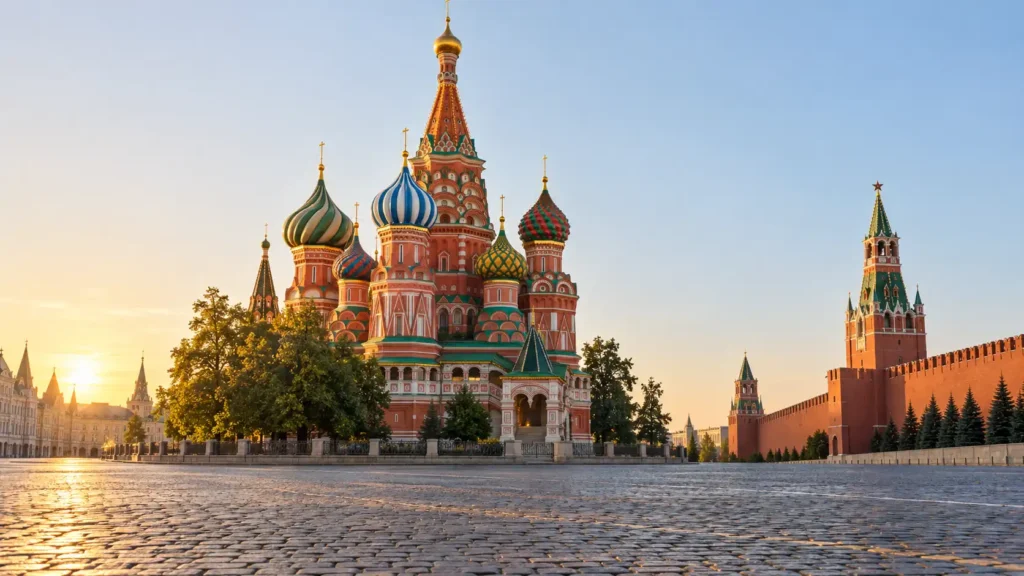
St. Basil’s Cathedral Moscow stands at the south end of Red Square, a cluster of colored domes that has become the symbol of the city. It was built in 1555–61 on the order of Ivan IV to mark the capture of Kazan, and it holds ten churches in one building.
From the square it looks like a single fairy-tale church, but inside it is a museum of small chapels linked by narrow passages. It is not part of the Kremlin, and the interior has its own ticket, which many first-time visitors only learn on arrival.
Quick Facts
| Russian name | Собор Василия Блаженного |
|---|---|
| Built / opened | 1555–1561 |
| Architect(s) | Traditionally credited to Barma and Postnik (attribution debated) |
| Address | 7 Red Square, Moscow, Russia OpenStreetMap · Google Maps |
| District | Tverskoy |
| Metro | Kitay-Gorod (Lines 6 (orange) and 7 (purple), about 6–7 min walk) Okhotny Ryad (Line 1 (Sokolnicheskaya, red), about 8–10 min walk through Red Square) Ploshchad Revolyutsii (Line 3 (Arbatsko-Pokrovskaya, dark blue), about 8–10 min walk) Teatralnaya (Line 2 (Zamoskvoretskaya, green), about 8–10 min walk) |
| Opening hours | From 16 September to 31 October the museum is open daily 11:00–18:00. From 1 November to 14 May it is open daily 11:00–17:00.
In the summer season (15 May to 15 September) it opens at 10:00: Monday, Tuesday, Wednesday and Sunday until 18:00, Thursday to Saturday until 19:00. The museum closes on a few set days in summer months. Ticket offices close 45 minutes before closing (as of October 2026 – check the official site). |
| Admission | Adults: upscale (₽₽₽); children aged 7–17: moderately priced (₽₽); younger children are free according to the official page (to verify). Rates for Russian citizens and concessions differ. Audio guide extra. |
| Best time to visit | Weekday mornings are the quietest. The museum opens later in autumn and winter, so check the seasonal hours before you plan the day.
Summer brings the most visitors and longer opening hours. Winter is calmer, and the domes look striking against snow, though the museum closes earlier. |
| Recommended duration | 45–90 minutes inside |
| Website | en.shm.ru/museum/hvb |
| Last updated | October 6, 2026 |
What Is (and Isn't) Part of a Visit to St. Basil’s Cathedral Moscow?
| Part | Status | Notes |
|---|---|---|
| The ten churches and their interiors | Included in the standard ticket | Covered by the standard museum ticket. |
| Temporary exhibition and former sacristy | Included in the standard ticket | Part of the museum visit with the same ticket. |
| The exterior and domes | Outside / not part of it | Free to see from Red Square without any ticket. |
| Minin and Pozharsky monument | Outside / not part of it | A free monument in front of the cathedral, on Red Square. |
| Second floor | Included in the standard ticket | Part of the visit but not accessible by wheelchair or stroller. |
| State Historical Museum | Separate ticket or institution | A separate building at the north end of Red Square with its own admission. |
| Moscow Kremlin | Separate ticket or institution | A different museum with its own tickets and entrances; not included here. |
| Lenin's Mausoleum and GUM | Outside / not part of it | Neighbouring sights on Red Square with their own hours; not part of this ticket. |
Why Visit St. Basil’s Cathedral Moscow?
The outside is the famous part, but the inside is what surprises most people: narrow, twisting passages, low vaults covered in painted plant patterns and small chapels that feel closer to a village church than a cathedral.
It also tells a specific story. The building commemorates a military victory in 1552, and one of its chapels was added over the burial place of Basil the Blessed, a Moscow holy man.
The cathedral is small enough to see in about an hour, which makes it easy to combine with the Kremlin, GUM or the State Historical Museum on the same day.
Highlights of St. Basil’s Cathedral Moscow
The domes and the exterior
Ten churches under separate domes, each with its own pattern and color, gather around a central church topped by a tented roof. The building was finished in 1561, and its present colors and patterns date from later centuries.
The exterior is free to see from Red Square. Walk around it to notice how the domes appear to rearrange themselves from each side, and stand near the southern end for the classic view.
Tip: The best exterior light is in the morning, when the sun falls on the domes from the east.
The central church
The tallest part of the cathedral is the Church of the Intercession of the Most Holy Theotokos, which gives the building its official name. The other churches are grouped around it and connected by galleries.
Look up when you enter; the narrow, rising shape of the central space is quite different from the low rooms around it. The building honors the victory over the Kazan Khanate.
Tip: Pause in the central church before wandering; it orients the rest of the visit.
Painted walls and vaults
The ten churches contain interiors from the 16th to the 20th centuries. The walls and domes are covered with frescoes and oil paintings, many with plant ornament and images of saints.
The effect is intimate rather than grand: dark, warm colors, small windows and low ceilings. Some passages are narrow, so the route can feel crowded at busy times.
Tip: Look at the ceilings and vaults, not only the walls; the plant patterns are most striking above eye level.
Church of St Basil the Blessed
This chapel was built in 1588 over the burial site of Basil the Blessed, a Moscow holy man and contemporary of Ivan the Terrible. It carries his name, which is why the whole cathedral is known as St. Basil’s.
Wall paintings and icons inside show episodes from his life and miracles. It is one of the quieter chapels and a good place to understand why the building has two names.
Tip: Read the explanation at the entrance to this chapel; it explains the two names of the cathedral.
The former sacristy and temporary exhibition
The former sacristy holds donations from royalty and parishioners, while a temporary exhibition shows rare examples of old Russian icon painting and applied art. Both are part of the museum visit.
The objects change with exhibitions, so what you see will vary. Allow extra time if you like icons and church silver.
Tip: Check the museum site for what is on during your visit; the exhibition rooms are often quieter than the churches.
Minin and Pozharsky monument
In front of the cathedral stands a bronze monument, unveiled in 1818 and made by Ivan Martos. It honors Kuzma Minin and Prince Dmitry Pozharsky, who led a militia against foreign forces in 1612.
It is free to see and sits in the open on Red Square, so it needs no ticket. It also makes a handy meeting point.
Tip: Use the monument as a meeting point; the cathedral entrance is just beside it.
Atmosphere
From a distance St. Basil’s looks bright and almost playful, but close up it is heavy and old, with thick walls, small windows and narrow stairs.
Outside, the square is open and loud with footsteps, guides’ voices and the Spasskaya clock chiming nearby. Inside, the sound drops. Passages are low, rooms are small and the air is cool, with painted walls glowing in warm colors.
The cathedral is quietest early in the day and busiest in the middle of the day, especially in summer. In winter the domes stand out against snow and gray sky, and the inside feels like a shelter.
History of St. Basil’s Cathedral Moscow
In 1552, Ivan IV captured the city of Kazan, ending the Kazan Khanate. To mark the victory he ordered a new church on the edge of the Kremlin market, built between 1555 and 1561. Tradition credits the builders Barma and Postnik, though who they were, and whether they were two people or one, is debated.
The design was unusual: a central church surrounded by smaller churches, each dedicated to a feast day linked to the Kazan campaign. It is officially called the Cathedral of the Intercession of the Most Holy Theotokos on the Moat, and it was known as the Pokrovsky Cathedral.
In 1588 a chapel was added over the burial site of Basil the Blessed, a Moscow holy man who had died in the 1550s. The chapel became so popular that the whole cathedral came to be known by his name. In later centuries the building gained its colorful domes and painted decoration.
During the French occupation of 1812, Napoleon’s troops are said to have used the cathedral for stabling, though accounts vary. In the 19th century the building was repaired and stood as a symbol of Moscow.
After the revolution the cathedral was protected by the state and became a museum in the 1920s, a branch of the State Historical Museum. Church services stopped in the late 1920s. In the 1930s, changes to Red Square for parades led to rumors that the building would be demolished, but it survived.
In 1990, UNESCO listed Red Square and the Kremlin as a World Heritage Site, and the cathedral is part of that listing. Since the early 1990s, church services have taken place in the building on some feast days, alongside its use as a museum.
Legends and Myths about St. Basil’s Cathedral Moscow
Ivan the Terrible blinded the builders
Legend – historically unreliable. A well-known story says that Ivan IV had the builders blinded so they could never make anything as beautiful again.
No reliable evidence supports this. Some accounts suggest that the architect, possibly Postnik Yakovlev, took part in other building projects after the cathedral was completed.
Napoleon's stables
Disputed by historians. Stories say that French troops used the cathedral as a stable in 1812, and that Napoleon ordered it blown up before retreating.
Historians disagree on how the building was used during the occupation, and the order to destroy it is generally treated as unreliable.
The architect who refused to demolish it
Disputed by historians. A popular tale says that in the 1930s Soviet leaders considered removing the cathedral to widen Red Square for parades, and that the architect Pyotr Baranovsky refused and was imprisoned.
The details vary between accounts, and historians debate how serious the plan was and what role Baranovsky played.
Tickets and Booking for St. Basil’s Cathedral Moscow
| Ticket | Price | Includes |
|---|---|---|
| Adult ticket | ₽₽₽₽ | Entry to the cathedral museum with the ten churches and exhibitions. |
| Children aged 7–17 | ₽₽ | Entry to the cathedral museum. |
| Younger children | Free | Free entry according to the official page; check the age limit on the ticket site. |
₽ budget · ₽₽ moderate · ₽₽₽ upscale · ₽₽₽₽ splurge. Price levels are estimates compared with typical prices for visitors.
Tickets are sold through the State Historical Museum’s ticket site, tickets.shm.ru, and at the museum’s own ticket office. The online booking window, session rules and ID requirements were not confirmed, so check the ticket page for your date; if a date does not show, sales for it may not have opened yet.
- Same-day tickets: available at the museum when sessions are not sold out.
- Ticket office: closes 45 minutes before the museum closes.
- Rates: prices for Russian citizens and concessions differ from the foreign adult and child rates listed here.
Questions can be sent to the tour centre at visitor@shm.ru. All categories and current availability are on the official ticket page, tickets.shm.ru.
Plan and Book
Suggested itineraries St. Basil’s Cathedral Moscow
1 hour
Look at the exterior from the south end of Red Square and the Minin and Pozharsky monument, then go inside and follow the passages through the central church and the chapel of St Basil the Blessed.
2 hours
Start outside with the domes, then spend about an hour inside, including the former sacristy and the temporary exhibition. Finish with a walk through GUM's middle arcade.
Half day
Visit the cathedral first, then cross Red Square to the State Historical Museum. Finish with views of the cathedral from Zaryadye Park.
How to Get to St. Basil’s Cathedral Moscow
The cathedral stands at the south end of Red Square, and the official page lists four nearby stations.
- Kitay-Gorod (Line 6, Kaluzhsko-Rizhskaya, orange, and Line 7, Tagansko-Krasnopresnenskaya, purple): the shortest walk, about 6–7 minutes.
- Okhotny Ryad (Line 1, Sokolnicheskaya, red): about 8–10 minutes, through Red Square.
- Ploshchad Revolyutsii (Line 3, Arbatsko-Pokrovskaya, dark blue): about 8–10 minutes.
- Teatralnaya (Line 2, Zamoskvoretskaya, green): about 8–10 minutes.
Streets around the square are often closed to traffic, so a taxi may drop you a few blocks away.
Accessibility
High steps on the first floor prevent strollers and wheelchairs from moving independently. The second floor is not accessible to visitors with strollers, wheelchairs or mobility difficulties because of the cathedral's architecture. Guide dogs cannot enter; they can be left at the tour desk with a staff member. Contact the museum through visitor@shm.ru before visiting if you need help.
Food Nearby
There is no cafe inside the cathedral. GUM, along the east side of Red Square, has cafes and a well-known canteen-style restaurant, Stolovaya No. 57. Nikolskaya Street, off the north end of the square, has many cafes and restaurants. Zaryadye Park, a short walk south-east of the cathedral, also has places to sit and eat. Check current opening hours.
What to Bring
Bring comfortable shoes for steep, narrow steps and a layer for the cool interior. Large bags, backpacks and umbrellas must be left in lockers, so carry little.
Best Views and Photo Spots of St. Basil’s Cathedral Moscow
South end of Red Square
The domes rise above the cobbles with the Spasskaya Tower and Kremlin wall beside them, the classic postcard view.
Best time: Early morning, before groups arrive
Vasilyevsky Descent
The cathedral rises behind the slope that leads down to the river, with the bridge in the foreground.
Best time: Late afternoon in clear weather
Zaryadye Park Floating Bridge
An elevated view of the domes with the Kremlin towers and the river around them, a different angle from the square.
Best time: Evening, when the cathedral is lit
Bolshoy Moskvoretsky Bridge
A view across the river with the cathedral domes and the Kremlin wall rising together behind the water.
Best time: Sunset or after dark
Photography Rules
Photography and video without flash or tripods are allowed in the permanent exhibition halls only. Do not touch display cases or exhibits. The exterior can be photographed freely from Red Square.
Family Suitability
Children often enjoy the colorful domes and the maze of small chapels. The steps are steep and the passages narrow, so strollers cannot move independently and small children need supervision. Young children must not be left alone in the halls. The visit is short, usually under an hour and a half, which suits families, though older children will get more from the history.
Moscow Vibes Tips
- Look at the exterior first from the south end, then go inside; seeing the domes from the outside makes the interior layout easier to follow.
- Group tours in which one member narrates to the others are not allowed unless authorized, so a private guide cannot lead you through the halls; use the audio guide or the museum's own tours.
- Visit the cathedral in the morning and the Kremlin after lunch, or the reverse; the Kremlin's timed sessions make it easier to fix first.
- After the cathedral, walk down the Vasilyevsky Descent for the view from below; most visitors turn back to the square.
- Look for small details in the passages: plant patterns on the vaults and changes in floor level between chapels.
- In the evening the cathedral is lit and Red Square is quieter, but the interior may be closed; plan the exterior for sunset and the interior for daytime.
Explore Nearby St. Basil’s Cathedral Moscow
Sights near St. Basil’s Cathedral Moscow
 Red Square Moscow – about 200 m away (~3 min walk) · typical visit: 1–2 hours for the square, 3–5 hours with St Basil's and one museum
 Moscow Kremlin – about 350 m away (~6 min walk) · typical visit: 3–5 hours for Cathedral Square plus the Armoury Chamber
 State Historical Museum Moscowabout 450 m away (~8 min walk) · typical visit: 2.5–4 hours
 Zaryadye Park Moscowabout 350 m away (~6 min walk) · typical visit: 1–2 hours; 3 hours with the pavilions
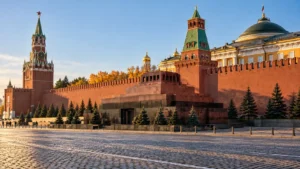 Lenin’s Mausoleum Moscow – about 250 m away (~4 min walk) · typical visit: 30–60 minutes including the queue; a few minutes inside
 GUM Moscowabout 250 m away (~4 min walk) · typical visit: 1–2 hours
Metro stations near St. Basil’s Cathedral Moscow
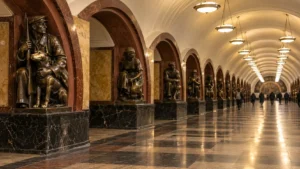 Ploshchad Revolyutsii Metro Stationabout 450 m away (~8 min walk)
 Okhotny Ryad Metro Stationabout 700 m away (~11 min walk)
 Kitay-Gorod Metro Stationabout 700 m away (~12 min walk)
Restaurants and cafes near St. Basil’s Cathedral Moscow
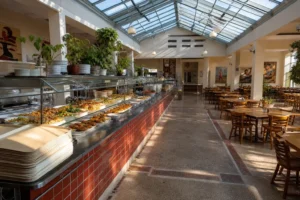 Stolovaya 57about 250 m away (~4 min walk)
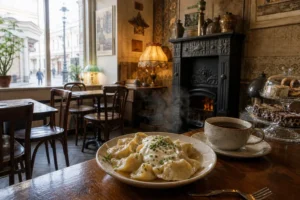 Varenichnaya No. 1about 450 m away (~8 min walk)
 Kappo Hiroki Arakawaabout 650 m away (~10 min walk)
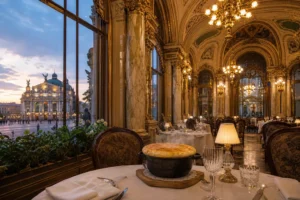 SAVVAabout 650 m away (~11 min walk)
Nightlife near St. Basil’s Cathedral Moscow
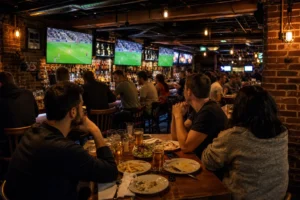 Papa's Barabout 600 m away (~10 min walk)
 Alexey Kozlov Clubabout 900 m away (~15 min walk)
Hotels near St. Basil’s Cathedral Moscow
 Hotel Baltschug Kempinski Moscowabout 500 m away (~8 min walk)
 Four Seasons Hotel Moscowabout 650 m away (~10 min walk)
 Hotel Metropol Moscowabout 650 m away (~11 min walk)
Events and traditions near St. Basil’s Cathedral Moscow
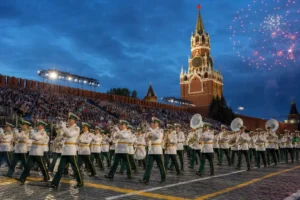 Spasskaya Tower Military Music Festivalabout 200 m away (~3 min walk)
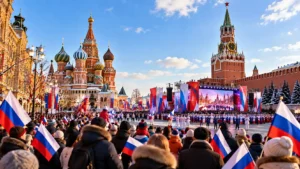 National Unity Day in Moscowabout 200 m away (~3 min walk)
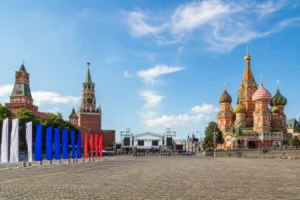 Russia Day in Moscowabout 200 m away (~3 min walk)
Related guides
 How to visit Zaryadye Park: Free Entry, the Bridge and Pavilions
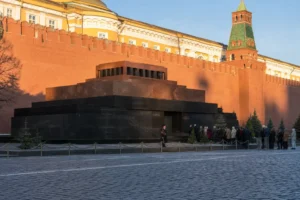 How to visit Lenin’s Mausoleum: Hours, Queue and Strict Rules
 How to visit Red Square: Access, Entrances and What’s Nearby
 How to visit St. Basil’s Cathedral: Tickets, Hours and Entrance
 Ivan the Great Bell Tower Moscow: Climb, Views and Kremlin Tickets
Browse more: More in Tverskoy · All Churches · All Sightseeing
FAQ: St. Basil’s Cathedral Moscow
Is St. Basil’s Cathedral part of the Kremlin?
No. It stands on Red Square, outside the Kremlin walls, and is run by the State Historical Museum. The Kremlin has its own tickets and entrances; see the Moscow Kremlin article.
Can you go inside St. Basil’s Cathedral?
Yes. It is a museum with ten churches and temporary exhibitions, and the interior needs a ticket. The outside is free to see from Red Square.
Why is it called St. Basil’s Cathedral?
Its official name is the Cathedral of the Intercession on the Moat. It became known by the name of Basil the Blessed after a chapel was added in 1588 over his burial place.
How long does a visit take?
About 45 minutes to an hour and a half inside, depending on how long you spend in the exhibition rooms. Add time for photographs outside.
Is it an active church?
It is mainly a museum, though church services are held on some feast days. Check with the museum if you want to attend a service.
Do I need a guide?
Not necessarily. An audio guide is available for an extra fee, and the museum organizes its own tours. See the tips for the rule on outside guides.
Is it suitable for wheelchair users?
Only partly. The first floor has high steps and the second floor is not accessible. See the accessibility section for details.
Which sights near it can I combine with the visit?
Red Square, GUM and the State Historical Museum are all within a few minutes' walk. The Kremlin is also close but needs a separate ticket and entrance.
* Affiliate link: as an Amazon Associate we earn from qualifying purchases at no extra cost to you.
Discover More of Moscow with Our Travel Tips
Get practical Moscow travel tips, new destination guides and useful updates on attractions, opening hours and prices. Plan your visit with clear, helpful information delivered to your inbox.
Moscow Vibes is a one-person project. A coffee keeps it going
Last updated: October 6, 2026.
How we research and update our guides
About this guide: AI assistance and accuracy
This guide is created with the help of AI and is based on official sources where available. Mistakes can still happen. Opening hours, prices, rules and other details are given to the best of our knowledge as of the date shown and can change without notice. It offers general recommendations only, not professional, legal or travel advice. Please confirm important details with the official source before you travel; you are responsible for your own plans and decisions.
International sanctions affect payments between Russia and many other countries. In practice, cards issued in the EU, the UK, the US and several other countries often do not work in Russia, Russian cards usually do not work abroad, and some booking platforms, airlines and payment providers limit or suspend their services for Russia. The situation changes frequently. We do not give legal or financial advice, and this site does not encourage anyone to break or circumvent sanctions. Whatever you plan, you are responsible for following the laws and regulations that apply to you, including those of your country of residence and citizenship. Many travelers still organise their stay lawfully. It is worth asking your bank or payment provider what is currently permitted, contacting hotels, tour operators and carriers directly about the payment methods they accept, and checking which services are open to customers from your country. Clarify payment, cancellation and refund terms before you commit to a booking, and keep your plans flexible. Partner links on this site may not be available in every country, and prices, availability and rules in our guides can differ from what you see when you book.Paying for your trip: please read
Report an issue on this page

Take this guide with you
Get a free PDF of this guide to print or read offline: key facts, tips and a map link on a few clean pages.