
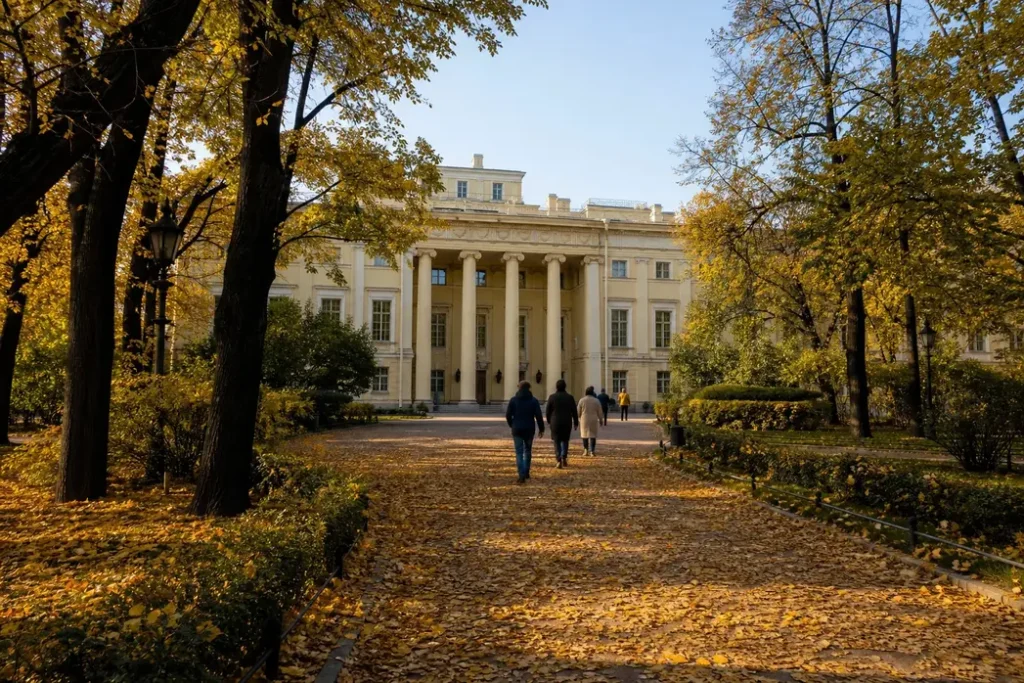
The State Museum of Oriental Art Moscow is one of the largest museums of Oriental art in the world, set in the Lunin House, a classical mansion of the early 19th century on Nikitsky Boulevard, about ten minutes’ walk from Red Square. Founded in 1918 as the Museum of the East, it has been in this building since 1960.
The galleries cover China, Japan, Korea, Iran, India, Central Asia, the Caucasus and Siberia, and the museum also has an exhibition devoted to Nicholas Roerich. This guide explains the opening hours and ticket categories published by the museum, what each part of the collection shows, which galleries suit a short visit, how the museum’s other sites differ and how to reach it from Arbatskaya Metro.
Quick Facts
| Russian name | Государственный музей Востока |
|---|---|
| Built / opened | 1918 |
| Architect(s) | Domenico Gilardi (the architect of the Lunin House, built in the early 19th century, according to the museum's site) |
| Address | Nikitsky Boulevard 12A, Moscow 119019 (Lunin House) |
| District | Arbat |
| Metro | Arbatskaya (Line 3, dark blue, and Line 4, light blue, about 500 meters, a walk of roughly 6 to 7 minutes (estimate)) Tverskaya (Line 2, green, about 950 meters, a walk of roughly 12 minutes (estimate)) Pushkinskaya (Line 7, purple, about 1 km, a walk of roughly 12 to 15 minutes (estimate)) |
| Opening hours | The museum's site lists Tuesday, Friday, Saturday and Sunday 11:00 to 20:00, Wednesday and Thursday 12:00 to 21:00 and closed on Monday, with the ticket office closing 40 minutes before closing time on most days (as of October 2026 – check the official site). |
| Admission | The official site lists a moderate price (₽₽) for foreign citizens, a budget price (₽) for children over 7, students and pensioners, and free entry for children under 7 and for some categories; check the official site for the current rates. |
| Best time to visit | Weekday afternoons are the quietest, and weekends and exhibition openings are busier. The museum is open until 21:00 on Wednesday and Thursday and until 20:00 on other days, and closed on Monday. It works all year and suits a rainy or cold day; see the Moscow in the Rain: Indoor Sightseeing Itinerary. |
| Recommended duration | About 1.5 to 2 hours |
| Website | orientmuseum.ru/?lang=en |
| Last updated | October 9, 2026 |
What Is (and Isn't) Part of a Visit to State Museum of Oriental Art Moscow?
| Part | Status | Notes |
|---|---|---|
| The permanent galleries in the Lunin House | Included in the standard ticket | The main display of art from China, Japan, Korea, Iran, India, Central Asia, the Caucasus and Siberia. |
| The Roerich exhibition | Separate ticket or institution | Part of the museum since 2017; check its location and whether it needs a separate ticket. |
| The branch at VDNKh (Pavilion 13) | Separate ticket or institution | Listed on the museum's site with its own hours and ticket office. |
| The North Caucasian branch | Separate ticket or institution | A branch in another region, not part of the Moscow visit. |
| Lectures, dance and children's classes | Separate ticket or institution | Events and studios run by the museum, with their own schedules. |
| The Pushkin Museum of Fine Arts | Outside / not part of it | A different museum nearby on Volkhonka Street; do not confuse it with this one. |
Why Visit State Museum of Oriental Art Moscow?
The museum shows how far the Asian continent reaches in one set of rooms: Chinese, Japanese and Korean art, metalwork and ceramics from ancient Persia and India, and costumes and art from Tibet and Mongolia, according to a guide. It also covers peoples closer to Russia, with Caucasian ceremonial costumes, carpets and embroideries, tools of Siberian shamans and carvings in walrus ivory from Chukotka.
The building adds to the visit: the Lunin House was built in the early 19th century by the architect Domenico Gilardi for a private family, and a classical mansion with high rooms is a contrast to the objects. The museum is small enough for a relaxed visit of an hour or two, and it is rarely crowded.
How State Museum of Oriental Art Moscow Is Laid Out
The main building is the Lunin House at Nikitsky Boulevard 12A, a mansion on the Boulevard Ring in the center, and the permanent display fills its halls with galleries for the different regions of the East. A museum shop and the ticket office are on the ground floor.
The museum also has other sites: its website lists a branch at VDNKh, in Pavilion 13, and a North Caucasian branch, each with its own address and hours, and a Roerich museum was created as part of the museum in 2017. Check the official site for which sites are open and whether tickets are shared, and start with the main building, which is the easiest to reach from Arbatskaya.
Highlights of State Museum of Oriental Art Moscow
The Lunin House
The museum's main building is a classical mansion of the early 19th century, a private residence built for the Lunin family by the architect Domenico Gilardi according to the museum, and one of its owners, Mikhail Lunin, was a soldier, poet and Decembrist. The building was taken over after the revolution and given to the museum, which has been here since 1960. Look at the facade and the high rooms as part of the visit.
Tip: Look at the facade from the boulevard before going in.
China, Japan and Korea
The galleries of Chinese, Japanese and Korean art form the core of the permanent display, with paintings, clothing, everyday objects and decorative art, according to a guide. These rooms are among the most visual and appeal to a general visitor. Labels are mostly in Russian, so a translation app helps. Check which galleries are open on the day.
Tip: Use a translation app on the labels, since English text is limited.
Iran, India and South-East Asia
The museum shows metalwork and ceramics from ancient Persia, India and South-East Asia, along with textiles and costumes. They give a sense of the museum's range across the continent. Allow time to look at small objects, which reward close attention.
Tip: Look at the small metal and ceramic objects up close.
The Caucasus and Central Asia
Caucasian ceremonial costumes, carpets, embroideries and metalwork are among the museum's strengths, with Central Asian textiles alongside. These rooms are bright with color and pattern. They are an easy introduction to the peoples closer to Russia's borders. Check the current arrangement of the halls.
Tip: Look for the carpets and ceremonial costumes, which are the most colorful items.
Siberia and the Far North
The museum shows carvings in walrus ivory from Chukotka and tools of Siberian shamans, which give a window into the cultures of Siberia and the Far North of Russia. These are among the less familiar items for foreign visitors. Allow a short stop to read the labels.
Tip: Ask at the ticket office if a gallery of these items is open, since halls are rearranged.
Nicholas Roerich
The museum has an exhibition dedicated to the work of Nicholas Roerich, and the Nicholas Roerich Museum was established as part of the museum in 2017. It shows the painter's Asian-themed works. Check whether it is in the main building or at another site, and whether it needs a separate ticket.
Tip: Check the location of the Roerich exhibition on the official site.
Atmosphere
The museum is calm and unhurried: a classical mansion with high ceilings, tall windows, polished floors and glass cases where carpets, costumes and bronzes glow under soft light. Visitors are mostly Muscovites, students and groups with guides, moving quietly from room to room.
Weekday afternoons are quiet, and weekends and exhibition openings bring more people. The sound is limited to footsteps and the murmur of guides, and the building has a faintly old-fashioned feel. The museum is a short walk from the busy Arbat streets but feels removed from them.
History of State Museum of Oriental Art Moscow
The State Museum of Oriental Art was established as the Museum of the East in 1918, in a Moscow that had no centers of Oriental studies at the time, and it was housed in a mansion on Nikitsky Boulevard that had belonged to the Lunin family. The Lunin House was built in the early 19th century by the architect Domenico Gilardi, and one of its owners, Mikhail Lunin, was a soldier, poet and Decembrist.
After the revolution the mansion was nationalized and given to the museum. The museum changed premises several times and has been in the Lunin House on Nikitsky Boulevard since 1960. It holds one of the largest collections of the art of the peoples of the East in Russia, though sources give very different counts, from about 40,000 to about 150,000 items.
In 2017 the Nicholas Roerich Museum was established as part of the museum, and the museum has branches at VDNKh and in the North Caucasus, according to its site. Dates and details should be checked against the museum’s official site, and this history is shorter than requested because few facts could be verified.
Tickets and Booking for State Museum of Oriental Art Moscow
| Ticket | Price | Includes |
|---|---|---|
| Entry ticket for foreign citizens | a moderate price (₽₽); check the current price | Entry to the permanent display in the main building. |
| Reduced ticket | a budget price (₽); check the current price | For schoolchildren over 7, students, pensioners and members of the Russian military historical society, according to the official site. |
| Children under 7 | Free | Free entry for children under 7 regardless of nationality; some other categories are also free. |
| Audioguide | a budget price (₽); check the current price | An audioguide with a deposit at the upscale level (₽₽₽) or a document, which must be returned before the ticket office closes. |
Tickets. Tickets are sold at the museum’s ticket office and online according to the museum’s site, and no more than five tickets can be bought in one order, according to a guide. The family ticket is for Russian citizens only, and a free day is offered for under-18s and students on the fourth Thursday of each month. Rates for Russian citizens and concessions differ, so check the official site orientmuseum.ru for all categories.
Payment. Cash in rubles is the safe option. Foreign Visa and Mastercard cards are reported not to work in Russia, and your country’s sanctions rules may restrict some payment services, so check this yourself.
Plan and Book
Suggested itineraries State Museum of Oriental Art Moscow
1.5 to 2 hours
Walk from Arbatskaya Metro along Nikitsky Boulevard to the Lunin House, see the galleries of China, Japan and Korea first, then the Caucasus and Siberia, and finish at the museum shop.
Half day in the center
Visit the museum in the morning and walk to Arbat and the Boulevard Ring, following the Arbat and New Arbat Walking Itinerary, with lunch on the way.
Arts afternoon
See the museum, then walk toward Patriarch's Ponds and the boulevards, following the Patriarch's Ponds and Tverskoy Boulevard Walking Itinerary, for a second cultural stop.
How to Get to State Museum of Oriental Art Moscow
Take the Metro to Arbatskaya (Line 3, dark blue, and Line 4, light blue), about 500 meters away, and walk along Nikitsky Boulevard, roughly 6 to 7 minutes; Tverskaya (Line 2) and Pushkinskaya (Line 7) are longer walks. The museum is at Nikitsky Boulevard 12A.
- On foot: the museum is about 10 minutes from Red Square and close to Arbat, according to the museum.
- By taxi: ask for Nikitsky Boulevard 12A, the Museum of Oriental Art.
- Orientation: look for the classical mansion set back from the boulevard.
Accessibility
The official site lists free entry for disabled persons and for the persons accompanying them; other accessibility facilities such as lifts and ramps were not verified, so check orientmuseum.ru or call the museum before you go.
Food Nearby
The streets around Arbat, Nikitsky Boulevard and the Boulevard Ring have many cafes and restaurants, and the museum has a shop; the exact venues were not verified. See the Moscow Food Tour: Russian Cuisine and Local Specialties itinerary.
What to Bring
Bring a translation app for the Russian labels, cash in rubles and a passport or another document if you take an audioguide, which needs a deposit or a document.
Best Views and Photo Spots of State Museum of Oriental Art Moscow
The facade of the Lunin House
A classical mansion with columns and a pale facade behind trees on Nikitsky Boulevard.
Best time: Morning light, when the facade is lit.
Nikitsky Boulevard
A tree-lined stretch of the Boulevard Ring with the museum behind the trees and walkers on the path.
Best time: Autumn colors or early morning.
The museum garden entrance
The approach to the mansion with its steps and railings, a calm frame for the building.
Best time: Midday, when the light is even.
The carpet and costume galleries
Bright carpets and ceremonial costumes in glass cases lit softly; check photography rules first.
Best time: Weekday afternoons, when the halls are quiet.
Photography Rules
Photography rules differ by hall and exhibition, and some displays may need a permit or not allow photographs, so follow the signs and ask staff. Flash and tripods are generally not allowed in the halls, and drones must not be flown near the center.
Family Suitability
Suitable for children from about school age, who often enjoy the costumes, weapons and carvings, and children under 7 enter free; labels are mostly in Russian. The museum also runs children's studios. Stroller access was not verified, so check with the museum.
Moscow Vibes Tips
- Check the official site for which branch holds the exhibition you want, since the museum has several sites.
- Visit on Wednesday or Thursday for the longest hours, until 21:00.
- Take a document with you if you plan to use an audioguide, since it needs a deposit or a document.
- Check the free day for under-18s and students on the fourth Thursday of the month, which can be busier.
- Combine the museum with a walk to Arbat or Patriarch's Ponds, since both are close.
- Do not confuse it with the Pushkin Museum of Fine Arts, which is a different museum.
Explore Nearby State Museum of Oriental Art Moscow
Sights near State Museum of Oriental Art Moscow
 Moscow State Conservatoryabout 300 m away (~5 min walk) · typical visit: About 2 to 3 hours for a concert
Main image: AI-generated illustration. It may not show the place exactly as it looks.
 Maxim Gorky House Museum Moscowabout 300 m away (~5 min walk) · typical visit: About 1 to 1.5 hours
Main image: AI-generated illustration. It may not show the place exactly as it looks.
 Great Ascension Church Moscowabout 300 m away (~5 min walk) · typical visit: About 30 to 45 minutes
Main image: AI-generated illustration. It may not show the place exactly as it looks.
 Schusev State Museum of Architecture Moscowabout 650 m away (~10 min walk) · typical visit: About 1.5 to 2 hours
Main image: AI-generated illustration. It may not show the place exactly as it looks.
 Vernadsky State Geological Museum Moscowabout 750 m away (~13 min walk) · typical visit: About 2 to 3 hours
Main image: AI-generated illustration. It may not show the place exactly as it looks.
 Vakhtangov Theatre Moscowabout 900 m away (~15 min walk) · typical visit: About 3 hours for a performance
Main image: AI-generated illustration. It may not show the place exactly as it looks.
Metro stations near State Museum of Oriental Art Moscow
 Arbatskaya Metro Stationabout 600 m away (~10 min walk)
Main image: AI-generated illustration. It may not show the place exactly as it looks.
 Aleksandrovsky Sad Metro Stationabout 700 m away (~12 min walk)
Main image: AI-generated illustration. It may not show the place exactly as it looks.
 Alexandrovsky Sad Metro Stationabout 700 m away (~12 min walk)
Main image: AI-generated illustration. It may not show the place exactly as it looks.
Restaurants and cafes near State Museum of Oriental Art Moscow
 Jean-Jacquesabout 50 m away (~1 min walk)
Main image: AI-generated illustration. It may not show the place exactly as it looks.
 Severyaneabout 400 m away (~7 min walk)
Main image: AI-generated illustration. It may not show the place exactly as it looks.
 Elevenabout 450 m away (~8 min walk)
Main image: AI-generated illustration. It may not show the place exactly as it looks.
 Ikraabout 600 m away (~9 min walk)
Main image: AI-generated illustration. It may not show the place exactly as it looks.
Nightlife near State Museum of Oriental Art Moscow
 Rule Taproomabout 700 m away (~12 min walk)
Main image: AI-generated illustration. It may not show the place exactly as it looks.
 Rhythm & Blues Cafeabout 750 m away (~12 min walk)
Main image: AI-generated illustration. It may not show the place exactly as it looks.
Hotels near State Museum of Oriental Art Moscow
 Cheers Arbat Mini-Hotelabout 200 m away (~3 min walk)
Main image: AI-generated illustration. It may not show the place exactly as it looks.
 Arbat House Hotelabout 350 m away (~5 min walk)
Main image: AI-generated illustration. It may not show the place exactly as it looks.
 Stella Di Mosca Hotelabout 400 m away (~7 min walk)
Main image: AI-generated illustration. It may not show the place exactly as it looks.
Events and traditions near State Museum of Oriental Art Moscow
 Moscow Tea Party Festivalabout 800 m away (~13 min walk)
Main image: AI-generated illustration. It may not show the place exactly as it looks.
 Easter Gift Festival in Moscowabout 800 m away (~13 min walk)
Main image: AI-generated illustration. It may not show the place exactly as it looks.
 Moscow Spring Festivalabout 800 m away (~13 min walk)
Main image: AI-generated illustration. It may not show the place exactly as it looks.
Related guides
 Arbat and New Arbat Walking Itinerary: Route, Sights and Timings
Main image: AI-generated illustration. It may not show the place exactly as it looks.
 Arbat: Old Arbat Street, Tsoi Wall and Pushkin’s Apartment
Main image: AI-generated illustration. It may not show the place exactly as it looks.
 Patriarch’s Ponds and Tverskoy Boulevard Walking Itinerary: Route
Main image: AI-generated illustration. It may not show the place exactly as it looks.
 Red Square and Moscow Kremlin Walking Itinerary: Route and Timings
Main image: AI-generated illustration. It may not show the place exactly as it looks.
 Moscow in the Rain: Indoor Sightseeing Itinerary: Dry Stops and Art
Main image: AI-generated illustration. It may not show the place exactly as it looks.
Browse more: More in Arbat · All Museums · All Sightseeing
FAQ: State Museum of Oriental Art Moscow
What does the museum show?
Art from China, Japan, Korea, Iran, India, Central Asia, the Caucasus and Siberia, plus an exhibition on Nicholas Roerich.
Which Metro station is closest?
Arbatskaya, about 500 meters and a walk of roughly 6 to 7 minutes.
Is the museum open every day?
No. It is closed on Monday; see the opening hours.
Is the building historic?
Yes. The Lunin House was built in the early 19th century by the architect Domenico Gilardi.
Do foreign visitors pay a different price?
The official site lists the same a moderate price (₽₽) for foreign and Russian citizens, with reduced and free categories; see the tickets section.
Is there a VDNKh branch?
The museum's site lists a branch in Pavilion 13 at VDNKh, with its own hours and tickets.
Do I need a guide?
No, but an audioguide is available for a fee and excursions can be booked through the museum.
Can I pay with a foreign card?
Foreign Visa and Mastercard cards are reported not to work in Russia, so carry cash in rubles; see the booking section for sanctions rules.
* Affiliate link: as an Amazon Associate we earn from qualifying purchases at no extra cost to you.
Discover More of Moscow with Our Travel Tips
Get practical Moscow travel tips, new destination guides and useful updates on attractions, opening hours and prices. Plan your visit with clear, helpful information delivered to your inbox.
Moscow Vibes is a one-person project. A coffee keeps it going
Last updated: October 9, 2026.
How we research and update our guides
About this guide: AI assistance and accuracy
This guide is created with the help of AI and is based on official sources where available. Mistakes can still happen. Opening hours, prices, rules and other details are given to the best of our knowledge as of the date shown and can change without notice. It offers general recommendations only, not professional, legal or travel advice. Please confirm important details with the official source before you travel; you are responsible for your own plans and decisions.
International sanctions affect payments between Russia and many other countries. In practice, cards issued in the EU, the UK, the US and several other countries often do not work in Russia, Russian cards usually do not work abroad, and some booking platforms, airlines and payment providers limit or suspend their services for Russia. The situation changes frequently. We do not give legal or financial advice, and this site does not encourage anyone to break or circumvent sanctions. Whatever you plan, you are responsible for following the laws and regulations that apply to you, including those of your country of residence and citizenship. Many travelers still organise their stay lawfully. It is worth asking your bank or payment provider what is currently permitted, contacting hotels, tour operators and carriers directly about the payment methods they accept, and checking which services are open to customers from your country. Clarify payment, cancellation and refund terms before you commit to a booking, and keep your plans flexible. Partner links on this site may not be available in every country, and prices, availability and rules in our guides can differ from what you see when you book.Paying for your trip: please read
Report an issue on this page

Take this guide with you
Get a free PDF of this guide to print or read offline: key facts, tips and a map link on a few clean pages.