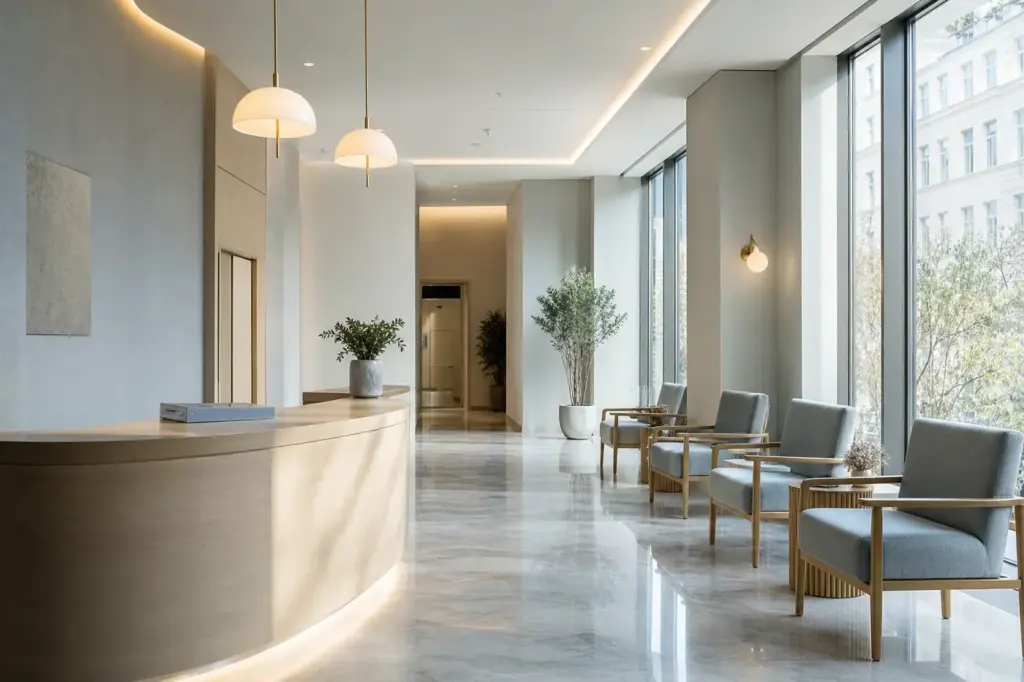
How to Find an English-Speaking Doctor in Moscow is a question most newcomers ask only after something goes wrong, so it helps to know the route before you need it. This guide is for visitors and new residents who want a non-urgent appointment, a prescription or a check-up in English. It takes the steps in the order you would use them. The recommended path is simple: call your insurer’s assistance line, then book a clinic that confirms English-speaking staff.
Availability of English-speaking staff varies by clinic and by specialty, and details change, so confirm everything by phone or on the official clinic website. This is general information, not medical advice. In an emergency, do not search for a doctor: call the emergency services.
Quick answer: Call your insurer's assistance line first, then book a private clinic or medical centre that confirms English-speaking staff. Allow a day or two to arrange; cost level ₽₽ or more. In an emergency, call the emergency services instead.
At a Glance
| Total time | Same day to a few days to arrange, plus 1–2 hours for the visit |
|---|---|
| Typical cost | ₽₽ |
What You Need Before You Start
- Passport and, if you have it, your insurance policy with the assistance phone number
- A working phone with calls and messages (an eSIM set up in advance is the practical option)
- A short list of symptoms, medications, allergies and earlier diagnoses
- A translation app that works offline
- Cash and payment options that work locally
- The address of your accommodation, to give to the clinic and to taxi drivers
Compare Your Options
| Option | Duration | Price | Notes |
|---|---|---|---|
| Insurer assistance line and partner clinic | Same day to a few days | ₽₽ | The recommended start. The assistance line can name clinics with English-speaking staff and explain how payment and claims work. Best for visitors with travel or international health insurance. |
| Private clinic or medical centre with English service | Often within a few days; urgent slots vary | ₽₽₽ | Multi-profile centres offer several specialties in one place and often list the languages of their doctors. Best when you need a specific specialist or tests. Confirm language support when you book. |
| Hotel or landlord recommendation | Same day | ₽₽ | Quick and local. Hotels often know a nearby clinic and can help with the call. Treat the suggestion as a starting point and confirm English-language service with the clinic. |
| List from your embassy or consulate | A few days | ₽₽ | Many embassies publish lists of medical providers used by their citizens. Check your own country's official site. Lists may be out of date, so confirm each entry by phone. |
| Telephone or online consultation | Same day, depending on the provider | ₽₽ | Useful for simple questions and prescriptions follow-up. Availability for foreign visitors and in English varies, and some problems need an in-person examination. |
| State clinic or hospital | Varies | ₽ | Care is available, but English is less common and an interpreter may be needed. Best for emergencies or when you are accompanied by a Russian speaker. Ask your insurer about the options. |
₽ budget · ₽₽ moderate · ₽₽₽ upscale · ₽₽₽₽ splurge. Price levels are estimates compared with typical prices for visitors.
Step-by-Step Instructions
Step 1: Decide whether it is an emergency
If someone is seriously ill or hurt, do not search for a doctor. Call the emergency number, give your exact location first and follow the dispatcher's instructions. The guide to emergency services in Moscow explains how this works. For non-urgent problems, such as persistent symptoms, a prescription or a check-up, continue with the steps below.
Tip: Keep your address saved in your phone so you can read it out or show it.
Step 2: Call your insurer's assistance line
If you have travel or international health insurance, call the assistance number on the policy first. Many insurers can suggest clinics in Moscow where English is available, explain whether they pay the clinic directly or you pay and claim back, and tell you which documents to keep. Have your policy number and a short description of your symptoms ready.
Tip: Ask for the clinic's name in Latin letters and its address in a form you can show in a map app.
Step 3: Ask your hotel or landlord
Hotel front desks and landlords often know nearby clinics and which of them handle foreign patients. Ask for the clinic's name, address, opening hours and whether the staff can speak English. Treat this as a lead, then confirm the details with the clinic itself, since language support and opening hours can change without notice.
Relying on the phone all day? A power bank may be worth having.
Tip: Ask whether the clinic is a short walk or needs a taxi, especially in winter.
Step 4: Check clinic websites for English-language service
Look at the official websites of private clinics and multi-profile medical centres in Moscow. Check whether English is mentioned for appointments and consultations, whether doctors are listed with their languages and specialties, and whether the clinic takes international patients. Websites and availability change, so confirm by phone or through the contact form.
Tip: Choose by specialty first, and then ask whether the doctor or an interpreter will be present.
Step 5: Book the appointment
Call or use the online form. State your language, your symptoms and the kind of doctor you need, for example a general practitioner or a dermatologist, and ask whether an interpreter is available. Ask about opening hours, which documents to bring and how payment works. Request the appointment confirmation in writing, in English if possible.
Tip: Ask for the entrance description, because large medical centres often have several buildings.
Step 6: Prepare documents and a symptom note
Bring your passport, the insurance policy and the assistance number. Write down your symptoms, when they started, your allergies, earlier diagnoses and the medicines you take, using the generic name of each active ingredient rather than only the brand. Use a translation app to prepare a short note in Russian that you can show if the conversation gets difficult.
Staying a few nights? A sleep mask could be worth bringing.
Tip: Photograph medicine packaging, since brand names often differ between countries.
Step 7: Attend and ask for written records
Arrive a little early to register. During the visit, ask the doctor to explain the diagnosis and the next steps in simple words, and confirm that you understood. Afterwards, ask for a written summary, any test results and prescriptions, with the names of the medicines written clearly. Keep the invoice and receipts, because insurers usually want them.
Tip: Ask for a digital copy of results, so you can translate them later or show another doctor.
Step 8: Handle medicines and follow-up
Take the prescription to a pharmacy and ask the pharmacist to confirm the active ingredient and how to take it. Brand names often differ from your home country, so show the generic name. Ask the doctor whether a follow-up visit is needed and how to reach the clinic if symptoms change. Send the documents to your insurer promptly.
Tip: Ask the doctor to write the dosage instructions down, in English if possible.
Common Mistakes to Avoid
- Searching for a doctor during an emergency: if the situation is serious, call the emergency services immediately and do not spend time comparing clinics.
- Assuming that English signs or a website in English mean English-speaking doctors: ask specifically whether the doctor or an interpreter will be in the room.
- Skipping the insurer call: some insurers want to be told before treatment, and a late call can complicate payment or claims.
- Describing medicines by brand name only: brand names differ between countries, so write down the generic name of each active ingredient.
- Relying on machine translation for important decisions: if you are asked to agree to a procedure, ask for an interpreter or a written explanation first.
- Leaving without invoices and receipts: insurers normally need itemised documents to refund the costs.
- Choosing a clinic by language alone: check that it has the specialty you need, and confirm opening hours before you go.
Tickets, Payment and Booking
Appointments are made directly with the clinic by phone, a contact form or its official app, and some insurers arrange them for you. Private clinics are typically at cost level ₽₽ to ₽₽₽.
- Payment: bank cards issued outside Russia currently do not work in Russia, neither in shops nor at ATMs, and Apple Pay or Google Pay does not work with them either. Plan for cash and for payment options that work locally. Ask your insurer whether it pays the clinic directly, and ask the clinic which payment methods it accepts before the visit.
- Records: keep itemised invoices and receipts for any insurance claim.
- Intermediaries: be wary of people who offer priority appointments for a fee. Book through the clinic itself or through your insurer.
Moscow Vibes Tips
- Ask the clinic for a map pin or a short description of the entrance. Large medical centres often have several buildings, and finding the right door can take longer than the walk itself.
- Keep calls and messages working before you need them. An eSIM is the practical option, and a newly activated eSIM can be restricted for about 24 hours, so set it up in advance. The guide to mobile internet for foreign visitors explains the options.
- Download an offline translation app and a map before the visit. The guide to navigating Moscow offline with maps and translation apps explains how, which helps in a waiting room with weak signal.
- Weekday mornings are usually the easiest time to get an appointment. Ask the clinic about evening and weekend hours if your schedule is tight.
- If you need tests, ask when the results are ready and whether you can receive them by email in a readable format. A digital copy is easier to translate or show to another doctor later.
Keep reading
Next steps
 How-ToHow to visit the Armoury Chamber and the Diamond Fund: What to SeeHow to visit the Armoury Chamber and the Diamond Fund: timed sessions, separate tickets, the Borovitskaya entrance, what to see and the no-photo rule.
 How-ToHow to Move a Dog or Cat to Russia: Papers, Flights and ArrivalHow to move a dog or cat to Russia: required papers, vaccination checks, flight options and airport arrival, plus which offices to confirm with.
 How-ToHow to transfer between Moscow railway stations: Metro, taxi and timingHow to transfer between Moscow railway stations via metro or taxi. Seven of nine terminals connect to the Circle Line. Plan 30 minutes for…
FAQ
Do state clinics have English-speaking doctors?
English is less common in state clinics than in private medical centres, and an interpreter or a Russian-speaking companion may be needed. For emergencies, any hospital will treat you. For routine matters, most foreign visitors choose a private clinic. Ask your insurer which providers it recommends.
How quickly can I get an appointment?
Private clinics can often offer a slot within a few days, sometimes sooner for common problems, but availability varies by clinic and specialty. Call rather than relying on the website, and say clearly that you need English. For urgent problems, use the emergency services.
Will my travel insurance cover the visit?
That depends on your policy. Some insurers pay the clinic directly, others refund you after the visit. Call the assistance line before the appointment, ask what is covered and which documents you need, and keep every invoice and receipt.
How much does a doctor's visit cost?
Private clinics are typically at cost level ₽₽ to ₽₽₽, and tests or specialists add to the total. Prices differ by clinic and change, so ask for the cost of the consultation and any tests before you confirm. See the Tickets, Payment and Booking section for payment options.
Can I get a prescription for my usual medication?
A doctor can assess your situation and may prescribe a suitable medicine, but rules differ between countries and the same drug may carry another name. Bring your packaging or a note of the active ingredient, and ask the doctor and the pharmacist to confirm. This is general information, not medical advice.
What if I need a specialist?
Many private medical centres have several specialties under one roof. Ask the clinic when you book whether the specialist speaks English or whether an interpreter is available, and whether you need a referral from a general practitioner first.
Can I find a doctor for a child?
Many clinics have paediatric specialists, and some are used to foreign families. Ask when booking whether a paediatrician with English-language service is available, and bring the child's vaccination record and any medication list.
Will the clinic provide an interpreter?
Some clinics have English-speaking doctors or coordinators, others arrange an interpreter on request. Ask when you book whether this is included and who arranges it. Avoid relying on a friend for sensitive medical information if a professional interpreter is available.
Discover More of Moscow with Our Travel Tips
Get practical Moscow travel tips, new destination guides and useful updates on attractions, opening hours and prices. Plan your visit with clear, helpful information delivered to your inbox.
Moscow Vibes is a one-person project. A coffee keeps it going
More in this section: Living in Moscow
Get a free PDF of this guide to print or read offline: key facts, tips and a map link on a few clean pages.
Take this guide with you
About this page
Report an issue on this page
Paying for your trip: please read
Payments and bookings between Russia and many other countries are currently restricted. In practice, cards issued in the EU, the UK, the US and several other countries often cannot be used in Russia, Russian cards usually cannot be used abroad, and some booking platforms, airlines and payment providers limit or pause their services for Russia. The situation changes frequently.
We do not give legal or financial advice, and this site does not encourage anyone to break any rule that applies to them. Whatever you plan, you are responsible for following the laws and regulations that apply to you, including those of your country of residence and citizenship.
Many travelers still organise their stay without problems. It is worth asking your bank or payment provider what is currently possible, contacting hotels, tour operators and carriers directly about the payment methods they accept, and checking which services are open to customers from your country. Clarify payment, cancellation and refund terms before you commit to a booking, and keep your plans flexible.
Partner links on this site may not be available in every country, and prices, availability and rules in our guides can differ from what you see when you book.
How we research and update our guides
About this guide: AI assistance and accuracy
This guide is created with the help of AI and is based on official sources where available. Mistakes can still happen. Opening hours, prices, rules and other details are given to the best of our knowledge as of the date shown and can change without notice. It offers general recommendations only, not professional, legal or travel advice. Please confirm important details with the official source before you travel; you are responsible for your own plans and decisions.
* Affiliate link: as an Amazon Associate we earn from qualifying purchases at no extra cost to you.