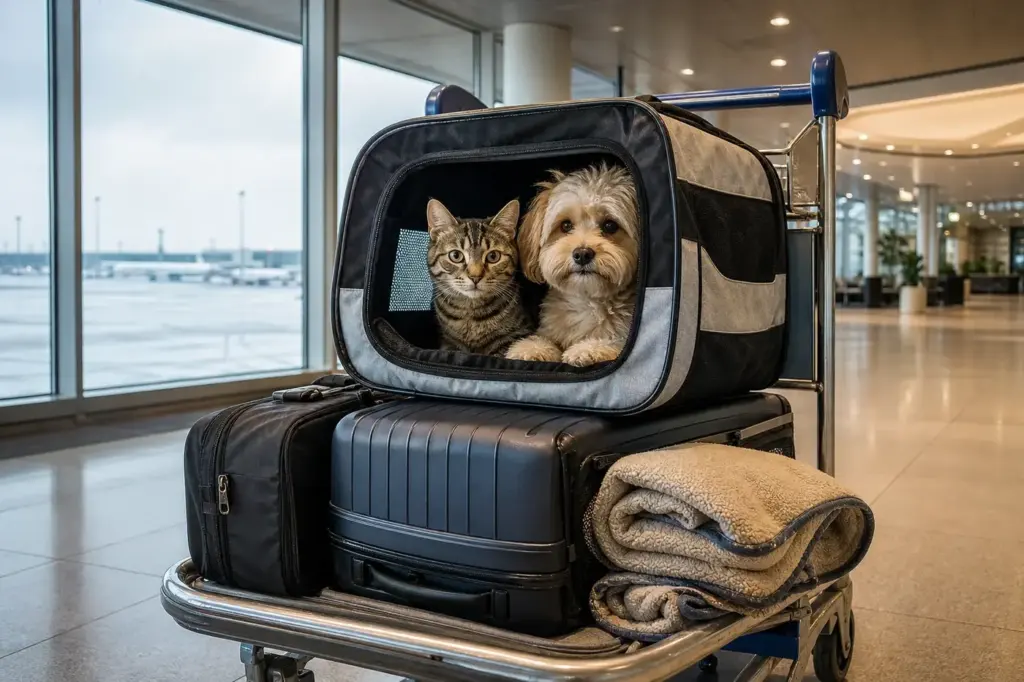
This guide on how to move a dog or cat to Russia is for people relocating to Moscow with a pet, and for long-stay visitors who do not want to leave the animal behind. It walks you through the sequence that matters: the animal’s identification and vaccinations, the veterinary certificate, the flight, and the veterinary check on arrival. Cats and dogs follow the same basic route.
The simplest route is to fly in with your pet on the same journey, arrive at an airport with a veterinary control point, and have the paperwork prepared well ahead in your departure country. Requirements are set by the Russian veterinary authority and can change, so confirm every detail with the official source before booking.
Quick answer: Prepare one to two months ahead: microchip, rabies vaccination, an official veterinary certificate and airline approval, then fly to an airport with a veterinary control point. Cost level ₽₽. Confirm the rules with Rosselkhoznadzor.
At a Glance
| Total time | Plan 1–2 months ahead; allow 1–2 hours for arrival checks |
|---|---|
| Typical cost | ₽₽ |
What You Need Before You Start
- A dog or cat with an ISO-standard microchip (confirm the exact standard with the veterinary authority)
- A rabies vaccination record with dates that fit the current rules
- A veterinary certificate issued by an official veterinarian in your departure country
- Written airline approval for your pet, plus the carrier or crate that airline requires
- Your own passport and entry documents, kept separate from the pet's papers
- Printed and digital copies of every pet document
- A flight into an airport that has a veterinary control point
Compare Your Options
| Option | Duration | Price | Notes |
|---|---|---|---|
| Fly with your pet in the cabin | 1–2 months of preparation; 1–2 hours of checks on arrival | ₽₽ | Best for small cats and dogs that fit under the seat within the airline's weight limit. It means the fewest handovers and the least stress for the animal. Cabin places per flight are limited, so book the pet space early. Recommended wherever size allows. |
| Fly with your pet in the hold as accompanied baggage | 1–2 months of preparation; 1–2 hours of checks on arrival | ₽₽ | For larger dogs. It requires a travel crate that meets the airline's rules, and airlines may restrict hold travel in very hot or cold weather or for flat-faced breeds. Ask how the airline handles the animal between the aircraft and the baggage hall. |
| Send your pet as air cargo | Several days to arrange; transit time depends on the route | ₽₽₽ | The pet travels separately from you through the airline's cargo service. Expect more paperwork and handling, and possibly different arrival steps. Best when you cannot fly on the same flight. Ask both the airline and the veterinary authority what applies. |
| Use a pet relocation company | Several weeks of preparation | ₽₽₽₽ | Companies arrange documents, crates and bookings. Useful for several animals or a complicated departure country. The legal requirements stay the same, so check that the company works through the official channels. |
| Arrive overland by car or train | Depends on the route | ₽₽ | Possible only where the border crossing has veterinary control and the carrier or vehicle rules allow animals. Confirm the crossing, its hours and the documents with the veterinary authority before choosing this route. There are fewer options than by air. |
₽ budget · ₽₽ moderate · ₽₽₽ upscale · ₽₽₽₽ splurge. Price levels are estimates compared with typical prices for visitors.
Step-by-Step Instructions
Step 1: Check the current rules with the official source
Pet entry rules are set by Russia's veterinary authority, Rosselkhoznadzor (the Federal Service for Veterinary and Phytosanitary Surveillance), and they depend partly on the country you travel from and how many animals you bring. As of November 2026, start on the official website or ask the Russian embassy or the veterinary authority in your departure country which certificate form applies. Rules change, so repeat this check shortly before you travel.
Tip: Note the date you checked and keep a printout of the page you relied on.
Step 2: Microchip your pet first
Ask a licensed vet to check that your pet carries an ISO-standard microchip, which is the usual identification expected on pet travel papers. If there is no chip, have one implanted before the rabies vaccination, so the chip number appears on the vaccination record. Check that the same number is written on every document, with no missing digits, because a mismatch is a common reason for delays.
Tip: Ask the vet to scan the chip in front of you and read the number back.
Step 3: Complete the rabies vaccination
Rabies vaccination is the central health requirement for dogs and cats. Rules usually set a minimum waiting period after the shot and a maximum validity window before arrival, so the date matters as much as the vaccine itself. Ask the veterinary authority which interval applies and whether other vaccinations are expected for your animal. A repeat shot can reset the waiting period, so avoid leaving this step late.
Packing for the flight? A travel blanket could be useful.
Tip: Book the vaccination early enough to leave room for a repeat visit if a date turns out to be wrong.
Step 4: Get the veterinary certificate
An official or officially authorised veterinarian in the departure country issues a certificate stating that the animal is healthy, identified and vaccinated. It is normally valid only for a short period before travel, so ask exactly when to book the appointment. In some countries the national veterinary authority must also endorse the certificate. Check names, dates and the chip number before you leave the clinic.
Tip: Ask whether Russia accepts the certificate in English only, and keep several printed copies.
Step 5: Choose a flight and get the airline's approval
Airlines set their own rules on pets: whether animals fly in the cabin or the hold, the maximum weight including the carrier, which breeds are accepted, and temperature limits in very hot or cold weather. Places per flight are limited, so reserve the pet space when you book and ask for written confirmation. Prefer a direct flight to a Moscow airport that has a veterinary check, which avoids extra transit rules.
Settling into the room? A sleep mask may be a useful extra.
Tip: Ask the airline which documents it checks at the departure desk, as these can differ from the Russian ones.
Step 6: Prepare the carrier and the travel day
Use a carrier that meets the airline's size and ventilation rules, and let your pet get used to it for several weeks beforehand. On the day, leave a short gap after the last meal, offer water, and keep the animal calm; do not give sedatives without veterinary advice. Carry the certificate, vaccination record and a set of copies in your hand luggage, never in a checked bag.
Tip: Attach a label with your name, phone number and destination address to the carrier.
Step 7: Go through the veterinary check on arrival
After landing, follow the signs to passport control and ask airport staff where the veterinary control point is, since its position relative to the baggage hall can differ. Present the certificate and vaccination record. The veterinary officer may check the chip, look at the animal and stamp the papers. Keep the pet in its carrier throughout and allow extra time before you can leave the terminal.
Busy rides ahead? A power bank could be useful on the way.
Tip: Keep your own passport documents separate from the pet folder, so you can hand over each set without shuffling.
Step 8: Settle your pet in Moscow
Within the first days, find a local veterinary clinic and show the arrival papers, so your pet has a local record. If you are staying long term, ask the clinic about local registration, vaccination schedules and the rules for dogs in public spaces, since these can differ from your home country. Keep the original certificate and vaccination record safe for future travel.
Tip: Save the clinic's address and opening hours in your phone before the first night.
Common Mistakes to Avoid
- Vaccinating before microchipping: if the chip is implanted after the rabies shot, the vaccination record may not carry the chip number. Chip first, then vaccinate, and check that the number matches on every page.
- Leaving the rabies vaccination to the last weeks: the waiting period after the shot can run out your timeline, and a repeat shot may reset it. Check the interval and plan backwards from your flight date.
- Treating airline approval as Russian approval: the airline's pet confirmation does not replace the veterinary certificate or the arrival check. They are two separate processes with different rules.
- Booking the certificate appointment too early or too late: certificates are usually valid for a limited period. Ask your authority for the exact window and book the visit inside it.
- Packing the pet papers in checked luggage: if the bag is delayed or the pet travels in the hold, you cannot show the documents. Keep originals and copies in your hand luggage.
- Choosing a connection through a country with its own pet rules: a stopover can add a second set of requirements. Prefer a direct flight, or check the transit rules in writing.
- Sedating the animal without veterinary advice: sedatives can be risky at altitude and some airlines refuse sedated animals. Ask your vet about calming options instead.
Tickets, Payment and Booking
There is no ticket for a pet. The costs are separate items: veterinary visits and the certificate in your departure country, the airline’s pet fee, a suitable carrier, and any fee for the veterinary check at the Russian airport.
- Before you leave: settle vet, carrier and airline charges at home, using your own cards and banks.
- On arrival: bank cards issued outside Russia currently do not work in Russia, neither in shops nor at ATMs, and Apple Pay or Google Pay does not work with them either. Carry cash for any on-the-spot fee and ask the airport in advance how it is paid.
- Official channels only: deal with your own vet, the veterinary authority and the airline. Be wary of intermediaries who promise guaranteed clearance or offer papers without an examination.
Moscow Vibes Tips
- Book pet-friendly accommodation before the flight. Many hotels and rental flats in Moscow do not accept animals, and some accept only small ones. Ask in writing before paying a deposit, and see How to book a hotel in Moscow as a foreign visitor for the booking basics.
- Plan the ride from the airport in advance. Some taxi drivers refuse a ride with an animal, so order a larger-category car through a taxi app, mention the pet in the order and keep the carrier closed on the seat beside you. First 24 Hours in Moscow: Airport Arrival and Travel Setup Checklist covers the rest of arrival day.
- Choose your travel day by weather. Airline pet rules can restrict hold travel on very hot or very cold days at either end, and Moscow winters are cold. Spring and autumn are usually the calmest choice; if you must fly in January, keep the carrier covered between the terminal door and the car.
- Keep a pet folder: originals, copies, the chip number, vaccination history and a recent photo on your phone. If the carrier is mishandled or the animal slips away, that photo and number are what staff need first.
- Bring a few days' supply of your pet's usual food and switch to local food gradually. Pet shops and clinics are easy to find in Moscow, but familiar food avoids stomach upsets in the first week.
- Line up an emergency vet before you land. Save the address of a veterinary clinic near your accommodation, check its opening hours and ask whether staff speak English.
Keep reading
Next steps



FAQ
Do I need an import permit to bring a pet to Russia?
For pets travelling with their owner in small numbers, a separate import permit is generally not the main hurdle; the veterinary certificate and the airport check are. Larger numbers, commercial shipments and animals travelling unaccompanied can fall under different rules. Confirm your exact case with Rosselkhoznadzor or the veterinary authority in your departure country before you book anything.
Will my pet be quarantined on arrival?
Quarantine is not normally part of the process when the papers are complete and the animal looks healthy, but the veterinary officer decides on the spot. Missing documents, a mismatched chip number or signs of illness can lead to extra measures or refusal of entry. That is why the preparation steps matter more than anything you do at the airport.
How much does it cost to move a pet to Russia?
Expect several separate cost items: veterinary visits and the certificate, vaccination, a suitable carrier, the airline's pet fee and any fee for the arrival check. Overall the level is ₽₽, rising to ₽₽₽ or more for cargo or relocation companies. Airline and clinic charges differ widely, so ask each for a written quote.
How early should I start preparing?
Allow one to two months in total if your pet is already chipped and vaccinated, and longer if not, because rabies timing and airline pet space both need lead time. Book the flight first, then schedule the certificate appointment inside the validity window your authority gives. Last-minute attempts tend to fail on dates rather than on cost.
Can my pet travel in the cabin?
Often yes for small cats and dogs, if the animal and carrier fit within the airline's weight limit and the carrier fits under the seat. Many airlines allow only a few animals per cabin, and some do not carry animals in the cabin on certain routes. See the options section, then ask your airline in writing.
Can I bring a puppy or kitten?
Very young animals are the difficult case, because the rabies vaccination that the certificate normally confirms cannot be given until a minimum age and then needs a waiting period. Ask the veterinary authority and the airline about minimum age before booking. Waiting until the animal is old enough is usually the practical answer.
I am only visiting Moscow on holiday. Do the same rules apply?
Yes. A short stay does not exempt the animal from the entry checks, and you also need to follow the return rules of your home country, which can include timing for vaccinations and tests. For most holidays, a pet sitter at home is simpler than the whole process.
Can I arrive at night or at the weekend?
Possibly, but the veterinary control point may not run at all hours, and airlines schedule arrivals across the day. Ask the airport or the airline about the opening hours of the veterinary check before choosing a flight, and prefer a daytime weekday arrival so help is available if the papers need attention.
Discover More of Moscow with Our Travel Tips
Get practical Moscow travel tips, new destination guides and useful updates on attractions, opening hours and prices. Plan your visit with clear, helpful information delivered to your inbox.
Moscow Vibes is a one-person project. A coffee keeps it going
Not legal advice. This is general information for visitors. Rules on visas, entry, registration, customs and similar matters change often and can depend on your nationality. Check the official source and, if in doubt, ask your embassy or a qualified adviser.
More in this section: Living in Moscow
Get a free PDF of this guide to print or read offline: key facts, tips and a map link on a few clean pages.
Take this guide with you
About this page
Report an issue on this page
Paying for your trip: please read
Payments and bookings between Russia and many other countries are currently restricted. In practice, cards issued in the EU, the UK, the US and several other countries often cannot be used in Russia, Russian cards usually cannot be used abroad, and some booking platforms, airlines and payment providers limit or pause their services for Russia. The situation changes frequently.
We do not give legal or financial advice, and this site does not encourage anyone to break any rule that applies to them. Whatever you plan, you are responsible for following the laws and regulations that apply to you, including those of your country of residence and citizenship.
Many travelers still organise their stay without problems. It is worth asking your bank or payment provider what is currently possible, contacting hotels, tour operators and carriers directly about the payment methods they accept, and checking which services are open to customers from your country. Clarify payment, cancellation and refund terms before you commit to a booking, and keep your plans flexible.
Partner links on this site may not be available in every country, and prices, availability and rules in our guides can differ from what you see when you book.
How we research and update our guides
About this guide: AI assistance and accuracy
This guide is created with the help of AI and is based on official sources where available. Mistakes can still happen. Opening hours, prices, rules and other details are given to the best of our knowledge as of the date shown and can change without notice. It offers general recommendations only, not professional, legal or travel advice. Please confirm important details with the official source before you travel; you are responsible for your own plans and decisions.
* Affiliate link: as an Amazon Associate we earn from qualifying purchases at no extra cost to you.