
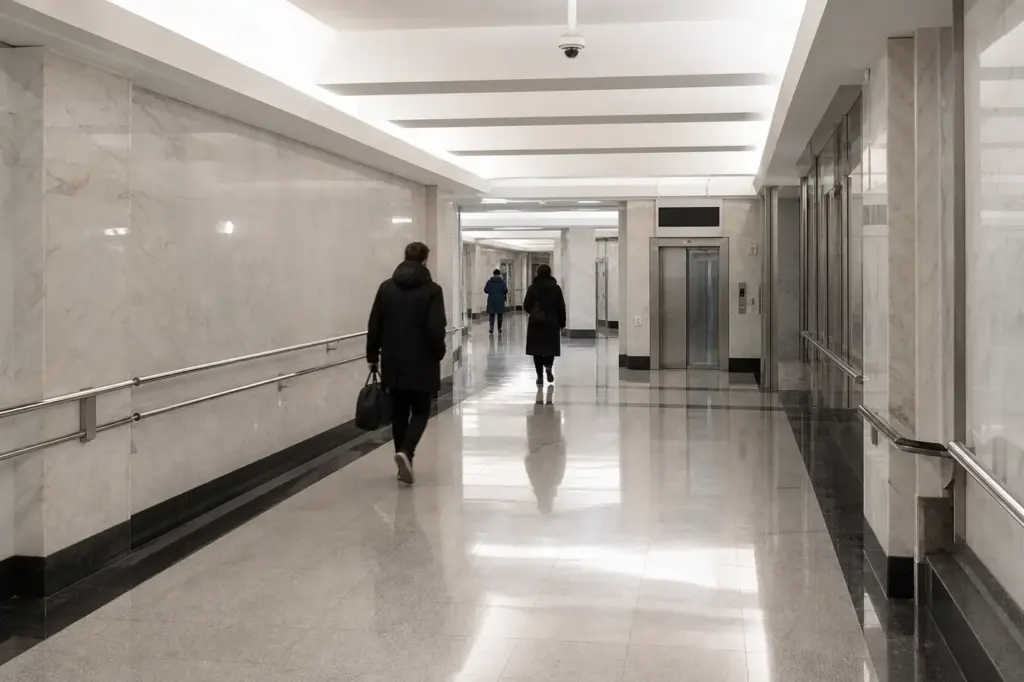
This guide is for visitors with limited mobility—including wheelchair users, people with walking difficulties, and travelers with reduced stamina. Moscow‘s Metro is beautiful and fast, but most of its 196 stations were built without modern accessibility features. You’ll learn which stations have elevators, how to request assistance, when to use buses instead, and what to expect when you arrive.
The honest answer: if you use a wheelchair or have difficulty with stairs, buses are a more reliable choice than the Metro. About 90% of Moscow’s city buses now have ramps and low floors. If you do use the Metro, plan your route carefully, request assistance in advance when needed, and know which stations are equipped with lifts.
Current access notice: As of October 2026: Moscow Metro's accessibility is limited and improving slowly. About 30 stations have elevators, but many are broken or out of service for maintenance. Assistance from the Center for Passenger Mobility requires advance booking at least 3 hours ahead. Elevators installed in newly opened or recently renovated stations (such as on the Moscow Central Circle and Moscow Central Diameters) are generally more reliable. Always contact the Metro directly or check the latest status on mosmetro.ru or metro4all.org before planning your trip.
Quick answer: Request assistance from Moscow Metro's Center for Passenger Mobility at least 3 hours before your visit by phone (+7 (495) 622-73-41) or online. Staff at 87 stations can provide help with stairs using mobile stairlifts at certain stations. Travel to an accessible station with an elevator (such as Park Pobedy or Novokosino) when possible. Alternatively, use city buses, which are step-free on most routes. Total travel time depends on your destination but expect longer journeys when planning accessible routes.
At a Glance
| Total time | variable; assistance requests require 3+ hours advance notice |
|---|---|
| Typical cost | ₽ |
What You Need Before You Start
- Translation app (Google Translate) to read Cyrillic station names and signs
- Phone number of Moscow Metro's Center for Passenger Mobility: +7 (495) 622-73-41
- Email or online form for advance booking (at least 3 hours before arrival)
- Troika transit card for payment (available at most stations)
- Luggage—note that stairs are common even at accessible stations
- Comfortable shoes and time to rest, as navigation is slower than for other visitors
Compare Your Options
| Option | Duration | Price | Notes |
|---|---|---|---|
| Moscow Metro with advance assistance (recommended for regular users) | variable by destination; wait time for assistance 10–30 minutes | ₽ | Call or book online at least 3 hours ahead. Available at 87 stations from 10 am–5 pm daily. Staff use mobile stairlifts or assist with platform gaps. Elevators present at about 30 stations; many elevators are broken. Best for one or two trips if you have time to arrange it. |
| Moscow Metro without advance booking (self-assisted) | variable; no staff help guaranteed | ₽ | Walk-ins who do not book ahead may find no assistance available. Some modern stations have working elevators; many older stations have only stairs. Requires ability to climb stairs, cross gaps, or get help from strangers. Not recommended unless station definitely has elevator and you've confirmed it's working. |
| City bus or trolleybus (recommended for most visitors) | 20–45 minutes depending on route and traffic | ₽ | About 90% of buses and 70% of trolleybuses have low floors and manual or automatic ramps. Look for wheelchair symbol on the front or center door. Flag down the bus and ask driver to lower the ramp. Free for wheelchair users. Buses run earlier (roughly 6 am–midnight) than the Metro in some areas and are less crowded during off-peak hours. |
| Aeroexpress (Airport Express train) from airports | 30–45 minutes to city center | ₽₽ | Fully accessible with fold-out wheelchair ramps at the center door. Book mobility assistance via airport websites (svo.aero, domodedovo.ru, vnukovo.ru) at least 48 hours before travel. Free personal assistant service available for various categories of reduced mobility. Connects all three Moscow airports to city train stations. |
| Taxi or ride-app car | depends on traffic and distance; typically 15–60 minutes across Moscow | ₽₽ | Most taxis are not wheelchair accessible. Invataxi (+7 (495) 580-60-64) specializes in wheelchair-accessible vehicles with English-speaking drivers. Social taxi service also available. More expensive than public transport but door-to-door without stairs or gaps. Book in advance when possible. |
| Moscow Central Circle (MCC) and Moscow Central Diameters (MCD) | variable by destination | ₽ | Newer rail lines with modern trains (Ivolga trains) designed for accessibility. Many MCC and MCD stations are at ground level or near street level (at-grade), reducing or eliminating stairs. Use same Troika card as Metro. Still developing but more accessible than classic Metro lines. Check individual station accessibility before travel. |
₽ budget · ₽₽ moderate · ₽₽₽ upscale · ₽₽₽₽ splurge. Price levels are estimates compared with typical prices for visitors.
Step-by-Step Instructions
Step 1: Check your route for accessible stations before you leave
Not all Metro stations have elevators. Before travel, check the interactive map at metro4all.org or mosmetro.ru to identify stations on your route with lifts. Write down the station names in Cyrillic (ask your hotel to help) and note which lines serve them. Only about 30 stations across the entire Metro system have working elevators, so avoiding stairs entirely may not be possible. If your destination requires multiple transfers, look for a route that passes through accessible stations.
Tip: Keep a screenshot or written note of accessible stations in case you lose internet connection.
Step 2: Request assistance from the Center for Passenger Mobility in advance
Call +7 (495) 622-73-41 or submit a request online at the Moscow Metro's official site at least 3 hours before your visit. Tell them which stations you plan to use and what kind of assistance you need (stairs, platform gap, boarding). Staff are available from 8:30 am to 7:30 pm daily. If assistance is available at your destination station, a metro employee can help you navigate using a mobile stairlift at certain locations, or may assist with crossing platform gaps.
Tip: Have your hotel concierge or translation app ready when calling; most operators do not speak English.
Step 3: Arrive at the station at your scheduled time
On duty at 87 metro stations, assistance officers work daily from 10:00 am to 5:00 pm. If you requested advance assistance, arrive 15–20 minutes before your time slot. Enter through the main entrance, look for the ticket hall, and approach the information desk or help desk. Tell staff (or show them a note in Cyrillic) that you requested mobility assistance. Note: not all stations have assistance on duty, only those in the center's network.
Tip: If help is not available, do not attempt to carry heavy bags down stairs alone; wait for a staff member or ask fellow travelers for assistance.
Step 4: Enter the station hall and locate the elevator or assisted route
Elevators, where present, are usually marked with international wheelchair symbols on signage. If an elevator is broken (a common problem), ask staff whether a mobile stairlift can be used instead. Metro attendants have portable lifts that can help you descend to the platform at some stations. If no assistance is available and you face long stairs with no elevator, you may need to take a bus or taxi to your destination instead. Do not attempt to board without staff support if you cannot manage stairs safely.
Tip: Look for tactile paving and Braille signs if you are visually impaired; these are present at most modern and recently renovated stations.
Step 5: Board the train and mind the platform gap
The gap between the platform and the train is typically 4–6 inches and the train floor is slightly higher than the platform. Metro staff can help you across this gap and onto the train. Ask a staff member to assist you into the carriage. If the train is crowded, wait for the next one—your comfort and safety come first. Once inside, hold the handrails. The ride itself is smooth, but standing is difficult if you have balance problems.
Tip: Sit immediately if a seat is available; standing on a moving Metro train is challenging even for visitors without mobility issues.
Step 6: Prepare for the platform gap at your exit station
When the train stops at your destination, the same gap exists. If you requested assistance at this station, a staff member will help you off the train. If the station is one of the 87 with assistance officers, they should be on duty (10 am–5 pm). Tell them you are exiting and need help. If the platform is crowded, move slowly and use handrails. If no staff member is present, politely ask other passengers for a hand or wait until the platform clears.
Tip: Always let staff know your exit station when you board, so they can alert the right personnel.
Step 7: Use the elevator to exit or follow staff guidance
If your exit station has an elevator, staff will direct you to it. The elevator will take you to the ticket hall. Escalators should not be used if you have balance or mobility issues; always take the elevator, stairs, or request staff assistance. Once you reach street level, you have exited the Metro. Exit doors are typically heavy; staff can help push them open if needed.
Tip: Do not attempt to carry large luggage down stairs; metro staff can assist or you can store it and return for it later.
Common Mistakes to Avoid
- Assuming all Moscow Metro stations have elevators. Only about 30 stations across 12 lines have lifts, and many are broken. Always check the station's accessibility status before you go, do not rely on staff being on duty at every location.
- Arriving without a booking and expecting assistance. Advance notice (at least 3 hours) is required for guaranteed help. Showing up without calling the Center for Passenger Mobility means you may find no staff available and will have to navigate stairs alone.
- Not calling ahead because you assume the station on your route definitely has an elevator. Even stations listed as having elevators sometimes have broken equipment. Call to confirm the elevator is working before you travel, or have a backup plan to use a bus instead.
- Boarding the train before asking staff for help with the platform gap. The 4–6 inch gap is real, and stepping down it without help can cause injury. Always ask a staff member or polite passenger before boarding.
- Visiting during 5:00 pm–10:00 am, when assistance staff are not on duty. The 87 stations with assistance only have officers from 10 am–5 pm. Plan your Metro trips during these hours, or arrange advance booking for early morning or evening travel.
- Using the escalator instead of the elevator. Many older stations have escalators but no working elevators. If you have balance or mobility issues, do not use escalators; wait for the elevator, request staff assistance, or take a bus instead.
- Carrying large luggage down Metro stairs. Even at stations with lifts, luggage takes up space and makes stairs harder. Use a locker if available, leave luggage at your hotel, or take a taxi. Do not risk your safety for your bags.
Tickets, Payment and Booking
Tickets and Payment: Use a Troika transit card (available at ticket counters in all stations) or a contactless payment card. A single Metro journey costs the same regardless of distance. Cards are also valid on buses and trolleybuses.
Buying Tickets: Purchase your Troika card at the ticket window in the station hall. Staff at ticket counters are usually present but may not speak English; use a translation app or show a note in Cyrillic. Payment is by cash (rubles) or card.
Advance Assistance Booking: Mobility-impaired passengers can request assistance by calling the Moscow Metro’s Center for Passenger Mobility at +7 (495) 622-73-41 or submitting an online request. Submit your request at least 3 hours before your visit. Available daily 8:30 am–7:30 pm. Assistance is provided at 87 stations from 10 am–5 pm.
Warning: Do not buy tickets from third parties outside the station. Use only official ticket windows or automated machines inside the station. Avoid ticket scalpers and unofficial resellers.
Moscow Vibes Tips
- Download the Yandex Metro app or metro4all.org interactive map before you arrive. These tools let you check accessibility status of each station—elevators, stairs, platform gaps—without making phone calls. Metro4All's crowdsourced database is especially detailed.
- Buses are faster and less stressful than the Metro if you have mobility issues. Almost 90% of buses are wheelchair accessible, ramps deploy reliably, and you avoid the platform gap entirely. Buses also run more frequently in tourist areas (central Moscow) than in outer zones.
- Visit the Moscow Metro during morning hours (before 9:30 am) or mid-afternoon (1:00–3:00 pm) if you need assistance. These are quieter times, and staff can help you board without the crush of rush hour passengers making it harder for you to move or for them to assist.
- If an elevator is broken at your destination station, do not assume another route will work. Call ahead to a second option to confirm that elevator is working. Have the phone numbers of at least two accessible stations written down before you travel.
- Ask your hotel or tour operator to write your destination in Cyrillic (Russian script) on a card. Show this to station staff, security guards, or helpful passengers. This avoids misunderstandings and speeds up communication when you are tired or stressed.
- Spring (May–June) and autumn (September–October) are easier seasons to travel. Winter snow makes uneven sidewalks and platform gaps more treacherous. Summer heat can exhaust you while waiting for assistance or navigating long station halls.
Explore Nearby How to use the Moscow Metro with limited mobility
Train stations and river piers near How to use the Moscow Metro with limited mobility
 Vnukovo International Airport
Main image: AI-generated illustration. It may not show the place exactly as it looks.
 Domodedovo International Airport
Main image: AI-generated illustration. It may not show the place exactly as it looks.
 Sheremetyevo International Airport
Main image: AI-generated illustration. It may not show the place exactly as it looks.
Related guides
 Moscow Metro Tour: Most Beautiful Stations Itinerary: 5 Stations
Main image: AI-generated illustration. It may not show the place exactly as it looks.
 10 Best Things to Do in Moscow on a Rainy Day: Indoor Picks and Tips
Main image: AI-generated illustration. It may not show the place exactly as it looks.
More guides
 How to use the Moscow Metro as a tourist
Main image: AI-generated illustration. It may not show the place exactly as it looks.
 How to use Moscow bike sharing as a tourist
Main image: AI-generated illustration. It may not show the place exactly as it looks.
 How to use the Moscow Central Circle (MCC)
Main image: AI-generated illustration. It may not show the place exactly as it looks.
Browse more: All How-To · All Metro and Trains
FAQ
Is the Moscow Metro wheelchair accessible?
Not fully. Only about 30 of the 196 stations have elevators, and many of those elevators are broken. Gaps of 4–6 inches exist between the train and platform. Most stations require climbing long flights of stairs. Buses are more reliable for wheelchair users.
How do I get help navigating the Moscow Metro?
Call the Center for Passenger Mobility at +7 (495) 622-73-41 at least 3 hours in advance. Staff are available 8:30 am–7:30 pm daily. Officers on duty at 87 stations from 10 am–5 pm can assist with stairs, platform gaps, and boarding. Walk-ins without advance booking may find no staff available.
Which Moscow Metro stations have working elevators?
About 30 stations have elevators, including Park Pobedy, Novokosino, and stations on the newer Moscow Central Circle. However, many elevators are frequently broken or under maintenance. Check metro4all.org or call the Center for Passenger Mobility before your visit to confirm an elevator is working.
Can I use my wheelchair on the Moscow Metro?
With advance assistance, yes, but only at certain stations. Staff can help you cross the platform gap using a mobile stairlift at some locations. However, the majority of stations are not wheelchair-friendly. Buses are a more reliable option; most have fold-out ramps and wheelchair spaces.
What about the platform gap between the train and platform?
The gap is typically 4–6 inches, and the train floor is higher than the platform. This is a real obstacle even for ambulatory visitors. Staff or other passengers can help you across, but you should not attempt it alone. Ask for help before boarding.
Are buses accessible for wheelchair users?
Yes, much more so than the Metro. About 90% of city buses have low floors and manual or automatic ramps at the center door. Look for the wheelchair symbol on the bus front. Flag down the bus to ensure the driver deploys the ramp. Wheelchair users ride free.
Do I need to book Metro assistance in advance, or can I just show up?
You must book at least 3 hours ahead by phone (+7 (495) 622-73-41) or online form. Without a reservation, assistance is not guaranteed, even at stations with assistance officers on duty. If you arrive without booking and no staff are available, you will have to navigate stairs alone or use a bus instead.
What if I am traveling early morning or late evening?
Assistance officers are on duty only 10 am–5 pm at 87 metro stations. If you travel outside these hours, book advance assistance via phone (available 8:30 am–7:30 pm). For airports, Aeroexpress trains are fully accessible and run throughout the day; book mobility assistance via the airport website at least 48 hours ahead.
Discover More of Moscow with Our Travel Tips
Get practical Moscow travel tips, new destination guides and useful updates on attractions, opening hours and prices. Plan your visit with clear, helpful information delivered to your inbox.
Moscow Vibes is a one-person project. A coffee keeps it going
Looking for more on this? Downtown Yekaterinburg: History, Walking Routes and What to See (Russia Vibes)
Get a free PDF of this guide to print or read offline: key facts, tips and a map link on a few clean pages.
Take this guide with you
Report an issue on this page
Paying for your trip: please read
Payments and bookings between Russia and many other countries are currently restricted. In practice, cards issued in the EU, the UK, the US and several other countries often cannot be used in Russia, Russian cards usually cannot be used abroad, and some booking platforms, airlines and payment providers limit or pause their services for Russia. The situation changes frequently.
We do not give legal or financial advice, and this site does not encourage anyone to break any rule that applies to them. Whatever you plan, you are responsible for following the laws and regulations that apply to you, including those of your country of residence and citizenship.
Many travelers still organise their stay without problems. It is worth asking your bank or payment provider what is currently possible, contacting hotels, tour operators and carriers directly about the payment methods they accept, and checking which services are open to customers from your country. Clarify payment, cancellation and refund terms before you commit to a booking, and keep your plans flexible.
Partner links on this site may not be available in every country, and prices, availability and rules in our guides can differ from what you see when you book.
How we research and update our guides
About this guide: AI assistance and accuracy
This guide is created with the help of AI and is based on official sources where available. Mistakes can still happen. Opening hours, prices, rules and other details are given to the best of our knowledge as of the date shown and can change without notice. It offers general recommendations only, not professional, legal or travel advice. Please confirm important details with the official source before you travel; you are responsible for your own plans and decisions.
* Affiliate link: as an Amazon Associate we earn from qualifying purchases at no extra cost to you.