
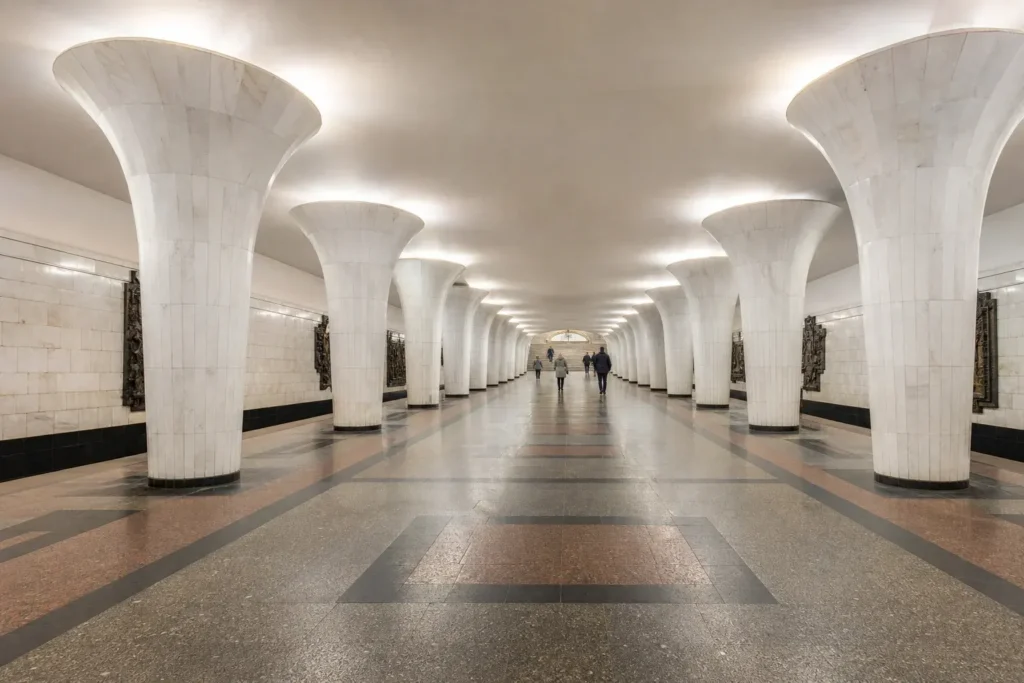
Kropotkinskaya Metro Station is one of the original Moscow Metro stations. It opened on 15 May 1935 and was built as the underground gateway to the planned Palace of the Soviets.
The station’s look is dominated by two rows of flared white marble columns, lit by concealed lamps placed in the tops of those columns. It’s close to the Cathedral of Christ the Saviour and the Pushkin State Museum of Fine Arts, so it works well as a short stop between sights.
Quick Facts
| Russian name | Кропоткинская |
|---|---|
| Built / opened | 1935 |
| Architect(s) | Alexey Dushkin and Yakov Lichtenberg |
| Address | Prechistenskiye Vorota Square, Gogolevsky Boulevard, Moscow, Russia OpenStreetMap · Google Maps |
| District | Khamovniki |
| Interchanges | Kropotkinskaya (Line 1 (Sokolnicheskaya, red), the station itself, between Park Kultury and Biblioteka imeni Lenina) |
| Opening hours | The Moscow Metro normally runs from early morning until around 1:00 at night, and the station is open to passengers during those hours.
Exact first and last train times were not confirmed, so check the Metro's official information (as of October 2026 – check the official site, mosmetro.ru). |
| Best time to visit | Mid-morning and early afternoon on weekdays are calmer, and late evening is quiet. The morning and evening rush hours are the busiest, and the station can be crowded when events take place at the cathedral.
The station works in every season, so it is a good stop on a cold or wet day. |
| Last updated | October 7, 2026 |
Why Visit Kropotkinskaya Metro Station?
If the goal is to understand early Moscow Metro design, Kropotkinskaya is a strong stop. It’s a shallow column station with a clean neoclassical look—white marble, flared geometric columns, and discreet lighting that changes the mood compared with heavier, more ornate stations.
It also has a history you can feel: designed as the underground approach to the Palace of the Soviets, it sits near the Cathedral of Christ the Saviour, turning “gateway” into a literal architectural story—because the palace was never built.
Highlights of Kropotkinskaya Metro Station
The flared white marble columns
Two rows of flared, ten-sided columns face the platform hall. They’re clad in white Koyelga marble, with a design said to echo the Temple of Amun at Karnak.
The columns’ shape—often described as a line of palm trees—is the station’s most recognizable feature.
Tip: Stand roughly in the middle of the hall so you can see both rows of columns receding in perspective.
Concealed lamps
Light is built into the architecture: concealed lamps sit in the tops of the columns, so the glow comes down from above rather than from a grid of ceiling lights.
The result is a calm, even illumination across the marble and the vault.
Tip: Look up at the column capitals to spot the sources of the light.
Granite floor with a simple color contrast
The platform hall floor uses gray and red granite, which makes the white marble columns stand out.
It’s a simple palette that keeps attention on the geometry of the hall.
Tip: Glance down as well as up—the contrast between the granite and the marble reads well in photos.
A gateway to a palace that never arrived
Kropotkinskaya was designed as the underground gateway to the Palace of the Soviets, planned on the site of the demolished Cathedral of Christ the Saviour.
Since the Palace was never built, the station became the complex’s only completed element.
Tip: Read a short history summary before you arrive—standing in the hall makes the “gateway” idea easier to feel.
What the hall looked like at opening
When it opened in 1935, the station hall was reportedly lined with live palm trees in wooden tubs, a playful reference to the columns’ “palm” look.
It’s an early curiosity that explains the station’s signature visual rhythm.
Tip: When you look along the hall, mentally place those palms between the columns to match the original concept.
Vestibules around Prechistenskiye Vorota Square and the cathedral
There are two different entry experiences to pay attention to: the west vestibule at the start of Gogolevsky Boulevard (Prechistenskiye Vorota Square) and a later entrance that faces the Cathedral of Christ the Saviour.
Tip: If you’re heading to the cathedral, choose the entrance oriented toward it.
Atmosphere
The station hall feels wide and composed: white columns rise in two rows, and the light falls evenly from the tops of those columns rather than from overhead fixtures.
Sounds are familiar Metro ones—train arrivals, announcements, and footsteps echoing under the vault. It can get crowded at rush hours and when the Cathedral area is busy; the middle of the day is usually calmer.
History of Kropotkinskaya Metro Station
Kropotkinskaya Metro Station opened on 15 May 1935 as one of the original Moscow Metro stations. It was built as the underground gateway to the planned Palace of the Soviets, which was intended for the same central site where the Cathedral of Christ the Saviour stood before being demolished in 1931.
The station is credited to Alexey Dushkin and Yakov Lichtenberg, with N. A. Kabanov as the structural engineer. At opening, the hall’s look was designed to feel elegant and ceremonial—reportedly even including live palm trees in wooden tubs.
The Palace of the Soviets was never completed. Sources describe different reasons, but the result was the same: the station remained as the completed “front door” of the unrealized complex. In 1957, the station was renamed Kropotkinskaya after Pyotr Kropotkin; before that it was called Dvorets Sovetov.
Legends and Myths about Kropotkinskaya Metro Station
“Marble from the Cathedral”
Legend – historically unreliable. A popular story says the white marble used in the station columns was taken from the demolished Cathedral of Christ the Saviour.
Tickets and Booking for Kropotkinskaya Metro Station
There is no separate ticket for the station itself—entering requires a regular Moscow Metro fare.
For payment options, the key practical choices are:
- Troika card: sold at ticket windows and top-up machines in station halls, and available via the official Metro app.
- Contactless bank cards: some reports indicate they can be used at turnstiles, but this was inconsistent in the research notes for foreign visitors.
- Cash / MIR: ticket offices accept cash and MIR cards (where needed, consider buying a fare card at a ticket window).
Current fares and how payment works for foreign cards can change, so confirm the latest details on the official Moscow Metro website (as of October 2026).
Plan and Book
How to Get to Kropotkinskaya Metro Station
Nearest Metro station: Kropotkinskaya (Line 1, Sokolnicheskaya, red).
Where it sits: between Park Kultury and Biblioteka imeni Lenina, in the Khamovniki area.
Entrances to look for: the west vestibule is at the start of Gogolevsky Boulevard on Prechistenskiye Vorota Square, and there is also a newer entrance facing the Cathedral of Christ the Saviour.
The Cathedral of Christ the Saviour and the Pushkin State Museum of Fine Arts are close by on foot; walking times were not verified.
Accessibility
Accessibility details were not confirmed in the research notes. If step-free access matters, check the official Moscow Metro information (as of October 2026) before travel, focusing on lift availability at the entrances you plan to use.
Food Nearby
Around the Cathedral of Christ the Saviour and the Pushkin Museum area (Gogolevsky Boulevard, Prechistenka Street, and nearby streets) you’ll find cafés and restaurants. Specific opening hours and options weren’t verified—check locally before settling in.
What to Bring
A camera/phone for photos, and payment for Metro entry (see booking_info). Carrying some cash can help if contactless or foreign card payment doesn’t work smoothly at the turnstiles.
Best Views and Photo Spots of Kropotkinskaya Metro Station
Middle of the platform hall
From the middle of the hall, the two rows of flared white columns recede in perspective, with concealed light giving the marble a soft, even tone.
Best time: Mid-morning to early afternoon on weekdays (usually calmer)
A column capital area
Close enough to make out the column capitals and the area where the hidden lamps sit in the top sections.
Best time: Between trains / when the platform is clear
West vestibule on Prechistenskiye Vorota Square (start of Gogolevsky Boulevard)
The west vestibule’s arch and the two glazed pavilions at Prechistenskiye Vorota Square are recognizable landmarks for a street-to-platform route.
Best time: Daylight
Entrance facing the Cathedral of Christ the Saviour
Including the Cathedral of Christ the Saviour in the background helps you connect the station’s “gateway” story to the place above.
Best time: Early evening light
Photography Rules
Photography rules inside stations were not confirmed in the research notes. As a practical default: expect staff directions about where you can stand and whether flash or tripods are allowed, and avoid getting too close to the platform edge (the station can be busy). Drone rules in Moscow are strict and can change—check the current rules with official authorities before flying.
Family Suitability
A practical stop for families heading between the Cathedral area and museum visits. The hall is wide and easy to move through, but it’s still an operating Metro—keep children close and avoid the platform edge. Step-free options were not confirmed, so check accessibility before relying on lifts or avoiding stairs.
Moscow Vibes Tips
- For the best architecture photos, find a spot where you can see both rows of columns at once; the hall’s geometry shows best from the middle.
- Follow the light: it comes from the tops of the columns, so slight angles change how “soft” the glow looks.
- If you are walking to the Cathedral of Christ the Saviour, start from the entrance oriented toward it—this saves a detour at street level.
- Don’t treat the “marble came from the cathedral” story as fact; sources disagree.
- Compare it with nearby older stations (if time allows). Kropotkinskaya’s neoclassical restraint makes it easier to spot than the more dramatic styles elsewhere on the network.
Explore Nearby Kropotkinskaya Metro Station
Sights near Kropotkinskaya Metro Station
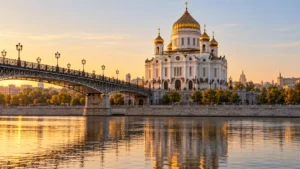 Cathedral of Christ the Saviour Moscow – about 100 m away (~2 min walk) · typical visit: 45 minutes to 1.5 hours; about 1 hour 20 minutes for the full guided tour
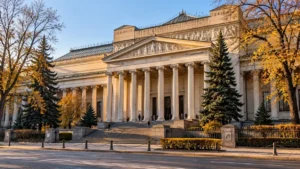 Pushkin State Museum of Fine Arts Moscowabout 300 m away (~5 min walk) · typical visit: 2–3 hours per building
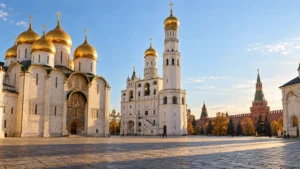 Moscow Kremlin – about 1.2 km away (~19 min walk) · typical visit: 3–5 hours for Cathedral Square plus the Armoury Chamber
 Gorky Park Moscowabout 1.7 km away (~27 min walk) · typical visit: 2–4 hours
 Moscow Metro · typical visit: 1.5–3 hours for a tour of showcase stations
Metro stations near Kropotkinskaya Metro Station
 Borovitskaya Metro Stationabout 750 m away (~12 min walk)
 Biblioteka Imeni Lenina Metro Stationabout 800 m away (~13 min walk)
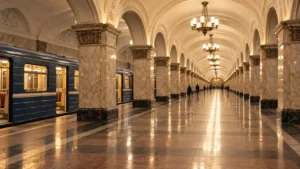 Arbatskaya Metro Stationabout 850 m away (~13 min walk)
Restaurants and cafes near Kropotkinskaya Metro Station
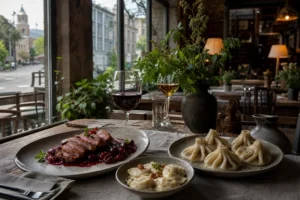 Ainaabout 450 m away (~7 min walk)
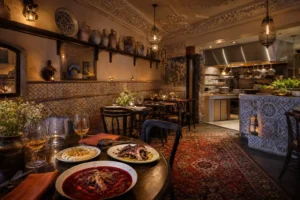 Multikulturaabout 700 m away (~12 min walk)
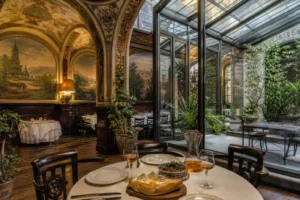 Bagebiabout 750 m away (~12 min walk)
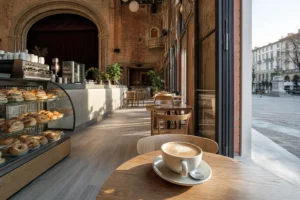 Elevenabout 850 m away (~14 min walk)
Hotels near Kropotkinskaya Metro Station
 Russo-Balt Hotel Moscowabout 700 m away (~11 min walk)
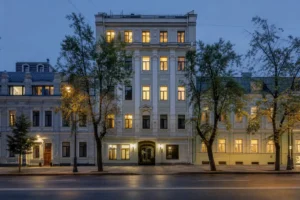 Bokstel Hostelabout 850 m away (~14 min walk)
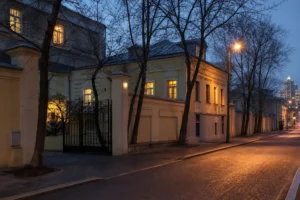 Library Hostel Moscowabout 900 m away (~15 min walk)
Events and traditions near Kropotkinskaya Metro Station
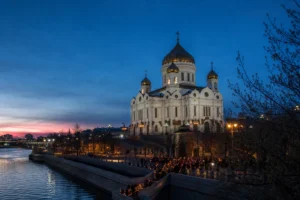 Orthodox Easter in Moscowabout 100 m away (~2 min walk)
 Orthodox Christmas in Moscowabout 100 m away (~2 min walk)
Related guides
 Prechistenka: Moscow Mansions, Pushkin and Tolstoy Museums
 Nabat Palace Arbat: Four-Star City Hotel on Old Arbat Street
 White Rabbit: Moscow Fine Dining with a Skyline View
 Luzhniki MCC Station: Sportivnaya Transfer, Luzhniki Complex Access
 Novodevichy Pond Moscow: Best Reflection Angles and Planning
Browse more: More in Khamovniki · All Metro Stations
FAQ: Kropotkinskaya Metro Station
Why was it called Dvorets Sovetov?
It was built as the underground gateway to the planned Palace of the Soviets and was called Dvorets Sovetov until it was renamed in 1957.
Who designed Kropotkinskaya Metro Station?
The station is credited to Alexey Dushkin and Yakov Lichtenberg (with N. A. Kabanov as the structural engineer).
What are the columns faced with?
They are faced with white Koyelga marble, with a design said to be inspired by the Temple of Amun at Karnak.
Was the station’s marble taken from the Cathedral of Christ the Saviour?
That idea is often repeated, but it’s not consistent across sources. Treat it as a legend unless you see a clear explanation on the official Metro materials.
Was the Palace of the Soviets built?
No—the Palace project was cancelled, and the station remained the complex’s only completed part.
Do you need a ticket to enter the station?
Yes. You need a Metro fare to enter; see the booking_info section for how to pay.
Discover More of Moscow with Our Travel Tips
Get practical Moscow travel tips, new destination guides and useful updates on attractions, opening hours and prices. Plan your visit with clear, helpful information delivered to your inbox.
Moscow Vibes is a one-person project. A coffee keeps it going
Last updated: October 7, 2026. Found an error or something out of date? Report it and we will check and fix it.
How we research and update our guides
About this guide: AI assistance and accuracy
This guide is created with the help of AI and is based on official sources where available. Mistakes can still happen. Opening hours, prices, rules and other details are given to the best of our knowledge as of the date shown and can change without notice. It offers general recommendations only, not professional, legal or travel advice. Please confirm important details with the official source before you travel; you are responsible for your own plans and decisions.
International sanctions affect payments between Russia and many other countries. In practice, cards issued in the EU, the UK, the US and several other countries often do not work in Russia, Russian cards usually do not work abroad, and some booking platforms, airlines and payment providers limit or suspend their services for Russia. The situation changes frequently. We do not give legal or financial advice, and this site does not encourage anyone to break or circumvent sanctions. Whatever you plan, you are responsible for following the laws and regulations that apply to you, including those of your country of residence and citizenship. Many travelers still organise their stay lawfully. It is worth asking your bank or payment provider what is currently permitted, contacting hotels, tour operators and carriers directly about the payment methods they accept, and checking which services are open to customers from your country. Clarify payment, cancellation and refund terms before you commit to a booking, and keep your plans flexible. Partner links on this site may not be available in every country, and prices, availability and rules in our guides can differ from what you see when you book.Paying for your trip: please read
Report an issue on this page
* Affiliate link: as an Amazon Associate we earn from qualifying purchases at no extra cost to you.
 Ask Masha