
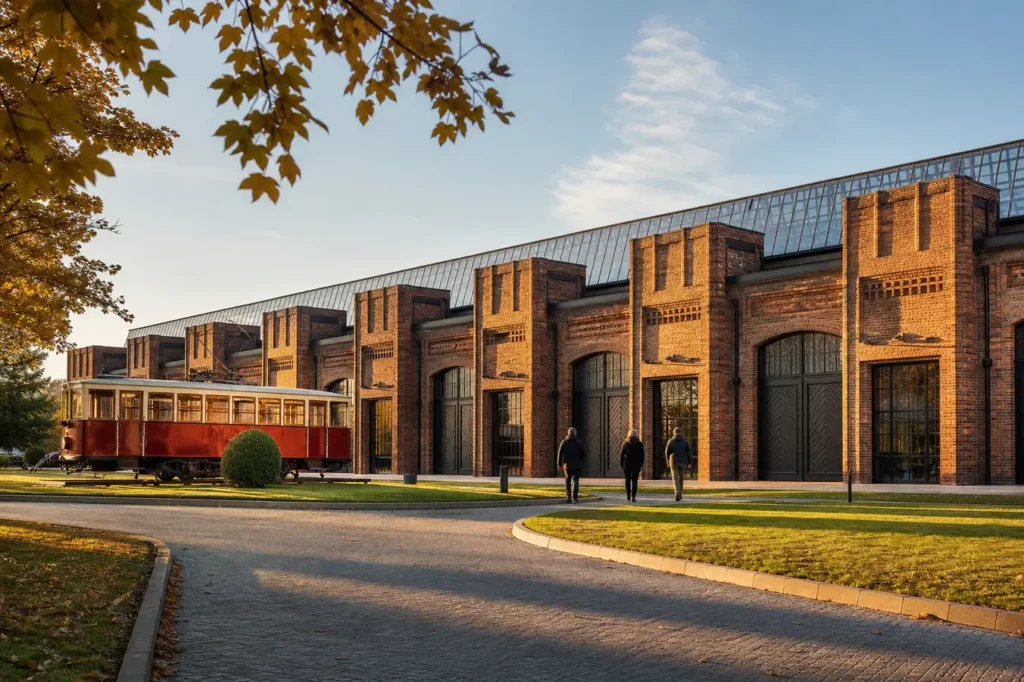
The Moscow Transport Museum in Moscow has a permanent exhibition in the restored Garage of Konstantin Melnikov on Novoryazanskaya Street, a few minutes from the three railway terminals at Komsomolskaya. The exhibition tells the story of the city’s transport from horse-drawn trams to autonomous vehicles, with original trams, buses, trolleybuses and metro cars.
The museum is new in this building, and it replaces several earlier temporary venues. This guide explains the opening hours and ticket price announced by the city, how the two levels are arranged, what the main exhibits and simulators are, what can be visited without a ticket, how the museum differs from earlier venues at VDNKh and the river stations, and how to reach it from Komsomolskaya.
Quick Facts
| Russian name | Музей Транспорта Москвы |
|---|---|
| Built / opened | 2026 |
| Architect(s) | Konstantin Melnikov (the garage of 1929 to 1931); restoration by Yuri Grigoryan and Boris Savin |
| Address | Novoryazanskaya Street 27, buildings 1 and 3, Moscow (the Konstantin Melnikov Garage, near Three Stations Square) |
| District | Basmanny |
| Metro | Komsomolskaya (Line 1, red, and Line 5, brown, the Three Stations Square hub named by the city as the nearest transport node; the walk is about 8 to 10 minutes (estimate)) |
| Opening hours | The city's announcement gives Tuesday to Thursday 10:00 to 20:00 and Friday to Sunday 10:00 to 21:00, closed on Monday; the cafe, reading room and shop can be visited without a museum ticket (as of October 2026 – check the official site). |
| Admission | The permanent exhibition was announced at a moderate price (₽₽), with a 30 percent discount for pensioners, students and schoolchildren; check the official site for current prices. |
| Best time to visit | Weekday mornings are the quietest, and weekends are busier, especially at the simulators. The museum is open until 20:00 from Tuesday to Thursday and until 21:00 from Friday to Sunday, and closed on Monday. It works in all seasons and in bad weather; see the Moscow in the Rain: Indoor Sightseeing Itinerary. |
| Recommended duration | About 2 to 3 hours |
| Website | en.mtmuseum.ru |
| Last updated | October 9, 2026 |
What Is (and Isn't) Part of a Visit to Moscow Transport Museum?
| Part | Status | Notes |
|---|---|---|
| The permanent exhibition in the Melnikov Garage | Included in the standard ticket | The ground-floor surface transport zones and the underground Metro zones, with simulators. |
| The courtyard, cafe, reading room and shop | Outside / not part of it | Open to everyone without a museum ticket. |
| The museum trolleybus route T | Separate ticket or institution | Guided tours along the route about the history of the Basmanny District, booked separately. |
| The club space and Auto Laboratory events | Separate ticket or institution | Events, master classes and lectures with their own schedule. |
| Pop-up installations at the Northern River Terminal and the children's space at the Southern River Terminal | Outside / not part of it | Separate venues of the museum on the river; see the river station guides. |
| Earlier temporary venues such as VDNKh Pavilion 26 | Outside / not part of it | Older addresses used before the Novoryazanskaya building opened; check which venues are still active. |
Why Visit Moscow Transport Museum?
The exhibition shows 53 original vehicles and pieces of equipment, among them the only 1872 horse-drawn tram reconstructed on an original chassis, a BF tram car that is one of two surviving in the world and a Berlin U-Bahn car in the eight-door configuration. A wartime GAZ-AA truck and a trolleybus built for the 1957 exhibition at VDNKh add Moscow stories.
The museum is also interactive: 27 simulators let visitors drive a metro car or work as a dispatcher, and there are 94 multimedia installations. The building itself is a landmark of the Soviet avant-garde, a garage built in 1929 to 1931 in the shape of a horseshoe, and it is a good stop for families and anyone interested in the city’s metro.
How Moscow Transport Museum Is Laid Out
The permanent exhibition occupies more than 9,000 square meters on two levels of the Melnikov Garage. The ground floor tells the history of surface transport in six zones, from the horse-drawn tram of 1872 to autonomous vehicles, and the underground level is devoted to the Moscow Metro in seven zones, with metro cars lowered into the building through an opening in the floor.
The museum complex also has a club space, an archive and library center, an Auto Laboratory with a children’s center, a cafe with a mosaic from the Moskvich plant facade and a green courtyard open to everyone. The cafe, the reading room and the shop can be visited without a ticket. Four multimedia guide routes and a children’s route help organize the visit.
Highlights of Moscow Transport Museum
The Melnikov Garage
The building was designed by the avant-garde architect Konstantin Melnikov and built in 1929 to 1931 as a truck garage, in the shape of a horseshoe so that the maximum number of vehicles could fit on a small wedge-shaped site and leave freely onto the street. It later served as a taxi depot, a wartime repair plant and a bus depot until 2015. The restoration brought back the ribbon stained-glass roof windows. Look at the brick sections and the glazing from the street.
Tip: Walk around the outside first, since the horseshoe shape and the glazing are part of the exhibit.
The unique original vehicles
Among the 53 original vehicles are the only 1872 horse-drawn tram reconstructed on an original chassis, a BF tram car, one of two surviving in the world, a type V metro car from Berlin, a GAZ-AA truck used on the Road of Life in the siege of Leningrad and a TBES trolleybus built for the 1957 exhibition at VDNKh. They are displayed in settings that link transport to the city's history. Look at the details of the early tram.
Tip: Start on the ground floor at the oldest tram and follow the chronology.
The underground Metro level
The underground level is devoted to the Moscow Metro in seven zones, with real metro cars placed on a replica section of track, and zones on tunnel construction, station technology, the dispatch center, architecture and navigation. A Moskva metro car shows the newest generation of trains with walk-through gangways. Allow time for the interactive installations.
Tip: Leave plenty of time for the underground level, since the interactive zones take longer than expected.
The simulators
The exhibition has 27 simulators for different types of urban transport, where visitors can drive a metro car, work as a dispatcher at the Unified Dispatch center or drive a tram in the capital of the future. They are the most popular part for children and adults. Queues may form on weekends, so go early to try several.
Tip: Try the simulators early in the day, before queues form.
The multimedia guide and routes
A multimedia guide with a screen and headphones offers four routes through the exhibition, among them a history of the capital through transport and a route of the most unusual objects, plus a children's route and an audio route with Braille labels and tactile models for blind visitors. The guide helps organize a long visit. Check the languages offered at the desk.
Tip: Choose a route at the start, since the exhibition is large.
The courtyard, cafe and shop
The green courtyard is open to everyone and hosts exhibitions of historic and modern vehicles, festivals and family events, with playgrounds and board games. The cafe has a mosaic from the facade of the Moskvich plant, and the reading room and the souvenir shop are open without a museum ticket. It is a pleasant place to rest. Check which events are on.
Tip: Use the courtyard and cafe for a break, since entry is free.
Atmosphere
The garage is a long, brick-and-glass hall filled with old trams and buses, with light falling through the restored ribbon windows onto painted metal and polished wood. Underground, the metro cars wait on their track in a cooler, quieter space with screens and the hum of simulators.
Visitors are families with children, transport enthusiasts and students, moving between the vehicles and the interactive stations. The museum is calm on weekday mornings and busier on weekends, when queues form at the simulators. Outside, the courtyard and the cafe add a relaxed urban note near the busy railway terminals.
History of Moscow Transport Museum
The garage on Novoryazanskaya Street was built in 1929 to 1931 to a design by Konstantin Melnikov, who also designed the Bakhmetevsky Garage, as a truck garage in the shape of a horseshoe. In 1938 it became a taxi depot, and in 1941 a vehicle repair plant that repaired the ZIS-5 frontline trucks. After 1945 it repaired buses and produced early dump trucks and refuse trucks, and from 1948 to 2015 it housed Mosgortrans Bus Depot No. 4.
The Moscow Transport Museum was established about six years before the opening of its permanent exhibition, according to the Moscow mayor, and was housed in temporary premises, among them VDNKh Pavilion 26, the Northern and Southern River Stations and the Museum of Moscow. The city decided to give the Melnikov Garage to the museum, and experts, restorers and builders worked on the project for several years.
The restoration, by the architects Yuri Grigoryan and Boris Savin, removed later extensions, recreated the stained-glass glazing and created an underground level for the Metro exhibition. The permanent exhibition opened in the restored garage in 2026. Dates and details should be checked against the museum’s official site, and this history is shorter than requested because few facts could be verified.
Tickets and Booking for Moscow Transport Museum
| Ticket | Price | Includes |
|---|---|---|
| Permanent exhibition | a moderate price (₽₽) announced by the city; check the current price | Entry to the permanent exhibition in the Melnikov Garage; a 30 percent discount was announced for pensioners, students and schoolchildren. |
| Courtyard, cafe, reading room and shop | Free | Open without a museum ticket. |
Tickets. The announcement did not say where tickets are sold, so use the museum’s official site en.mtmuseum.ru and the ticket desk to check current options; the museum can welcome up to 10,000 people a day. Rates for Russian citizens and concessions differ, so check the official site for all categories.
Payment. Cash in rubles is the safe option. Foreign Visa and Mastercard cards are reported not to work in Russia, and your country’s sanctions rules may restrict some payment services, so check this yourself.
Plan and Book
Suggested itineraries Moscow Transport Museum
2 to 3 hours
Start on the ground floor with the 1872 horse-drawn tram, follow the chronology to the autonomous vehicles of the future, go down to the Metro level and try a simulator before the cafe.
Half day with Komsomolskaya
See the museum in the morning, then explore the railway terminals and the Komsomolskaya Metro station nearby, following the Moscow Metro Tour: Most Beautiful Stations Itinerary.
Family day
Use the children's route and the simulators in the morning, take lunch in the cafe or the nearby food hall and spend the afternoon in the courtyard.
How to Get to Moscow Transport Museum
Take the Metro to Komsomolskaya (Line 1, red, and Line 5, brown) and walk to Novoryazanskaya Street 27, about 8 to 10 minutes; the city describes the museum as near the Three Stations Square transport hub. See the Yaroslavsky Railway Terminal, Leningradsky Railway Terminal and Kazansky Railway Terminal guides for the hub.
- By taxi: ask for Novoryazanskaya Street 27, the Moscow Transport Museum.
- Food: a food hall called Depo. Three Stations is nearby.
- Orientation: look for the long brick garage with a glazed roof.
Accessibility
The museum offers an audio route and Braille labels for blind and visually impaired visitors, with 77 tactile models, according to the city's announcement; other accessibility facilities such as lifts and ramps were not verified, so check en.mtmuseum.ru before you go.
Food Nearby
The museum has a cafe, and the nearby Depo. Three Stations food hall was named by the city; the courtyard and cafe can be used without a ticket. See the Moscow Food Tour: Russian Cuisine and Local Specialties itinerary for more.
What to Bring
Bring comfortable shoes, since the exhibition covers more than 9,000 square meters, a translation app if you do not read Russian, and cash in rubles.
Best Views and Photo Spots of Moscow Transport Museum
The facade of the Melnikov Garage
Projecting brick sections with gates and a glazed roof, a landmark of the Soviet avant-garde seen from Novoryazanskaya Street.
Best time: Morning light.
The 1872 horse-drawn tram
The oldest vehicle in the exhibition, a rare reconstruction on an original chassis; check photography rules first.
Best time: Weekday mornings.
The metro cars on the underground level
Real metro cars on a replica track in a cool underground hall; check photography rules first.
Best time: Any time; avoid crowded weekends.
The courtyard
A green courtyard with historic and modern vehicles and the brick garage around it.
Best time: Late afternoon.
Photography Rules
Photography rules for the exhibition were not verified, so ask staff before taking photographs. Flash and tripods are generally not appropriate near the simulators, and drones must not be flown near the railway terminals.
Family Suitability
Suitable for children, who usually enjoy the simulators and the interactive installations, and a children's route and an Auto Laboratory with a children's center are offered; the courtyard has playgrounds. The exhibition is large, so allow breaks and take the cafe stop. Stroller access was not verified, so check with the museum.
Moscow Vibes Tips
- Go on a weekday morning, since the simulators have queues on weekends.
- Use the multimedia guide, since it organizes a large exhibition into routes.
- Use the free courtyard and cafe for a break between levels.
- Do not rely on older addresses at VDNKh or Rogozhsky Val, since the permanent exhibition is now on Novoryazanskaya Street.
- Combine the visit with the railway terminals and Komsomolskaya Metro for a transport-themed day.
- Ask about the museum trolleybus route T if you want a guided tour of the Basmanny District.
Explore Nearby Moscow Transport Museum
Sights near Moscow Transport Museum
 Bauman Garden Moscowabout 750 m away (~12 min walk) · typical visit: About 1 to 1.5 hours
Main image: AI-generated illustration. It may not show the place exactly as it looks.
 Apothecary Garden Moscowabout 2.2 km away · typical visit: About 1.5 to 2.5 hours
Main image: AI-generated illustration. It may not show the place exactly as it looks.
 Andrey Rublev Museum Moscowabout 2.5 km away · typical visit: About 1.5 to 2 hours
Main image: AI-generated illustration. It may not show the place exactly as it looks.
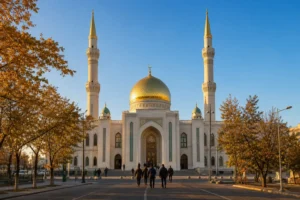 Moscow Cathedral Mosqueabout 2.6 km away · typical visit: About 30 minutes to 1 hour
Main image: AI-generated illustration. It may not show the place exactly as it looks.
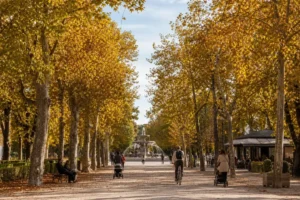 Sokolniki Park Moscowabout 2.7 km away · typical visit: About 2 to 4 hours
Main image: AI-generated illustration. It may not show the place exactly as it looks.
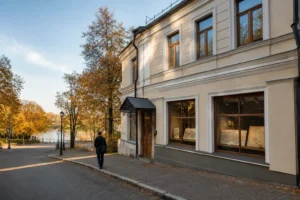 Museum of the History of Lefortovo Moscowabout 2.8 km away · typical visit: About 1 to 1.5 hours
Main image: AI-generated illustration. It may not show the place exactly as it looks.
Metro stations near Moscow Transport Museum
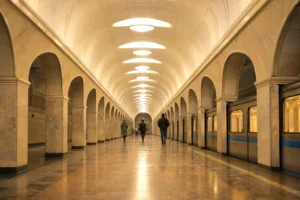 Baumanskaya Metro Stationabout 750 m away (~12 min walk)
Main image: AI-generated illustration. It may not show the place exactly as it looks.
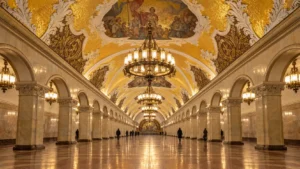 Komsomolskaya Metro Stationabout 800 m away (~13 min walk)
Main image: AI-generated illustration. It may not show the place exactly as it looks.
 Krasnoselskaya Metro Stationabout 900 m away (~15 min walk)
Main image: AI-generated illustration. It may not show the place exactly as it looks.
Restaurants and cafes near Moscow Transport Museum
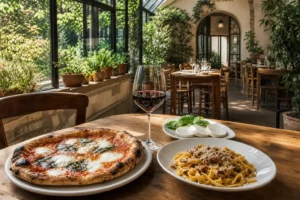 +39 Trattoria & Pizzeriaabout 400 m away (~7 min walk)
Main image: AI-generated illustration. It may not show the place exactly as it looks.
Hotels near Moscow Transport Museum
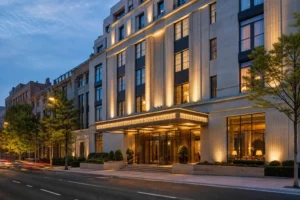 Imperial Plaza Moscowabout 650 m away (~11 min walk)
Main image: AI-generated illustration. It may not show the place exactly as it looks.
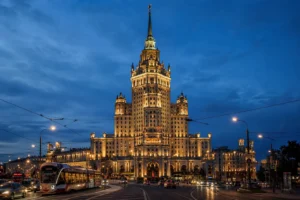 Hilton Moscow Leningradskayaabout 1000 m away (~16 min walk)
Main image: AI-generated illustration. It may not show the place exactly as it looks.
 Jackpot Energy Hotelabout 1.6 km away (~26 min walk)
Main image: AI-generated illustration. It may not show the place exactly as it looks.
Train stations and river piers near Moscow Transport Museum
 Yaroslavsky Railway Terminalabout 800 m away (~13 min walk)
Main image: AI-generated illustration. It may not show the place exactly as it looks.
 Leningradsky Railway Terminalabout 850 m away (~14 min walk)
Main image: AI-generated illustration. It may not show the place exactly as it looks.
 Kazansky Railway Terminalabout 700 m away (~11 min walk)
Main image: AI-generated illustration. It may not show the place exactly as it looks.
Related guides
 Moscow Metro Tour: Most Beautiful Stations Itinerary: 5 Stations
Main image: AI-generated illustration. It may not show the place exactly as it looks.
 Chistye Prudy, Myasnitskaya and Sretenka Walking Itinerary: Route
Main image: AI-generated illustration. It may not show the place exactly as it looks.
 Basmanny: Chistye Prudy, Old Churches and the German Quarter
Main image: AI-generated illustration. It may not show the place exactly as it looks.
 Alexey Kozlov Club: Jazz and Live Music on Maroseyka Street
Main image: AI-generated illustration. It may not show the place exactly as it looks.
 Kursky Railway Terminal: Trains to Nizhny Novgorod, Tula and Vladimir
Main image: AI-generated illustration. It may not show the place exactly as it looks.
Browse more: More in Basmanny · All Museums · All Sightseeing
FAQ: Moscow Transport Museum
Where is the museum?
In the restored Konstantin Melnikov Garage at Novoryazanskaya Street 27, near Three Stations Square.
Which Metro station is closest?
Komsomolskaya, about 8 to 10 minutes on foot.
How much is a ticket?
The permanent exhibition was announced at a moderate price (₽₽); see the tickets section.
Is the museum open every day?
No. It is closed on Monday; see the opening hours.
Can I visit the cafe without a ticket?
Yes. The cafe, the reading room, the shop and the courtyard are open without a museum ticket.
What are the most unusual exhibits?
The 1872 horse-drawn tram, the BF tram car and the Berlin metro car, among others.
Is it the same as the earlier museum at VDNKh?
No. The permanent exhibition is now in the Melnikov Garage; earlier venues were temporary.
Can I pay with a foreign card?
Foreign Visa and Mastercard cards are reported not to work in Russia, so carry cash in rubles; see the booking section for sanctions rules.
* Affiliate link: as an Amazon Associate we earn from qualifying purchases at no extra cost to you.
Discover More of Moscow with Our Travel Tips
Get practical Moscow travel tips, new destination guides and useful updates on attractions, opening hours and prices. Plan your visit with clear, helpful information delivered to your inbox.
Moscow Vibes is a one-person project. A coffee keeps it going
Last updated: October 9, 2026.
How we research and update our guides
About this guide: AI assistance and accuracy
This guide is created with the help of AI and is based on official sources where available. Mistakes can still happen. Opening hours, prices, rules and other details are given to the best of our knowledge as of the date shown and can change without notice. It offers general recommendations only, not professional, legal or travel advice. Please confirm important details with the official source before you travel; you are responsible for your own plans and decisions.
International sanctions affect payments between Russia and many other countries. In practice, cards issued in the EU, the UK, the US and several other countries often do not work in Russia, Russian cards usually do not work abroad, and some booking platforms, airlines and payment providers limit or suspend their services for Russia. The situation changes frequently. We do not give legal or financial advice, and this site does not encourage anyone to break or circumvent sanctions. Whatever you plan, you are responsible for following the laws and regulations that apply to you, including those of your country of residence and citizenship. Many travelers still organise their stay lawfully. It is worth asking your bank or payment provider what is currently permitted, contacting hotels, tour operators and carriers directly about the payment methods they accept, and checking which services are open to customers from your country. Clarify payment, cancellation and refund terms before you commit to a booking, and keep your plans flexible. Partner links on this site may not be available in every country, and prices, availability and rules in our guides can differ from what you see when you book.Paying for your trip: please read
Report an issue on this page

Take this guide with you
Get a free PDF of this guide to print or read offline: key facts, tips and a map link on a few clean pages.