
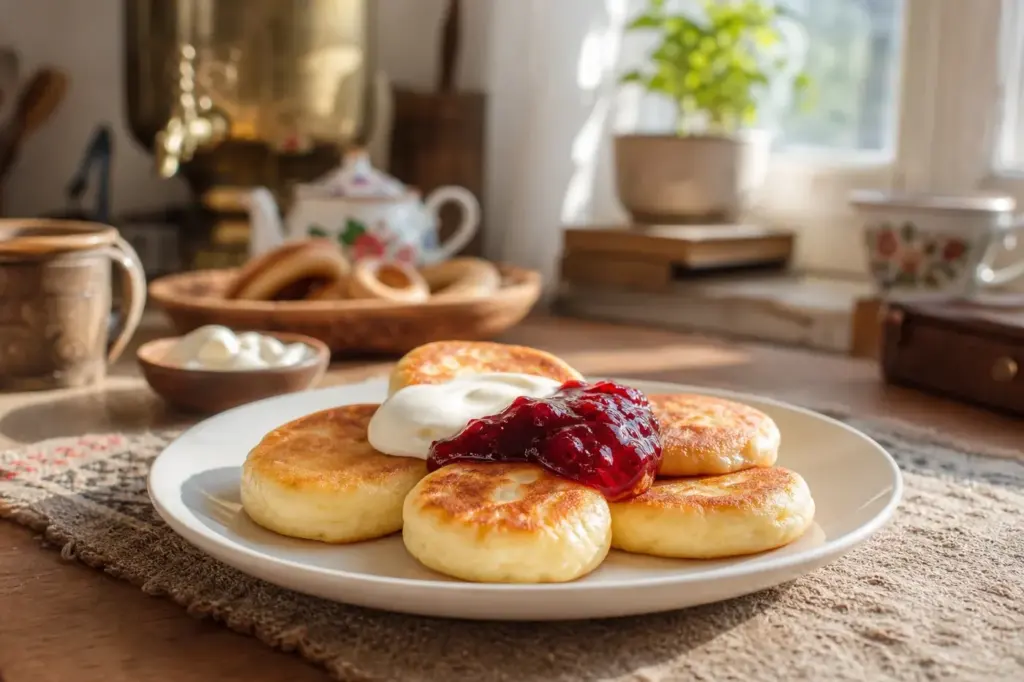
Syrniki are fried Eastern Slavic quark (curd cheese) pancakes that appear on breakfast tables throughout Moscow and across Eastern Europe. If you want to learn how to make syrniki Russian cheese pancakes at home or understand what you’re eating at a café, this guide covers ingredients, steps, and the cultural story behind these golden patties.
The recommended approach is to start with quality farmer’s cheese (tvorog), mix it with simple pantry staples, shape and fry until golden. You’ll have breakfast or a light dessert ready in about 30 minutes.
Quick answer: Syrniki begin with cottage cheese or farmer's cheese mixed with eggs, sugar, and flour to bind the mixture together. Shape the sticky dough into small patties, coat lightly with flour, and fry in oil over medium heat until golden on both sides. Total time: about 25–30 minutes.
At a Glance
| Type | Dishes |
|---|---|
| Local name | Сырники |
| Origin | Syrniki trace their roots to ancient Slavic dairy traditions, where curd cheese production emerged as a key preservation method among peasant farmers in the 9th and 10th centuries. During this period, sour milk was commonly transformed into tvorog (curd cheese) through fermentation, a practice essential for storing dairy in regions with abundant livestock but limited preservation techniques. The Domostroi, a 1550s household manual, references "syrniki with eggs and cheese," suggesting a cheese-based preparation. |
| Servings | 2–4 servings (makes about 8–12 pancakes) |
| Total time | 25–30 minutes |
| Difficulty | Easy |
History and Story of Syrniki (Сырники)
Syrniki are an ancient traditional food. Although impossible to determine when they were first created, they, like bliny and Russian pancakes, are sometimes associated with the ancient Slavic god Yarila; all three foods are round and yellow, like the sun, and were used to pay homage for a rich harvest and full table. The word “syrniki” literally means “a thing made of cheese.” Syrniki are made from tvorog, a type of “home cheese” or “cottage cheese” made by placing milk in a warm place. The fat content curdles and condenses and can then be strained out, creating a product that can be stored longer than plain milk. Historically, they were a practical way to use up farmer’s cheese before it spoiled. Additionally, they’ve been enjoyed for generations as a hearty breakfast that sustains people through cold winter mornings.
Ingredients
- 500 g (1 lb) farmer's cheese (tvorog) or drained cottage cheese
- 1 egg
- 2–3 tablespoons sugar
- 3–4 tablespoons wheat flour, plus extra for dusting
- ½ teaspoon salt
- Oil or butter for frying
How Syrniki (Сырники) Is Made
Step 1: Prepare the cheese
Start with farmer's cheese that is dry and a little crumbly, packed like a brick. If it is packed in water or has a texture similar to ricotta, you'll need to strain it in a fine-mesh colander until it is dry and crumbly. Break it into smaller pieces in a large bowl.
Tip: Wet cheese will force you to use too much flour, making the pancakes dense instead of creamy.
Step 2: Mix the base
Add one egg, sugar, salt, and vanilla extract (if using) to the cheese. Mix thoroughly with a fork until the ingredients are well combined and smooth. The texture should be slightly grainy but hold together.
Tip: Don't use a blender or food processor at this stage—you want to keep the cheese slightly textured, not completely smooth.
Step 3: Add flour gradually
Stir in flour a little at a time, mixing well. The final mixture should be sticky but still moldable—thick enough to hold a shape when scooped, but not runny. If it feels too wet, add a bit more flour; if too dry, it will be tough when cooked.
Tip: The exact amount of flour depends on how wet your cheese is. Start with 3 tablespoons and adjust.
Step 4: Rest the batter
Let it sit for at least 10 minutes to absorb the liquid. This makes shaping easier and allows the flour to fully hydrate.
Tip: Resting also gives you time to heat your oil and prepare your workspace.
Step 5: Shape the pancakes
Dust your hands with flour and shape small balls of batter before flattening them into round pancakes. Use about 2–3 tablespoons of batter per pancake. Form each into a ball, then flatten with your palm into a patty roughly ¾ inch (2 cm) thick. Coat lightly with flour to prevent sticking.
Tip: Keep your hands floured and work quickly. If the batter gets sticky, refrigerate it for 10 minutes.
Step 6: Fry until golden
Heat a large pan or skillet over medium heat and add butter or oil. Fry syrniki over medium heat for 3–4 minutes per side, or until golden brown. The exterior should be crispy and golden; the inside will be creamy and soft. Do not rush or use high heat, or they will brown outside while staying raw inside.
Tip: The pancakes should sizzle gently when they hit the oil—if they bubble violently, your heat is too high. Work in batches to avoid crowding the pan.
Step 7: Drain and serve
Transfer to paper towels to drain excess oil. Serve warm with sour cream, jam, honey, or fresh berries. Serve cakes hot with sour cream, varenye, jam and tea, milk, juice.
Tip: Syrniki deflate slightly as they cool—this is normal because the cheese is the main ingredient and there isn't enough flour and egg to keep them permanently puffed.
Variants
- With raisins or dried fruit: Add raisins, dried apricots, or diced dried plums to the mixture before frying.
- With chocolate: Place a small piece of dark chocolate or chocolate chips in the center before sealing the patty.
- With fresh apple: Mix finely diced fresh apple and cinnamon into the batter, or fry the apple separately with cinnamon and fold it in.
- Sweeter version: Increase sugar to 3–4 tablespoons and add vanilla extract for a dessert version.
- Less sweet version: Use only 1 tablespoon sugar for a lighter breakfast pancake.
- With lemon zest: Add grated lemon zest to the mixture for brightness.
Common Mistakes to Avoid
- Using wet cheese without draining. Cottage cheese fresh from the store often contains excess liquid. If you don't drain it thoroughly, you'll add too much flour trying to compensate, and the pancakes become tough and rubbery instead of creamy.
- Mixing the batter too much or using a blender. Over-mixing makes the cheese break down and release liquid. Keep it simple—mix by hand until just combined.
- Frying on too high heat. Many cooks brown the outside quickly to save time, but the inside stays cold and raw. Medium heat is non-negotiable; they need 3–4 minutes per side to cook through.
- Skipping the flour dusting and resting step. A sticky batter is harder to shape. Dust your hands and work surface with flour, and let the batter sit for 10 minutes to firm up.
- Adding all the flour at once. Different cheeses have different moisture levels. Add flour gradually and adjust as you go; too much flour ruins the creamy texture that makes syrniki special.
- Not flattening them enough. If you leave them as thick balls, the inside won't cook through before the outside burns. Flatten to about ¾ inch for even cooking.
How to Order and Eat It
Serve with sour cream and jelly or jam. They are generally fried in vegetable oil to create crispy-on-the-outside, soft-on-the-inside medallions of warm, creamy goodness. Drizzled with sour cream, condensed milk, and/or jam, and served for breakfast or dessert, syrniki are particularly beloved in Russia, Ukraine, Poland, Belarus, and the Baltics. Traditional Russian presentation includes a dollop of cold sour cream on top of each warm pancake, sometimes with a spoonful of berry jam or honey. Eat them while warm—they are at their best when the cheese is still soft and the exterior is still crispy. A cup of tea or milk complements them well.
To order: Сырники, пожалуйста [Syrniki, pozhaluysta]
Diet and Allergens
- vegetarian
Where to Try Syrniki (Сырники)
 Mari Vanna Russian
Main image: AI-generated illustration. It may not show the place exactly as it looks.
Moscow Vibes Tips
- The best farmer's cheese for syrniki has 9% fat or higher and a slightly crumbly texture. In Moscow, look for tvorog labeled specifically for syrniki in the dairy section, or ask at food markets where quality varies noticeably. Avoid ultra-smooth ricotta-like versions unless you can drain them for 30 minutes first.
- Keep your work surface and hands well-floured while shaping. The batter is naturally sticky, and this is correct—don't add extra flour to "fix" it. If the batter becomes too warm and sticky to handle, refrigerate it for 10 minutes.
- Cook in batches of 3–4 pancakes at a time rather than crowding the pan. Each pancake needs space to brown evenly and the oil to maintain its temperature.
- The pancakes will puff up slightly when they first hit the hot oil because of the trapped steam, then settle a little as they cool. This is normal and not a sign of failure—it happens because cheese is denser than flour.
- If serving guests, cook the first batch and hold it loosely covered with foil in a warm (not hot) oven while you fry the rest. They'll stay warm without becoming too crispy.
- Leftover syrniki can be reheated gently in a moderate oven for 5–10 minutes the next day, or eaten cold (though they taste best fresh and warm).
Where to Find Syrniki (Сырники) in Moscow
Related guides
 10 Best Places to Try Russian Food in Moscow: Classics and Canteens
Main image: AI-generated illustration. It may not show the place exactly as it looks.
 10 Best Food Markets and Food Halls in Moscow: Where to Eat Indoors
Main image: AI-generated illustration. It may not show the place exactly as it looks.
 Moscow Food Tour: Russian Cuisine and Local Specialties: One-Day Route
Main image: AI-generated illustration. It may not show the place exactly as it looks.
Browse more: All Food & Drink · All Other
FAQ
What's the difference between syrniki and ricotta pancakes or cheesecake?
Russian syrniki are a pancake and cheesecake hybrid that makes for a very delicious and special treat. They are essentially a pancake and cheesecake hybrid, slightly crispy on the outside and soft and delicious on the inside. They are fried (not baked) and thinner than cheesecake, crispy outside and creamy inside. Ricotta pancakes are similar but often contain baking powder and are fluffier; syrniki use mainly cheese for texture and flavor.
Can I use cottage cheese instead of farmer's cheese (tvorog)?
Farmer's cheese is basically pressed cottage cheese with all liquid removed. Yes, you can use cottage cheese, but it must be thoroughly drained first. Use a fine strainer or cheesecloth and press out as much liquid as possible, or the pancakes will be dense and require too much flour.
Why did my syrniki turn out tough or dense?
The most common reason is using wet cheese and compensating by adding too much flour. Drain your cheese very well first. The second reason is over-mixing, which breaks down the cheese texture. Mix gently by hand. A third cause is cooking on too-high heat, which sets the exterior before the inside cooks through—use medium heat and allow 3–4 minutes per side.
Can I bake syrniki instead of frying them?
You can, but they won't have the signature crispy exterior. Brush them with oil and bake at 375°F (190°C) for about 12–15 minutes, turning halfway, until light golden. They'll be less golden and crispier on the outside, but still soft inside. Frying remains the traditional method for the best result.
How far in advance can I prepare the batter?
Mix the batter up to 4 hours ahead and refrigerate it covered. The flour will continue to hydrate, so add a tiny bit more flour if it seems wet when you're ready to cook. Do not mix and let sit at room temperature for hours—the mixture can start to break down and become watery.
What's the best topping for syrniki?
Drizzled with sour cream, condensed milk, and/or jam, and served for breakfast or dessert, syrniki are particularly beloved across Eastern Europe. Sour cream is the most traditional in Russia; jam, honey, fresh berries, and stewed fruit (varenye) are also classic. Some people add a drizzle of condensed milk for extra sweetness.
Are syrniki gluten-free?
Traditional syrniki contain wheat flour, so they are not gluten-free. You can try a gluten-free flour blend as a 1:1 substitute, but results vary—some gluten-free flours absorb more liquid, so you may need to adjust quantities. Start with a little less and add more if the batter is too sticky.
Can I freeze syrniki?
Yes. Freeze cooked syrniki on a tray until solid, then transfer to a freezer bag for up to 2 months. Reheat in a moderate oven. You can also freeze uncooked shaped patties on a tray and fry them directly from the freezer, adding 1–2 extra minutes per side.
Discover More of Moscow with Our Travel Tips
Get practical Moscow travel tips, new destination guides and useful updates on attractions, opening hours and prices. Plan your visit with clear, helpful information delivered to your inbox.
Moscow Vibes is a one-person project. A coffee keeps it going

Take this guide with you
Get a free PDF of this guide to print or read offline: key facts, tips and a map link on a few clean pages.
Report an issue on this page
Paying for your trip: please read
Payments and bookings between Russia and many other countries are currently restricted. In practice, cards issued in the EU, the UK, the US and several other countries often cannot be used in Russia, Russian cards usually cannot be used abroad, and some booking platforms, airlines and payment providers limit or pause their services for Russia. The situation changes frequently.
We do not give legal or financial advice, and this site does not encourage anyone to break any rule that applies to them. Whatever you plan, you are responsible for following the laws and regulations that apply to you, including those of your country of residence and citizenship.
Many travelers still organise their stay without problems. It is worth asking your bank or payment provider what is currently possible, contacting hotels, tour operators and carriers directly about the payment methods they accept, and checking which services are open to customers from your country. Clarify payment, cancellation and refund terms before you commit to a booking, and keep your plans flexible.
Partner links on this site may not be available in every country, and prices, availability and rules in our guides can differ from what you see when you book.
How we research and update our guides
About this guide: AI assistance and accuracy
This guide is created with the help of AI and is based on official sources where available. Mistakes can still happen. Opening hours, prices, rules and other details are given to the best of our knowledge as of the date shown and can change without notice. It offers general recommendations only, not professional, legal or travel advice. Please confirm important details with the official source before you travel; you are responsible for your own plans and decisions.
* Affiliate link: as an Amazon Associate we earn from qualifying purchases at no extra cost to you.