
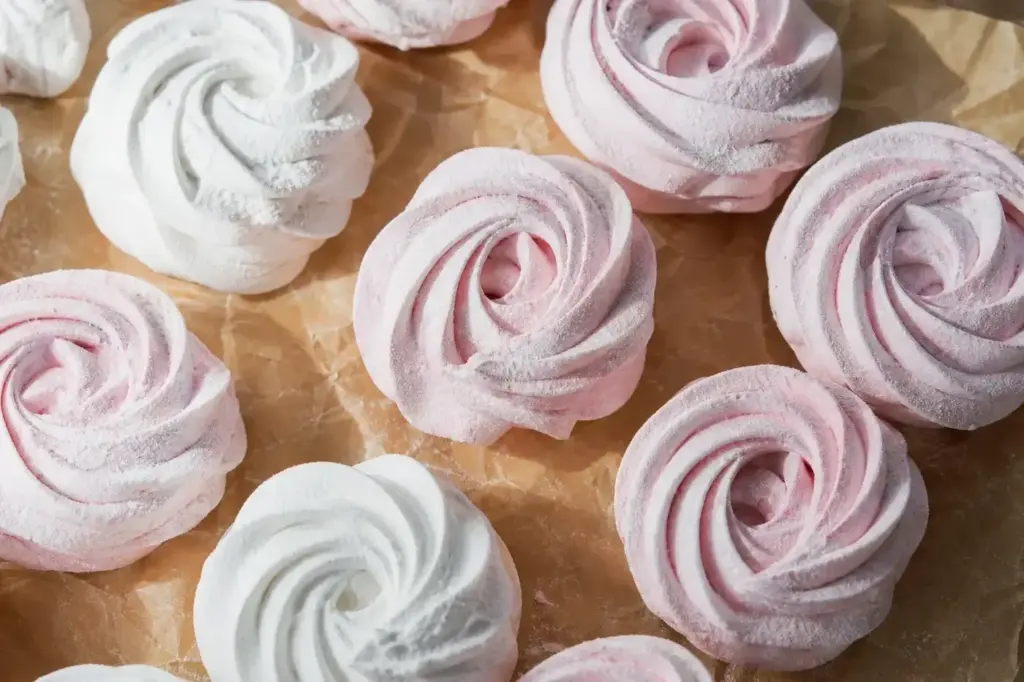
This article is for anyone curious about classic Russian sweets and who wants to recreate an authentic zefir at home. You’ll learn to make this delicate confection using simple, natural ingredients: fruit purée (typically apple or berry), sugar, egg whites and a gelling agent. The recommended way is to use agar agar, which sets at room temperature and produces the proper light, airy texture that defines true zefir.
Zefir differs from Western marshmallow in both origin and taste. Unlike marshmallow (which uses gelatin and corn syrup), zefir is fruit-forward with whipped egg whites, creating a softer, less sweet treat that pairs beautifully with tea. Once you understand the technique, you can vary the fruit flavors endlessly.
Quick answer: Whip fruit purée with sugar and egg whites, fold in a hot agar syrup, pipe into peaks, and let it set for several hours at room temperature. Total time: about 30 minutes hands-on work plus 4–6 hours setting time.
At a Glance
| Type | Desserts & sweets |
|---|---|
| Local name | Зефир |
| Origin | Zefir is derived from the traditional Russian pastila confectionery, known since the 14th century, but with added egg white foam and a gelling agent. An addition of unwhipped egg whites to the recipe originated in the town of Kolomna sometime during the 15th century, and in the 19th century, the zefir dessert most likely emerged in its modern form with whipped egg whites due to a French adaptation on the recipe that was later brought back to Russia. These marshmallows were named after the Greek god of the west wind, Zephyrus, on account of them being light and airy. |
| Servings | 2–4 servings (approximately 12–16 pieces) |
| Total time | 30 minutes preparation, plus 4–6 hours setting |
| Difficulty | Medium |
History and Story of Zefir (Зефир)
Zefir is derived from the traditional Russian pastila confectionery, known since the 14th century, but with added egg white foam and a gelling agent. The name itself carries meaning: these marshmallows were named after the Greek god of the west wind, Zephyrus, on account of them being light and airy. In the 15th century, in the town of Kolomna, bakers began adding egg whites to pastila to make it lighter. The modern version emerged during the 19th century when French culinary influence introduced the technique of whipping egg whites into foam before setting with natural gelling agents. During the Soviet era, this dessert became increasingly popular for its simple ingredients and ease of preparation, and became a staple in Russian households, available in flavors like apple, berry, and vanilla.
Ingredients
- 350 g tart apples (Granny Smith type)
- 150 g granulated sugar (for fruit mixture)
- 200 g granulated sugar (for syrup)
- 50 ml water (for agar)
- 6 g agar agar powder
- 2 egg whites (room temperature)
- 15 ml lemon juice
- Icing sugar (for dusting)
How Zefir (Зефир) Is Made
Step 1: Prepare the fruit purée base
Peel, core and chop the apples. Arrange them in a baking dish, coat lightly with lemon juice, and sprinkle with the granulated sugar (150 g) and a pinch of cinnamon if desired. Bake at 170°C (350°F) for 25 minutes until softened. Transfer the apple pieces to a blender and reduce to a smooth, velvety purée. Cool the purée completely in an ice bath or refrigerator (about 30 minutes) until it reaches room temperature.
Tip: Acidic apples like Granny Smith work best—they provide the traditional tart flavor. Avoid sweet, juicy varieties.
Step 2: Whip the egg whites
Place the egg whites (at room temperature) in the bowl of a stand mixer. Increase the speed to high and whip continuously until stiff peaks form—the mixture should transform from liquid to glossy, foam-like consistency, about 5–7 minutes. The peaks should hold their shape when you lift the whisk.
Tip: Cold egg whites take longer to whip. Allow them to warm to room temperature first for faster results.
Step 3: Prepare the agar syrup
In a small saucepan, combine agar agar powder with 50 ml of water. Heat over medium heat, stirring constantly, until the agar dissolves completely and the mixture becomes clear—about 5 minutes. Add the remaining 200 g of granulated sugar and continue heating gently, stirring often, until the sugar dissolves fully. The mixture should be hot but not boiling.
Tip: Agar agar must reach sufficient temperature to set properly. If it cools too much before mixing with the egg whites, it will set prematurely and won't incorporate smoothly.
Step 4: Combine fruit and egg whites
Add the cooled apple purée to the whipped egg whites. Reduce the mixer speed to low and gently fold them together until just combined. Do not overmix—you want to preserve as much airiness as possible in the egg whites.
Tip: Folding gently is key to maintaining the light, airy texture that makes zefir distinctive.
Step 5: Add the hot syrup
When the agar syrup is hot and ready, reduce the mixer speed to the lowest setting. Pour the hot syrup in a thin stream into the fruit-egg mixture, being careful not to pour it directly over the whisk. Once all the syrup is in, increase the speed to high and beat for another 3–4 minutes until firm peaks form again. The mixture should become pale, thick and glossy.
Tip: Pouring the syrup slowly and carefully prevents it from setting instantly around the whisk. The final beating ensures the syrup is evenly distributed and the texture becomes light and uniform.
Step 6: Pipe and set
Transfer the mixture to a piping bag fitted with a large star nozzle. Pipe rosette-shaped peaks onto parchment paper, leaving space between each one. The zefir will set at room temperature and does not need refrigeration. Allow 4–6 hours for complete setting, or until the surface firms to the touch.
Tip: Once set, the peaks may be paired with a partner piece and the flat sides pressed together if desired, then dusted with icing sugar. Store in an airtight container between layers of parchment paper.
Step 7: Finish with icing sugar
Once fully set, lightly dust the zefir pieces with icing sugar. This prevents them from sticking together and gives them a refined appearance. If making double-dipped zefir (two peaks pressed together), dust after assembly.
Tip: If the zefir becomes sticky during storage, redust with icing sugar and return to an airtight container with fresh parchment paper between layers.
Variants
- Berry zefir: Replace apple purée with raspberry, blackberry, or strawberry purée for a deeper red or pink color and different flavor profile.
- Cherry zefir: Traditional and popular; offers a more tart, burgundy-colored confection.
- Paired zefir: Press two piped peaks together at the base so they appear as a single bonbon, then dust with icing sugar for a more finished presentation.
- Light pink or white apple-only zefir: Made with only applesauce and sugar, without berries; delicate and subtly sweet.
- Vanilla-scented zefir: Add 1 teaspoon of vanilla extract to the fruit purée for a warm, aromatic note.
- Two-tone zefir: Pipe one fruit flavor into peaks, then pipe a contrasting color on top in a smaller nozzle for a decorative effect.
Common Mistakes to Avoid
- Using regular gelatin instead of agar agar: Regular gelatin melts at a much lower temperature and won't set properly in zefir. Agar agar is essential—it sets at room temperature and can withstand the hot sugar syrup.
- Pouring hot syrup too quickly: If the hot agar syrup hits the whisk directly or is poured too fast, it will set into lumps instead of incorporating smoothly. Always pour in a thin stream with the mixer at low speed.
- Not cooling the apple purée: If the fruit purée is still warm when you fold it into the egg whites, you risk deflating the whipped whites and losing airiness.
- Over-beating after adding syrup: Once you add the hot syrup and beat at high speed for 3–4 minutes, stop. Over-beating can cause the mixture to become grainy or separate.
- Using sweet apples: Sweet apples produce zefir that tastes cloying and one-dimensional. Acidic varieties like Granny Smith or Antonovka provide the proper tart balance that defines traditional Russian zefir.
- Rushing the setting time: Zefir needs 4–6 hours to set properly at room temperature. Trying to move or eat it before this time will result in a sticky, collapsed product.
How to Order and Eat It
Zefir is often enjoyed alongside tea or as a light dessert. Serve zefir at room temperature on a plate or in a small bowl. It pairs exceptionally well with hot black tea, particularly Russian black tea, or with coffee. The light, fruity sweetness complements rather than overwhelms. Zefir is most enjoyable fresh—within a week of making—though it keeps well in an airtight container for up to two weeks. Each piece should be eaten whole to enjoy the contrast between the firm outer layer and the soft, airy interior. If zefir has been stored and become slightly sticky on the surface, a light re-dusting with icing sugar before serving restores its appeal.
To order: Зефир [zefir]
Diet and Allergens
- gluten-free
- dairy-free
- vegetarian
Moscow Vibes Tips
- Cold egg whites are the enemy: Remove them from the refrigerator 15–20 minutes before you start. They whip to stiff peaks much faster and more easily when at room temperature, cutting preparation time significantly.
- Use a food mill or sieve after blending: A standard blender sometimes leaves tiny apple fiber or skins in the purée, which creates a grainy texture in the final zefir. Pushing the purée through a fine sieve ensures silky smoothness.
- Toast the apples instead of baking: For deeper flavor and more concentrated purée, bake the apples until slightly caramelized (30–35 minutes), which also reduces excess moisture in the fruit.
- Double the recipe easily: The technique doesn't change; simply scale all ingredients proportionally. Just ensure your mixer bowl and piping bag are large enough for double the volume.
- Store in parchment layers: Once completely set, layer zefir pieces between sheets of parchment paper in an airtight container. This prevents them from sticking together and keeps the surface from becoming sticky from condensation.
- Agar agar varies by brand: Some agar agar powders are denser than others. If your zefir doesn't set firmly after 6 hours, your agar may be weaker; add an extra gram next time and extend setting time by 1–2 hours.
Where to Find Zefir (Зефир) in Moscow
Related guides
 Danilovsky Market Moscow: Food Hall, Hours and What to Eat6 min on foot from Tulskaya metro, Open daily 08:00–21:00
Main image: AI-generated illustration. It may not show the place exactly as it looks.
 Izmailovo Vernissage Market Moscow: Hours, Souvenirs and Flea Market11 min on foot from Partizanskaya metro, Open daily 09:00–18:00
Main image: AI-generated illustration. It may not show the place exactly as it looks.
 10 Best Food Markets and Food Halls in Moscow: Where to Eat Indoors
Main image: AI-generated illustration. It may not show the place exactly as it looks.
 10 Best Places to Try Russian Food in Moscow: Classics and Canteens
Main image: AI-generated illustration. It may not show the place exactly as it looks.
 15 Best Things to Do in Moscow with Kids: Circus, Space and Parks
Main image: AI-generated illustration. It may not show the place exactly as it looks.
Browse more: All Food & Drink · All Other
FAQ
Can I use regular gelatin instead of agar agar?
The Russian recipe uses agar-agar instead of gelatin as a thickening agent, which withstands the high temperature needed to melt down sugar into a syrup. Regular gelatin will not work because it melts at temperatures much lower than the hot sugar syrup, causing the mixture to separate and set unevenly. Agar agar is not optional.
Is zefir the same as marshmallow?
Zefir and marshmallow, though often compared, are distinct confections with different origins, ingredients, and uses. Zefir is made by whipping fruit purée with sugar, egg whites, and a natural gelling agent such as agar or pectin. While it shares similarities with marshmallows, Zefir does not contain gelatin or heavy syrups. Its fruit content is higher, which makes its flavour brighter and less cloying.
Why does my zefir come out grainy?
Graininess usually means the apple purée wasn't smooth enough, or the syrup wasn't incorporated smoothly. Always push the cooked apples through a fine sieve after blending, and pour the hot syrup slowly into the mixer at low speed, not directly over the whisk. If the syrup sets too quickly, it forms granules instead of folding evenly into the mixture.
Can I make zefir without a stand mixer?
A stand mixer makes the job much easier because you need to whip egg whites to stiff peaks and then beat the final mixture for several minutes. You can use a hand mixer, but the process takes longer and requires more effort. Manual whipping with a whisk is extremely labor-intensive and not recommended.
How long does zefir keep?
Zefir keeps best in an airtight container at room temperature, layered between parchment paper, for up to two weeks. It does not need refrigeration and should not be frozen—freezing damages the delicate air structure. Once opened, it may absorb moisture and become slightly sticky over time.
What if my zefir won't set after 6 hours?
If your zefir is still sticky after 6 hours, the agar agar concentration may have been too low, or your agar brand may be weaker than expected. Leave it for another 2–3 hours. If it still doesn't firm up, dust it with icing sugar, transfer to an airtight container with parchment layers, and refrigerate for 2 hours, then bring back to room temperature.
Can I use different fruits?
Yes. Zefir are traditionally made with a fruit purée of raspberry, cherry, or blackberries to yield a pretty rose color. They can also be made with apple puree and dyed light green. Berry, cherry and cranberry all work well. Avoid very watery fruits like strawberries unless you reduce them down to concentrate; the purée should be thick enough to incorporate smoothly.
Is zefir gluten-free and vegan?
Zefir is gluten-free and dairy-free. However, it contains egg whites, so it is not vegan. If you need a vegan version, some recipes use aquafaba (chickpea liquid) in place of egg whites, though the result is slightly different.
Discover More of Moscow with Our Travel Tips
Get practical Moscow travel tips, new destination guides and useful updates on attractions, opening hours and prices. Plan your visit with clear, helpful information delivered to your inbox.
Moscow Vibes is a one-person project. A coffee keeps it going
Looking for more on this? Beef Stroganoff: Authentic Russian Recipe and Cooking Method (Russia Vibes)

Take this guide with you
Get a free PDF of this guide to print or read offline: key facts, tips and a map link on a few clean pages.
Report an issue on this page
Paying for your trip: please read
Payments and bookings between Russia and many other countries are currently restricted. In practice, cards issued in the EU, the UK, the US and several other countries often cannot be used in Russia, Russian cards usually cannot be used abroad, and some booking platforms, airlines and payment providers limit or pause their services for Russia. The situation changes frequently.
We do not give legal or financial advice, and this site does not encourage anyone to break any rule that applies to them. Whatever you plan, you are responsible for following the laws and regulations that apply to you, including those of your country of residence and citizenship.
Many travelers still organise their stay without problems. It is worth asking your bank or payment provider what is currently possible, contacting hotels, tour operators and carriers directly about the payment methods they accept, and checking which services are open to customers from your country. Clarify payment, cancellation and refund terms before you commit to a booking, and keep your plans flexible.
Partner links on this site may not be available in every country, and prices, availability and rules in our guides can differ from what you see when you book.
How we research and update our guides
About this guide: AI assistance and accuracy
This guide is created with the help of AI and is based on official sources where available. Mistakes can still happen. Opening hours, prices, rules and other details are given to the best of our knowledge as of the date shown and can change without notice. It offers general recommendations only, not professional, legal or travel advice. Please confirm important details with the official source before you travel; you are responsible for your own plans and decisions.
* Affiliate link: as an Amazon Associate we earn from qualifying purchases at no extra cost to you.