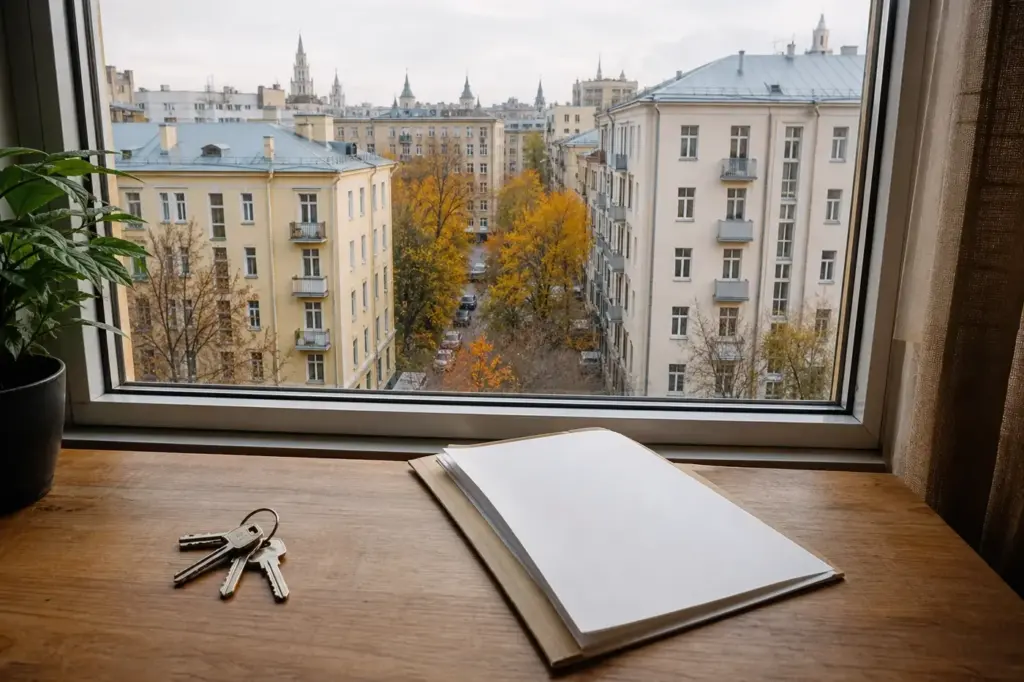
Can foreigners buy property in Russia? Foreign individuals can generally buy flats, including in Moscow, but the answer for a particular transaction depends on the property and the parties. A house with a plot requires a separate land check. Some transactions involving foreign parties are subject to special approval or settlement rules. This guide covers 12 checks to make before committing to a purchase.
Start by asking for the cadastral number and identifying the buyer and seller. Check the property record, the permissions that apply and how the bank can complete settlement before agreeing to a deposit. The information reflects official guidance as of November 2026. Confirm current requirements with Rosreestr, the relevant authority and the bank handling payment. Rules can change and depend on individual circumstances. This is general information, not legal or financial advice.
At a Glance
| # | Place | Best for | Good to know |
|---|---|---|---|
| 1 | Buying a Flat in Moscow | Check the registered unit | Match the listing to the unit’s entry in the Unified State Register of Real Estate, known as the EGRN. |
| 2 | Buying a House With Land | Check both property records | Request the cadastral numbers for the building and the land, then compare them with the proposed sale contract. |
| 3 | Land in Designated Border Territories | Location-based ownership restriction | Compare the plot’s official address and municipality with the current decree and confirm the result with Rosreestr or your lawyer. |
| 4 | Land Classified as Agricultural | Land category changes eligibility | Ask for a property-specific review if the EGRN identifies any parcel as agricultural land. |
| 5 | Special Transaction Approvals | Classify buyer and seller | Have your lawyer check current Bank of Russia guidance, relevant Government Commission decisions and Rosreestr’s registration requirements. |
| 6 | Seller Identity and Signing Authority | Verify who can sell | Ask the seller to provide ownership evidence identifying the owner. A third-party register extract may omit personal details. |
| 7 | Title History and Registered Restrictions | Look beyond the owner | Request current documents for the exact unit and give your lawyer time to review them before paying a reservation amount. |
| 8 | Identity Documents and Russian Translations | Prepare signing documents | Confirm the required originals, certified copies and translations for both signing and registration. |
| 9 | Bank Settlement and Deposits | Confirm payment before signing | Confirm the recipient account, bank documents and release conditions before sending funds. |
| 10 | The Sale Contract and Any Required Notarial Act | Agree the completion conditions | Align the contract, bank instructions and registration paperwork on when funds are released and when the property is handed over. |
| 11 | Registration of the Transfer and Handover | Confirm the registered transfer | Match the final register result to the cadastral number and buyer shown in the sale contract. |
| 12 | Ownership and Immigration Status | Separate residence procedure | Check residence eligibility and the applicable address procedure with the Russian Ministry of Internal Affairs. |
How We Chose
The checks follow the order in which a buyer can establish whether a purchase is feasible. The first entries distinguish a flat from a house with land and identify restrictions attached to particular plots. The remaining entries cover the parties, documentation, payment and registration.
- Property. Use the cadastral number and the recorded property type.
- Parties. Verify ownership, signing authority and any transaction approval requirements.
- Settlement. Confirm with the bank that it can carry out the agreed payment.
- Registration. Identify what Rosreestr needs and how the completed transfer will be confirmed.
1. Buying a Flat in Moscow – Check the registered unit
Foreign citizenship alone generally does not prevent an individual from buying a flat in Moscow. Check how Rosreestr records the specific unit before assessing the purchase. An advert may use the word apartment even when the unit is registered as non-residential premises. Ask for its cadastral number, floor area and recorded use. The distinction matters if you intend to live there and need to use the address for an official procedure.
Good to know: Match the listing to the unit’s entry in the Unified State Register of Real Estate, known as the EGRN.
Tip: Ask for the exact recorded property type when comparing a flat with a unit marketed as an aparthotel.
2. Buying a House With Land – Check both property records
A house and the plot beneath it can have separate cadastral records and different rights attached to them. Ask whether the seller owns the plot or holds another right to use it, and what the contract would transfer to you. Have the plot’s category, permitted use and location checked before committing to the house. This matters for properties outside Moscow as well as homes advertised as being within the city.
Out in the evening? Earplugs may be worth having along.
Good to know: Request the cadastral numbers for the building and the land, then compare them with the proposed sale contract.
Tip: Make sure the plot shown at the viewing matches the parcel identified in the paperwork.
3. Land in Designated Border Territories – Location-based ownership restriction
Article 15 of Russia’s Land Code restricts foreign ownership of land in designated border territories. The formal list is set by Presidential Decree No. 26, as amended. The check is whether the specific plot falls within a territory covered by the current list. If the sale includes a building and land, have a property lawyer review what the restriction means for the interests described in the draft contract.
Good to know: Compare the plot’s official address and municipality with the current decree and confirm the result with Rosreestr or your lawyer.
Tip: Use the cadastral record to establish the municipality when a listing names only the nearest town or resort.
4. Land Classified as Agricultural – Land category changes eligibility
Article 3 of Federal Law No. 101-FZ generally limits foreign individuals to leasehold for covered agricultural land, subject to the law’s scope and exceptions. A country property listing may use informal terms that tell you little about its legal classification. Check the recorded land category and permitted use. If the deal includes several parcels, request the same information for each before deciding whether to pursue it.
Good to know: Ask for a property-specific review if the EGRN identifies any parcel as agricultural land.
Tip: Check the recorded category alongside permitted use. They answer different questions about the plot.
5. Special Transaction Approvals – Classify buyer and seller
Presidential Decree No. 81 and related measures establish a special procedure for certain real estate transactions involving foreign parties. General permissions cover some categories. The applicable conditions can depend on which party is buying, the parties’ status under the rules and, in some cases, how the property was acquired. Have the exact transaction reviewed before signing. Ask whether a general permission applies or an individual approval is required.
Long journey ahead? Travel games may make the trip a little easier.
Good to know: Have your lawyer check current Bank of Russia guidance, relevant Government Commission decisions and Rosreestr’s registration requirements.
Tip: Ask for the legal basis in writing, including any condition that affects the contract or payment.
6. Seller Identity and Signing Authority – Verify who can sell
Compare current title evidence with the seller’s identity document. If someone will sign for the seller, review the power of attorney and confirm what it authorises. A person empowered to sign the contract may have a different scope of authority for receiving payment or submitting registration papers. For a company seller, identify who can sign on its behalf. Have the filing specialist check the relevant documents before the signing date.
Good to know: Ask the seller to provide ownership evidence identifying the owner. A third-party register extract may omit personal details.
Tip: If a representative is involved, ask who can confirm that the authority is still in force on signing day.
7. Title History and Registered Restrictions – Look beyond the owner
Review the register information for mortgages, restrictions and any other recorded encumbrances. Ask the seller for the document on which their ownership is based, such as a purchase contract or inheritance document. A lawyer can compare it with the register and identify issues that need a separate check, including potential third-party rights. If the seller promises to remove an encumbrance, agree how that will be verified and reflected in the sale arrangements.
Staying a few nights? A garment bag could be worth bringing.
Good to know: Request current documents for the exact unit and give your lawyer time to review them before paying a reservation amount.
Tip: Check the document date and arrange a fresh review if signing is postponed.
8. Identity Documents and Russian Translations – Prepare signing documents
Ask the lawyer, notary or registration specialist which identity document and Russian translation will be accepted. A buyer signing through a representative should have the wording of the power of attorney checked before it is issued. Depending on where a foreign document originates and which rules apply, it may need an apostille or consular legalisation as well as translation. Build that lead time into the signing schedule.
Good to know: Confirm the required originals, certified copies and translations for both signing and registration.
Tip: Use the same spelling of your name throughout the contract, translation and bank instructions.
9. Bank Settlement and Deposits – Confirm payment before signing
Ask the bank that will handle the transaction to confirm the proposed settlement method for the actual buyer and seller. Supply the information it needs about the parties, currency and source of funds. Special settlement conditions can apply even where the transaction is permitted. Set out in writing when a reservation amount is credited or returned and what happens if an approval, bank transfer or registration cannot be completed.
Good to know: Confirm the recipient account, bank documents and release conditions before sending funds.
Tip: Ask whether the written settlement instructions also cover a rejected or returned transfer.
10. The Sale Contract and Any Required Notarial Act – Agree the completion conditions
The written contract should identify the property and parties, state the purchase price and describe the payment and handover terms. Check whether the particular sale requires notarisation. A transaction involving a share in ownership, for example, can need a different form from a straightforward transfer of an entire flat. Ask the filing specialist to check the proposed form and any approvals, consents or supporting documents before the parties sign.
Spending time on the metro? A power bank may come in handy.
Good to know: Align the contract, bank instructions and registration paperwork on when funds are released and when the property is handed over.
Tip: Record the agreed vacancy and handover arrangements if the seller or another occupant will remain after signing.
11. Registration of the Transfer and Handover – Confirm the registered transfer
Rosreestr records the transfer of ownership in the EGRN. Agree who will submit the documents, who will receive any request for a correction and how the parties will check the result. Keep proof that the application was filed and obtain the final register evidence. At handover, record the property’s condition, keys, access devices and meter readings so the buyer and seller have the same record of what was delivered.
Good to know: Match the final register result to the cadastral number and buyer shown in the sale contract.
Tip: Track the dates of signing, registration and handover separately so each agreed obligation can be checked.
12. Ownership and Immigration Status – Separate residence procedure
An ordinary property purchase does not automatically issue a visa, extend a stay or grant residence in Russia. The country has a separate residence route for qualifying investors. It requires an application and assessment against government criteria, so eligibility cannot be inferred from owning a flat. If relocation is part of your decision, confirm the immigration basis before committing and ask how any required address registration would be handled after the purchase.
Good to know: Check residence eligibility and the applicable address procedure with the Russian Ministry of Internal Affairs.
Tip: If a seller mentions a residence benefit, ask for the exact official provision and confirm it independently.
Moscow Vibes Tips
- In a large Moscow building, check the entrance, floor, unit number and cadastral number together. A viewing address may describe the whole building or complex.
- Ask the seller which fixtures and appliances will remain, then attach an agreed list to the handover paperwork if those items matter to your purchase.
- For new construction, ask what right you would acquire at signing and at what stage an ownership entry can be made. Review the developer’s documents for the particular project.
- If two language versions of the contract are used, ask which governs and have the schedules and attachments checked in both versions.
- Before completing remotely, agree who will receive notices while the transfer is pending and who will inspect the unit and accept the keys on your behalf.
Keep reading
Related guides

Places to see


FAQ
Can someone represent me if I cannot travel to Moscow?
A representative may be able to sign and file for you if the required authority is properly documented. Ask the Russian notary or filing specialist to review the wording before you sign a power of attorney abroad. Check the permitted actions individually, including whether the representative can sign amendments, respond to registration questions and take possession.
Does a Russian bank have to give a foreign buyer a mortgage?
A bank makes its own lending assessment under the rules that apply to it. Ask which passports, residence statuses and income documents it accepts, and whether it will lend against the type of property you are considering. Obtain a bank decision that covers your case before signing a purchase obligation that depends on financing.
What if the flat is already occupied?
Ask who lives there, what right they have to occupy it and when they are expected to leave. Give the documents to your lawyer so they can check whether any rights continue after sale. If you need vacant possession, agree how it will be confirmed and what the contract provides if the handover is delayed.
Can I buy only a share in a Moscow flat?
A share purchase calls for a separate review of the ownership record, the form of the contract and any relevant rights of other owners. Ask a Russian notary or property lawyer to check the procedure for that specific share. Also confirm what practical use of the flat the share would give you.
Are buying from a developer and buying a resale flat the same process?
Start by identifying the document the seller proposes. With a completed resale, the focus is on the registered unit, existing ownership and transfer. A flat still under construction can involve a different contract and settlement process. Ask the relevant specialist to identify what you acquire at each stage and when the home can be handed over.
What costs should I budget for beyond the purchase price?
Ask for a breakdown of registration, any required notarial work, translations, bank settlement and professional assistance. If an agent is involved, check who engaged them and when their fee falls due. For ongoing ownership, request recent building and utility statements and check which expenses will be yours after completion.
Can I later sell a property I buy in Russia?
Check the rules in force when you plan to sell. The parties’ status, the history of acquisition and the proposed payment arrangements can affect the procedure and how proceeds are received. Before accepting a deposit from a later buyer, ask your lawyer and bank to review both the transfer and settlement.
What should I do if Rosreestr suspends the registration?
Obtain the official notice and identify the issue and response deadline it gives. Ask the person who filed the documents to explain what needs correcting and who must provide it. Before authorising a separate payment or handover, compare the notice with the contract and the bank’s settlement conditions.
Discover More of Moscow with Our Travel Tips
Get practical Moscow travel tips, new destination guides and useful updates on attractions, opening hours and prices. Plan your visit with clear, helpful information delivered to your inbox.
Moscow Vibes is a one-person project. A coffee keeps it going
More in this section: Living in Moscow
Get a free PDF of this guide to print or read offline: key facts, tips and a map link on a few clean pages.
Take this guide with you
About this page
Report an issue on this page
Paying for your trip: please read
Payments and bookings between Russia and many other countries are currently restricted. In practice, cards issued in the EU, the UK, the US and several other countries often cannot be used in Russia, Russian cards usually cannot be used abroad, and some booking platforms, airlines and payment providers limit or pause their services for Russia. The situation changes frequently.
We do not give legal or financial advice, and this site does not encourage anyone to break any rule that applies to them. Whatever you plan, you are responsible for following the laws and regulations that apply to you, including those of your country of residence and citizenship.
Many travelers still organise their stay without problems. It is worth asking your bank or payment provider what is currently possible, contacting hotels, tour operators and carriers directly about the payment methods they accept, and checking which services are open to customers from your country. Clarify payment, cancellation and refund terms before you commit to a booking, and keep your plans flexible.
Partner links on this site may not be available in every country, and prices, availability and rules in our guides can differ from what you see when you book.
How we research and update our guides
About this guide: AI assistance and accuracy
This guide is created with the help of AI and is based on official sources where available. Mistakes can still happen. Opening hours, prices, rules and other details are given to the best of our knowledge as of the date shown and can change without notice. It offers general recommendations only, not professional, legal or travel advice. Please confirm important details with the official source before you travel; you are responsible for your own plans and decisions.
* Affiliate link: as an Amazon Associate we earn from qualifying purchases at no extra cost to you.