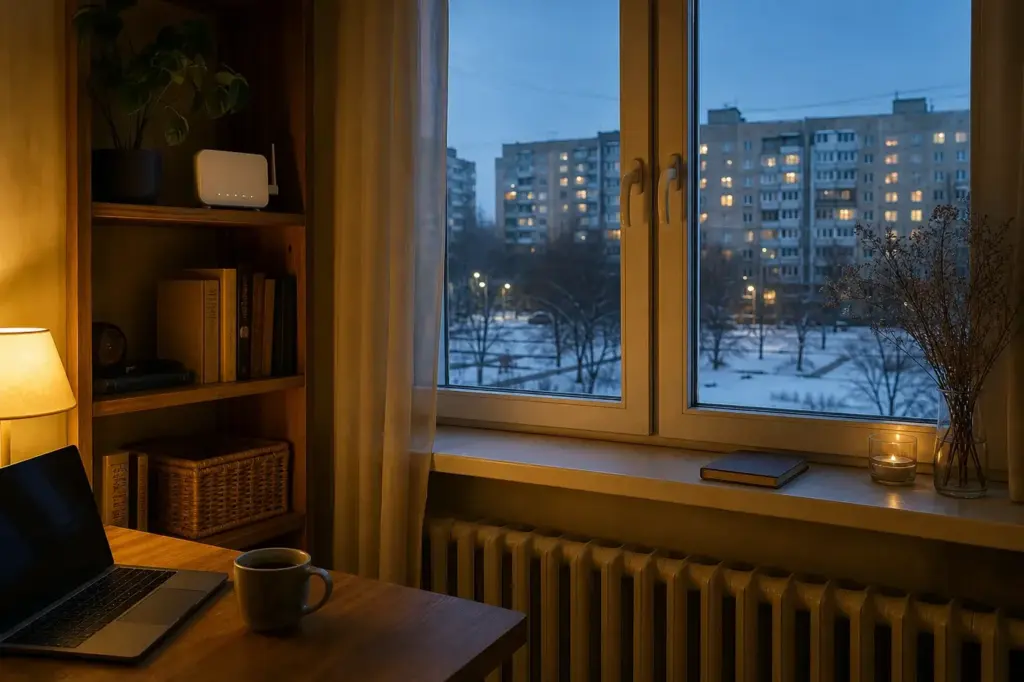
Home Internet and Utilities in Moscow is a practical guide for newcomers who rent or move into a flat and need a working connection, readable bills and a clear idea of who is responsible for what. It suits renters, long-stay visitors and people moving for work. It covers ten topics, from checking which providers reach your address to meters, heating and what to do when something breaks.
Contracts, tariffs and billing rules differ between buildings, landlords and providers, and they change. Treat this guide as an orientation, confirm details with your landlord, the building’s management company and the provider’s official channels, and remember that this is general information, not legal, tax or financial advice. Arrange the connection early, because other steps often depend on it.
At a Glance
| # | Place | Best for | Good to know |
|---|---|---|---|
| 1 | Checking Home Internet Availability by Address | Start with your address | Provider websites or apps; ask your landlord first |
| 2 | Choosing a Home Internet Connection Type | Fibre, cable or mobile | Typically budget to moderate (₽–₽₽); confirm with the provider |
| 3 | Signing a Home Internet Contract | Documents and contract | Provider office or official online channel |
| 4 | How to get mobile internet in Moscow as a foreign visitor | Bridge solution | Phone or eSIM; set up before you arrive |
| 5 | Russian SIM Card for Foreign Tourists: SNILS, Gosuslugi and Biometrics Explained | Local number | Online or via an operator; allow extra time |
| 6 | Understanding the Utility Bill | Single payment document | Building management company; check what the rental agreement includes |
| 7 | Meters and Monthly Readings | Water and electricity | Management company or city service; ask which channel the building uses |
| 8 | Heating, Hot Water and Seasonal Shutoffs | Seasonal service | Building notices and city service announcements |
| 9 | How to pay and exchange money in Moscow | Paying bills and rent | Agree the payment method with your landlord first |
| 10 | How to contact emergency services in Moscow | When something breaks | By phone; save the numbers offline |
How We Chose
Entries are the steps and services a new tenant in Moscow usually meets, chosen from official provider and city information and from related guides on this site rather than personal visits. No tariffs or fees are given, because they change and vary by building.
- Covers a step that most renters need, from the first connection to the monthly bill
- Names who is usually responsible: provider, landlord or building management company
- Ordered from getting online, to understanding the bill, to solving problems
Payments: bank cards issued outside Russia currently do not work in Russia, neither in shops nor at ATMs, and Apple Pay or Google Pay does not work with them either. Plan for cash and for payment options that work locally, and agree the method with your landlord. Confirm every detail with the official source.
1. Checking Home Internet Availability by Address – Start with your address
Home internet in Moscow is sold building by building, so the first step is finding out which providers actually reach your address. Most providers have an address checker on their official website or app, and the landlord or building manager can often tell you what is already installed. Availability, connection types and speeds change, so confirm with the provider before relying on a listing.
Settling into the room? A travel power strip may be a useful extra.
Good to know: Provider websites or apps; ask your landlord first
Tip: Check two or three providers, because coverage can differ between neighbouring buildings.
2. Choosing a Home Internet Connection Type – Fibre, cable or mobile
Most Moscow flats can use a fixed fibre or cable connection, usually delivered through the building's existing cabling to a router in the hallway or living room. A mobile router is a backup if no fixed line is available, but coverage inside thick-walled buildings varies. Ask about the connection type, router ownership and any minimum contract period before you agree. Details differ by building and provider.
Good to know: Typically budget to moderate (₽–₽₽); confirm with the provider
Tip: Ask whether the router is rented or included, and what happens to it when you move out.
3. Signing a Home Internet Contract – Documents and contract
A fixed connection is normally set up through a written contract in the account holder's name. Providers may ask for a passport, the address and a phone number for confirmation codes, and some also want proof of your right to live at the address. Terms are in Russian, so use a translation tool and ask the provider to explain anything unclear. Confirm requirements for foreign nationals with the provider.
Sunny days ahead? A travel towel could be worth packing.
Good to know: Provider office or official online channel
Tip: Make sure the contract holder is the person who will actually receive the notices and invoices.
4. How to get mobile internet in Moscow as a foreign visitor – Bridge solution
Until a home line is installed, mobile internet keeps you connected. The article explains the practical options for visitors and how to set them up, and it is the quickest way to cover the first days. Keep it as a backup afterwards too, since a fixed connection can fail. Mobile data rules and coverage can change, so check the current details.
Good to know: Phone or eSIM; set up before you arrive
Tip: Treat mobile data as your emergency line and keep a spare plan until the home line works.
5. Russian SIM Card for Foreign Tourists: SNILS, Gosuslugi and Biometrics Explained – Local number
Many contracts and online accounts send confirmation codes to a local phone number. A physical Russian SIM card is no longer easy for visitors to get and needs registration, so an eSIM is the practical option. A newly activated eSIM can be restricted for about 24 hours, which is normal. The article explains the identification steps and the official services involved.
Good to know: Online or via an operator; allow extra time
Tip: Set up your number before applying for any connection, so codes arrive on the first day.
6. Understanding the Utility Bill – Single payment document
Utilities in Moscow are often billed through one monthly payment document that can combine water, heating, electricity, building maintenance and a contribution to long-term building repairs. The tenant may pay it directly or through the landlord, depending on the rental agreement. The bill shows the account number, meter readings and the management company responsible for the building, so keep a copy of each one.
Packing for the flight? A travel bottle set could be useful.
Good to know: Building management company; check what the rental agreement includes
Tip: Ask the landlord to show you a recent bill before you sign anything.
7. Meters and Monthly Readings – Water and electricity
Water and electricity are typically measured by meters in the flat, and readings are usually reported once a month through the management company, a city service or a payment app. Submitting readings on time avoids estimated charges, which can be higher. Ask the landlord where the meters are, how to read them and which channel the building uses, and note the starting readings on the day you move in.
Good to know: Management company or city service; ask which channel the building uses
Tip: Photograph every meter on move-in day with the date visible.
8. Heating, Hot Water and Seasonal Shutoffs – Seasonal service
Most Moscow buildings use central heating, and the heating season starts and ends according to the outdoor temperature rather than on a fixed date. Radiators are rarely controlled by the tenant. Hot water is also supplied centrally, and many districts have a scheduled maintenance shutoff, often in summer for a period of days. Management companies and city announcements carry the schedule, so check them before you plan around hot water.
Busy rides ahead? A crossbody bag could be useful on the way.
Good to know: Building notices and city service announcements
Tip: Find the notice board near your entrance; shutoff dates are often posted there first.
9. How to pay and exchange money in Moscow – Paying bills and rent
Housing costs mostly move through locally working payment options, a landlord's arrangement or cash. The article explains how money and payments work in practice for visitors. Agree early with the landlord how rent and utilities are paid, who receives the payment document and how you will get a receipt. Rules and options change, so confirm them before the first payment.
Good to know: Agree the payment method with your landlord first
Tip: Keep a receipt or a confirmation screenshot for every payment.
10. How to contact emergency services in Moscow – When something breaks
A gas smell, a burst pipe or a power failure needs a quick and calm response. The article explains how emergency numbers work in Moscow and how to describe your location. For non-emergency faults, the building's dispatcher or management company is usually the first call. Keep your address ready to read out, since staff may speak little English.
Good to know: By phone; save the numbers offline
Tip: Save the dispatcher's number for your building in your phone on the day you move in.
Moscow Vibes Tips
- Ask your landlord for the account number, the latest bill and the current meter readings at move-in. Having them in writing makes any later disagreement about charges much easier to settle.
- Provider technicians usually come by appointment in a time window. Ask for a window that you can actually attend, and keep your phone number reachable on the day.
- Contracts and bills are in Russian. A translation app on your phone helps with a first reading, and the guide to navigating Moscow offline with maps and translation apps explains how to set one up without a data connection.
- Be careful with door-to-door sales promoters offering fast connections. Use the provider's official channels, and do not hand over passport copies to anyone you cannot verify.
- Before the heating season peaks, check that the radiators are warm and the windows close properly, and report faults to the management company early rather than in the first cold week.
- Keep a short list in your phone: landlord, management company dispatcher, provider support and the account numbers. In a fault, finding the right number is often the slowest part.
Keep reading
Related guides

Places to see


FAQ
Can a foreigner sign a home internet contract in Moscow?
Often yes, but requirements depend on the provider and on your documents. Expect to show a passport and the address, and possibly a local phone number for confirmation codes. Some providers also want proof of your right to live at the address. Ask the provider directly before booking a technician visit.
How long does it take to get connected?
It can range from a few days to a couple of weeks, depending on the building, the provider and the available appointment times. A building that already has the provider's cabling is usually quicker. Ask for an installation date when you apply, and keep mobile data as a bridge in the meantime.
Who pays the utilities, the tenant or the landlord?
It depends on the rental agreement. Some landlords include utilities or a fixed amount in the rent, others pass the bill on to the tenant. Ask which items are included, who receives the payment document and how meter readings are handled, and get the answers in writing.
Is Wi-Fi always included in a rented flat?
Not always. Some flats come with a router and an active contract, others have nothing. Ask whether the connection exists, who holds the contract and whether the landlord expects you to move it into your name. Do not assume that a router on the shelf means a working line.
Do I need to read the meters myself?
Usually yes for water, and often for electricity, depending on the meter type. Readings are commonly submitted once a month through the management company, a city service or a payment app. Ask the landlord which channel the building uses and note your starting readings on move-in day.
What is a management company?
It is the organisation responsible for the building's shared systems, such as heating, entrance areas, lifts and repairs, and it often issues or explains the monthly payment document. Ask your landlord for its name and contact details, because it is the first point of contact for building problems.
Can I pay my bills with a foreign bank card?
See the payment note under the selection criteria. In practice, tenants often pay through the landlord or through a locally working payment option, so agree the method with the landlord early, and ask how you will receive a receipt for each payment.
Is tap water in Moscow flats suitable for drinking?
Many residents use bottled water or a household filter for drinking, because the condition of building pipes can vary. For reliable information, check the official water supplier's pages and ask the management company about your building. This is general information, not medical advice.
Discover More of Moscow with Our Travel Tips
Get practical Moscow travel tips, new destination guides and useful updates on attractions, opening hours and prices. Plan your visit with clear, helpful information delivered to your inbox.
Moscow Vibes is a one-person project. A coffee keeps it going
More in this section: Living in Moscow
Get a free PDF of this guide to print or read offline: key facts, tips and a map link on a few clean pages.
Take this guide with you
About this page
Report an issue on this page
Paying for your trip: please read
Payments and bookings between Russia and many other countries are currently restricted. In practice, cards issued in the EU, the UK, the US and several other countries often cannot be used in Russia, Russian cards usually cannot be used abroad, and some booking platforms, airlines and payment providers limit or pause their services for Russia. The situation changes frequently.
We do not give legal or financial advice, and this site does not encourage anyone to break any rule that applies to them. Whatever you plan, you are responsible for following the laws and regulations that apply to you, including those of your country of residence and citizenship.
Many travelers still organise their stay without problems. It is worth asking your bank or payment provider what is currently possible, contacting hotels, tour operators and carriers directly about the payment methods they accept, and checking which services are open to customers from your country. Clarify payment, cancellation and refund terms before you commit to a booking, and keep your plans flexible.
Partner links on this site may not be available in every country, and prices, availability and rules in our guides can differ from what you see when you book.
How we research and update our guides
About this guide: AI assistance and accuracy
This guide is created with the help of AI and is based on official sources where available. Mistakes can still happen. Opening hours, prices, rules and other details are given to the best of our knowledge as of the date shown and can change without notice. It offers general recommendations only, not professional, legal or travel advice. Please confirm important details with the official source before you travel; you are responsible for your own plans and decisions.
* Affiliate link: as an Amazon Associate we earn from qualifying purchases at no extra cost to you.