International Schools in Moscow serve families who move for work or study and want lessons in English or another language, often following a British, American or International Baccalaureate curriculum. This guide lists ten things to compare, from curriculum and licences to admissions, fees, commute and the school calendar, so you can build a shortlist before you visit. Places and start dates vary, so begin the search well before you move and ask early.
Schools, curricula, fees and admission rules change and differ from school to school, and no school is named or recommended here. Confirm everything with the school and with the relevant education authority, especially licences and the recognition of certificates. This is general information, not educational or legal advice.
At a Glance
| # | Place | Best for | Good to know |
|---|---|---|---|
| 1 | Curriculum Types | What is taught | Ask each school for its curriculum overview |
| 2 | Language of Instruction and Russian Lessons | Language support | Ask about language levels and support lessons |
| 3 | Licences and Accreditation | Check credentials | Ask for the licence and accreditation details in writing |
| 4 | Admissions Process and Documents | Paperwork | Admissions office; ask for the current document list |
| 5 | Entry Tests and Waiting Lists | Timing | Ask the admissions office about places and timing |
| 6 | Fees and Extra Costs | What you pay | Ask for a written fee list; levels are estimates |
| 7 | Location and School Bus Routes | Commute | Ask for the bus map and pick-up times |
| 8 | Private Health Insurance for Foreigners in Russia: What to Compare | Health cover | Guide on this site; ask the school about its nurse |
| 9 | Public Holidays and Office Closures in Russia | School calendar | Ask for the full-year calendar; guide on this site |
| 10 | Visits and Trial Days | See it first | Book a tour with the admissions office |
How We Chose
Entries are the points worth comparing between schools, chosen from public information about how international schools work and the related guides on this site, not from personal visits. No school is named or recommended, because places, fees and programmes change.
- Each point can be checked with the school or the education authority
- Relevant for families who move for a longer stay
- Ordered from teaching and credentials to practical details
Payments: bank cards issued outside Russia currently do not work in Russia, neither in shops nor at ATMs, and Apple Pay or Google Pay does not work with them either. Plan for cash and for payment options that work locally, and ask the school how fees are paid and invoiced. Confirm every detail with the school.
1. Curriculum Types – What is taught
International schools usually follow one main curriculum, most often British, American or the International Baccalaureate, sometimes alongside the Russian programme. The choice affects exams, university applications and how easily a child can move to the next school abroad. Ask which curriculum each year group follows, what exams are taken at the end and whether a bilingual track is offered. Compare it with where your family may go next.
Travelling with children? Travel games could make things easier.
Good to know: Ask each school for its curriculum overview
Tip: Ask for a sample timetable for your child's year group.
2. Language of Instruction and Russian Lessons – Language support
Most international schools teach in English, but the amount of Russian differs. Check how many Russian lessons are offered, whether beginners are taught separately and what support exists for children who are still learning English. Younger children often adapt quickly, while older students may need extra help. Ask how language progress is reported to parents and how the school handles other home languages.
Good to know: Ask about language levels and support lessons
Tip: Ask how long a new student usually needs extra language support.
3. Licences and Accreditation – Check credentials
Before applying, ask which licence the school holds from the education authority and whether its curriculum or exams are authorised by an international body. Both can affect whether a certificate is recognised in Russia and abroad. Ask for the information in writing and confirm it with the relevant education authority, since rules change. This is general information, not legal advice.
Spending time on the metro? A power bank may come in handy.
Good to know: Ask for the licence and accreditation details in writing
Tip: Ask the school to show the licence document, not only to describe it.
4. Admissions Process and Documents – Paperwork
Applications usually ask for an application form, passport copies, previous school reports and sometimes medical or vaccination records, often with translations. Some schools also ask for references and an interview with the child. Document lists differ by school and by the child's status, so ask for the current list and which translations are accepted. Prepare the originals well before the start date.
Good to know: Admissions office; ask for the current document list
Tip: Request the records from your child's current school before you leave, as this can take time.
5. Entry Tests and Waiting Lists – Timing
Many schools use placement tests or trial days to find the right class, and popular year groups can have waiting lists. The main intake is usually in early autumn, but many schools accept students during the year if places are free. Ask how long a decision takes, whether a deposit holds a place and what happens if your move is delayed.
Good to know: Ask the admissions office about places and timing
Tip: Apply to two or three schools in parallel rather than waiting for one answer.
6. Fees and Extra Costs – What you pay
Fees at international schools are typically at the upscale to splurge level, ₽₽₽ to ₽₽₽₽, and may be charged per term or per year. Ask what is included and what is extra: registration or deposit, meals, uniforms, school bus, trips, exams and after-school clubs. If an employer pays part of the fees, ask how invoices are issued. The payment note in the selection criteria explains how payments work for visitors.
Travelling by train, bus or plane? A travel blanket could come in handy.
Good to know: Ask for a written fee list; levels are estimates
Tip: Ask for the full cost of one school year, including extras.
7. Location and School Bus Routes – Commute
Moscow is large and winter commutes are long, so the school's location and bus routes matter as much as the curriculum. Schools are spread across the city, and some run buses that pick up children from several districts. Ask about pick-up points, travel time and who supervises the ride. The guide to the best neighborhoods helps with choosing where to live, and you can test the route before signing a lease.
Good to know: Ask for the bus map and pick-up times
Tip: Test the commute at school rush hour before you sign a lease.
8. Private Health Insurance for Foreigners in Russia: What to Compare – Health cover
Schools often ask for medical records, vaccination information and emergency contacts, and some expect families to hold health insurance. The insurance guide explains what to compare, including clinic networks, language support and direct billing. Ask the school about its nurse, first-aid arrangements and the clinic it uses in an emergency. This is general information, not medical advice.
Staying a few nights? A sleeping bag liner could be worth bringing.
Good to know: Guide on this site; ask the school about its nurse
Tip: Add your insurer's assistance number to the school's emergency contacts.
9. Public Holidays and Office Closures in Russia – School calendar
International schools usually have their own calendar, with terms and breaks that may differ from state schools, and some also close on Russian public holidays. The holidays guide explains the long breaks in January and May, when offices and services close. Ask each school for the calendar for the full year, and check how it fits with your work and travel plans.
Good to know: Ask for the full-year calendar; guide on this site
Tip: Ask whether school days are shifted around public holidays.
10. Visits and Trial Days – See it first
Visit before you decide. Open days and tours show the classrooms, playgrounds and mood of the school, and a short trial day lets your child try a class. Ask about class size, how teachers are recruited, learning support, safety rules and how parents are kept informed. Compare your notes between schools while the details are fresh.
Good to know: Book a tour with the admissions office
Tip: Ask to see the school at drop-off or lunch time, not only at a quiet moment.
Moscow Vibes Tips
- If your employer is relocating you, ask whether it has a relocation adviser or existing contacts with schools. They often know current places and can help with timing.
- Keep digital copies of school reports and certificates, and ask which official translations the school accepts, so you do not have to arrange them in a hurry.
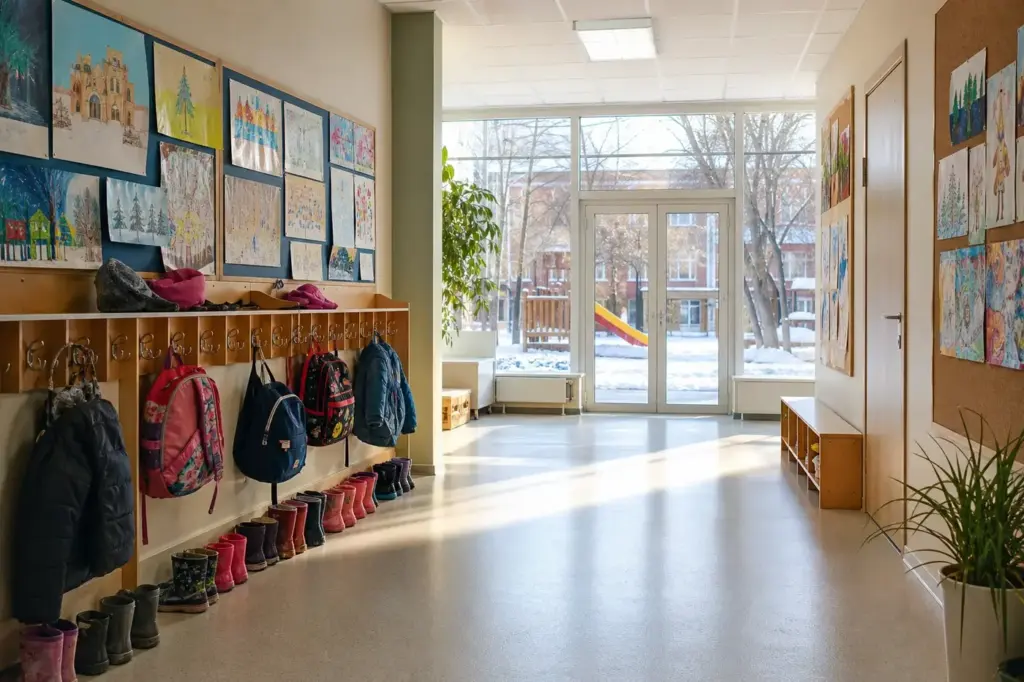
- Ask about outdoor time and dress rules in winter. Children usually need proper boots, a warm coat and spare clothes.
- Use a translation app for forms in Russian. The guide to navigating Moscow offline with maps and translation apps explains how to set it up without a data connection.
- Schools often contact parents by phone or by message, so keep your number working. An eSIM is the practical option, and a newly activated eSIM can be restricted for about 24 hours, so set it up in advance.
- Talk to other parents. The Expat Communities and Meetups in Moscow guide lists ways to meet families who have already been through the search.
Keep reading
Related guides
Places to see
FAQ
Are there international schools in Moscow?
Yes, there are several, and they differ in curriculum, language, size and fees. Offers change, so check the current list with the schools and with your employer, and confirm licences with the relevant education authority.
Can my child attend a state school instead?
Possibly, depending on your status and the school, but lessons are in Russian and the process differs from international schools. Ask the relevant education authority which documents and rules apply to your situation.
Does my child need to speak Russian?
Not for most lessons at an international school, which are usually taught in English. Russian lessons are normally part of the timetable, and some basic Russian helps with daily life, school trips and making local friends.
Which curricula do international schools offer?
The most common are British, American and International Baccalaureate programmes, sometimes combined with the Russian programme. Ask each school which curriculum applies to which age group and which exams students take at the end.
How much do international schools cost?
As a rough estimate, typically at the upscale to splurge level, ₽₽₽ to ₽₽₽₽, with extras on top. Fees change and depend on the year group, so ask for the current fee list and a clear breakdown of what is included.
When should I apply?
As early as you can, because places in some year groups are limited and waiting lists are possible. Many schools also take students during the school year. Contact the admissions office as soon as your move is likely.
Are the certificates recognised abroad?
That depends on the curriculum and the exam body, not only on the school. Ask the school which qualifications students receive and check with the university or authority in your next destination whether they are accepted.
Can I visit a school without an appointment?
Usually not. Most schools arrange tours and open days through the admissions office, and security rules at the entrance apply. Book a visit in advance and ask for the parts of the school you most want to see.
Discover More of Moscow with Our Travel Tips
Get practical Moscow travel tips, new destination guides and useful updates on attractions, opening hours and prices. Plan your visit with clear, helpful information delivered to your inbox.
Moscow Vibes is a one-person project. A coffee keeps it going
More in this section: Living in Moscow
Get a free PDF of this guide to print or read offline: key facts, tips and a map link on a few clean pages.
Take this guide with you
About this page
Report an issue on this page
Paying for your trip: please read
Payments and bookings between Russia and many other countries are currently restricted. In practice, cards issued in the EU, the UK, the US and several other countries often cannot be used in Russia, Russian cards usually cannot be used abroad, and some booking platforms, airlines and payment providers limit or pause their services for Russia. The situation changes frequently.
We do not give legal or financial advice, and this site does not encourage anyone to break any rule that applies to them. Whatever you plan, you are responsible for following the laws and regulations that apply to you, including those of your country of residence and citizenship.
Many travelers still organise their stay without problems. It is worth asking your bank or payment provider what is currently possible, contacting hotels, tour operators and carriers directly about the payment methods they accept, and checking which services are open to customers from your country. Clarify payment, cancellation and refund terms before you commit to a booking, and keep your plans flexible.
Partner links on this site may not be available in every country, and prices, availability and rules in our guides can differ from what you see when you book.
How we research and update our guides
About this guide: AI assistance and accuracy
This guide is created with the help of AI and is based on official sources where available. Mistakes can still happen. Opening hours, prices, rules and other details are given to the best of our knowledge as of the date shown and can change without notice. It offers general recommendations only, not professional, legal or travel advice. Please confirm important details with the official source before you travel; you are responsible for your own plans and decisions.
* Affiliate link: as an Amazon Associate we earn from qualifying purchases at no extra cost to you.