
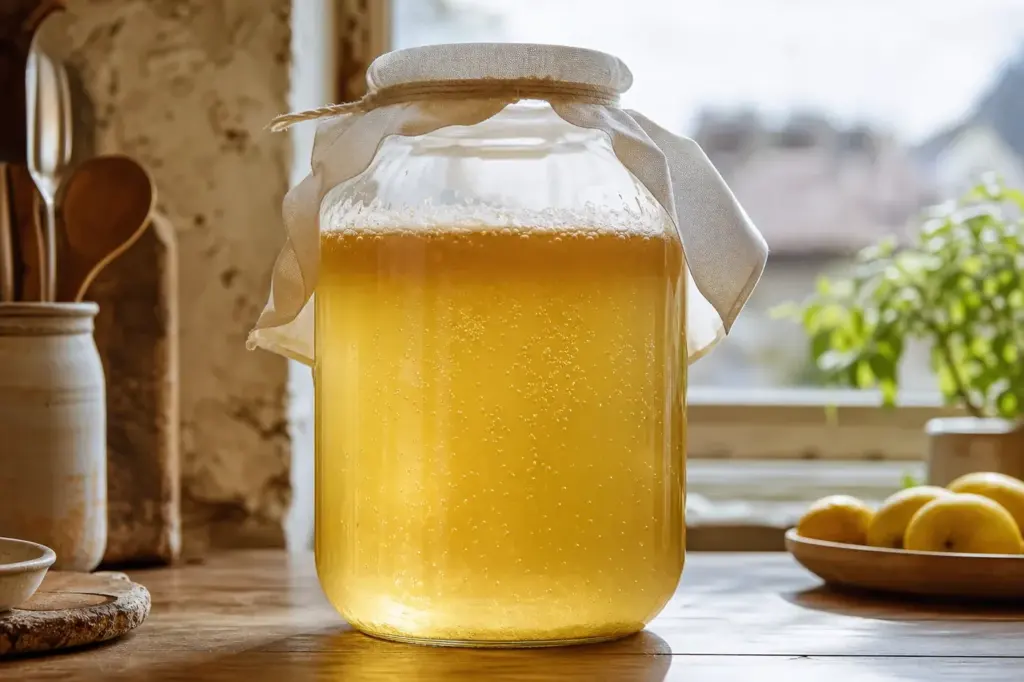
Medovukha is a traditional Slavic honey-based alcoholic beverage with roots stretching back to medieval times. Visitors to Moscow interested in trying authentic Russian drinks will find medovukha served in traditional restaurants and specialty establishments across the city. This guide shows you how to make medovukha Russian honey mead at home, using simple ingredients and a straightforward fermentation process.
Medovukha is lighter and faster to prepare than its ancient predecessors, making it accessible for home cooks. Unlike heavily aged meads, modern medovukha ferments in days to weeks and is typically consumed fresh, yielding a slightly sweet, naturally fizzy drink that connects you directly to Slavic culinary tradition.
Quick answer: Medovukha is made by dissolving honey in water, heating gently, cooling, then fermenting with yeast and optional spices for 5–10 days. Total time including initial setup and fermentation is 1–2 weeks; the resulting drink is slightly sweet, naturally fizzy, and typically contains 5–10% alcohol.
At a Glance
| Type | Alcoholic drinks |
|---|---|
| Local name | Медовуха |
| Origin | Medovukha originates in medieval Kievan Rus and remained a central part of Slavic culture through the centuries. The term 'medovukha' emerged in the 18th century in Veliky Novgorod and gained widespread recognition only in the 20th century. Before that, honey-based drinks existed in older forms: ancient Russians prepared 'stavlennyi med' (aged honey), which fermented naturally for 15–20 years, and 'varennyi med' (boiled honey), which reduced fermentation to months.During the 16th century, Prince Vasily III of Moscow restricted private medovukha production, making it a monopoly of the church and state. Later, Peter the Great promoted vodka production over medovukha because it fermented faster and generated higher tax revenue. Despite this decline, medovukha remained a folk tradition and experienced a revival in the 20th century, particularly in Suzdal, where the first Soviet mead brewery opened in 1967. |
| Servings | 4–6 servings (about 1.5–2 litres) |
| Total time | 1–2 weeks (active fermentation 5–10 days, plus maturation) |
| Difficulty | Easy |
History and Story of Medovukha (Медовуха) [Alcoholic]
Honey-based alcoholic drinks appear in Old Russian texts dating to the 9th century, where ‘med’ referred both to fermented beverages and honey itself. Early medovukha variants were rare luxury items: fermentation occurred naturally over 15–50 years in sealed, buried oak barrels, rendering the drink accessible only to nobility. The mixture typically combined two parts honey with one part berry juice, which introduced wild yeasts and bacteria necessary for fermentation.Slavic innovation transformed medovukha from a luxury to a folk beverage. By heating the honey mixture, fermentation time dropped dramatically—from decades to months or weeks. By the 11th century, boiled honey drinks (‘varennyi med’) reduced preparation to approximately one month. The 18th-century innovation of rapid fermentation using controlled yeast created modern medovukha, which took only days to weeks.Medovukha held deep cultural significance in Slavic ritual and celebration. It was traditionally drunk at weddings, feasts, religious festivals (particularly Medoviy Spas on August 14), and funerary meals. Newlyweds were said to drink it throughout their first month of marriage. By the 20th century it had become less common but remains associated with traditional hospitality and holiday celebrations.
Ingredients
- 1.2 litres water (spring or filtered)
- 300–400 grams raw honey
- 2–3 grams dried hops (optional but traditional)
- 2 grams active dry yeast or natural raisins for wild yeast
- Sanitised fermentation vessel (glass jar, 2 litres minimum)
- Cheesecloth or loose cloth cover
- Fine strainer
- Clean bottles for storage
How Medovukha (Медовуха) [Alcoholic] Is Made
Step 1: Sanitise your vessel and equipment
Wash a glass fermentation jar (at least 2 litres), spoon, funnel, and storage bottles with hot water. Rinse thoroughly. This prevents unwanted bacteria from competing with your yeast. Mead-making depends on controlling the microbial environment; contamination from old residue is a common failure point.
Tip: If available, use a no-rinse brewing sanitiser according to package directions for extra assurance.
Step 2: Dissolve honey in water
Pour 1.2 litres of water into a saucepan. Gently warm it—aim for a temperature where your finger can sit in it comfortably (about 40–45°C). Stir in 300–400 grams of raw honey until it fully dissolves. The honey should blend smoothly without clumps. This mixture, called syta in old recipes, forms the base for fermentation.
Tip: Use filtered or spring water; chlorinated tap water can inhibit yeast activity. If your tap water smells strongly of chlorine, boil it first and cool it completely before use.
Step 3: Heat gently and add hops (optional)
Raise the heat slightly to bring the mixture just to a gentle simmer. Do not boil vigorously, as high heat drives off delicate honey aromatics. Skim any white foam from the surface with a spoon for cleaner flavour. If using dried hops for bitterness and traditional character, add 2–3 grams now and simmer gently for 15 minutes, keeping heat moderate so the liquid reduces only slightly.
Tip: If you prefer a lighter, more floral medovukha without the hop bitterness, skip this step and move directly to cooling.
Step 4: Cool to room temperature
Remove the pan from heat and let the mixture cool to lukewarm (about 25–30°C). You can speed cooling by placing the pan in a sink filled with cold water. Once cooled, pour the mixture into your sanitised fermentation jar. Do not add yeast while the mixture is hot, as heat will kill it.
Tip: The cooler your home, the longer fermentation will take; warmer environments (20–25°C) accelerate it.
Step 5: Prepare and activate yeast
In a small cup, mix 2 grams of active dry yeast with 20 millilitres of warm water (not hot). Let it sit undisturbed for 5–10 minutes. It should become slightly foamy, indicating the yeast is alive. If it does not foam, your yeast is dead or dormant; discard and start with fresh yeast. Pour the activated yeast into your honey-water mixture and stir gently to combine.
Tip: Alternatively, use unwashed organic raisins for natural wild yeast fermentation: add a small handful (about 20–30 grams) directly to the cooled mixture without activating separate yeast.
Step 6: Cover and ferment
Cover the jar loosely with clean cheesecloth or a cloth, secured with a rubber band or string. This allows gases to escape while preventing dust and insects from entering. Place the jar in a dark, warm corner of your kitchen (ideally 18–24°C). During the first few days, you may see vigorous bubbling and foam; this is normal and shows fermentation is progressing. Stir gently once daily during the first 3 days if you wish, though it is not essential.
Tip: Never seal the jar tightly during active fermentation; pressure from gases can crack glass or cause the lid to pop off suddenly.
Step 7: Strain and bottle
After 5–10 days, fermentation will slow visibly; bubbling becomes infrequent. Taste a small sample—it should be slightly sweet with a clean fermented edge, not vinegary. Using a fine strainer and funnel, pour the medovukha into clean bottles, leaving behind the sediment at the bottom of the jar. Seal the bottles loosely at first (cap only partially), then tighten after 2–3 days if you prefer still medovukha, or leave slightly loose for gentle carbonation.
Tip: If you prefer naturally fizzy medovukha, bottle while fermentation is still active (around day 5–7); seal tightly and let carbonation develop for 3–7 days at room temperature before moving to cool storage.
Variants
- Spiced medovukha: add cinnamon, cloves, or cardamom during the heating stage for warmth and complexity
- Berry-infused medovukha: add raspberries, cranberries, or other berries during early fermentation for fruitiness and natural yeast
- Birch sap medovukha: substitute birch sap (collected in early spring in regions near Moscow) for part of the water, a regional Vladimir Oblast variant
- Hopped medovukha: add dried hops for bitterness and a beer-like character
- No-boil medovukha: combine honey and cool water, then add unwashed raisins for natural fermentation without heating
Common Mistakes to Avoid
- Using pasteurised or ultra-filtered honey: Raw honey contains dormant wild yeasts and enzymes that support fermentation. Pasteurised honey ferments slowly or not at all. Always choose raw, unpasteurized honey for the best results.
- Boiling the honey mixture too vigorously: High heat destroys the delicate floral notes that make medovukha distinctive and can caramelize the honey into a coarse, burnt-tasting syrup. Maintain a gentle simmer only.
- Adding yeast to hot liquid: Yeast dies above 50°C. If you add it before cooling, you kill it and fermentation never starts. Always cool to lukewarm before inoculating.
- Sealing the jar tightly during active fermentation: Pressure from carbon dioxide buildup can crack the glass or cause sudden leaks. Fermentation produces gas; the jar must breathe. Seal only after fermentation has visibly slowed.
- Fermenting in direct sunlight: Light exposure can degrade delicate flavours and encourage unwanted microbial growth. Keep your fermentation vessel in a dark cupboard or corner.
- Impatience in bottling: Bottling too early while fermentation is still vigorous leads to excessive pressure and possible bottle breakage. Bottling too late (after fermentation has completely stopped) results in a flat, dull drink. Bottle when fermentation noticeably slows—typically day 7–10.
- Contamination from unwashed equipment: Any residue, dust, or old fermented matter introduces competing microbes. Medovukha is gentle but unforgiving of dirty vessels. Always sanitise thoroughly before use.
How to Order and Eat It
Medovukha is served fresh and cool, either still or slightly carbonated, depending on how long you ferment and bottle it. Pour into small glasses or cups; the traditional serving size is modest, as it is slightly sweet and meant to accompany food or be sipped slowly at celebrations.Drink medovukha before meals as a palate opener, or alongside bread and cheese. It pairs well with savoury pastries, smoked fish, or traditional Slavic dishes. The honey sweetness and subtle spice make it suitable for both warm and cold weather service—serve chilled in summer or slightly warmed (not hot) in winter.Medovukha should taste floral, slightly sweet, with a clean fermented edge. If you detect vinegar or sharp sourness, fermentation has overextended or contamination occurred; discard it. Traditional medovukha is not clarified to absolute transparency; slight cloudiness is normal and indicates living character.
To order: Медовуху, пожалуйста. [Medovukhu, pozhaluysta.]
Contains alcohol. Please drink responsibly and follow local rules.
Moscow Vibes Tips
- Start fermenting in autumn or winter: cooler temperatures (15–20°C) slow fermentation to 2–3 weeks, producing more complex, settled flavour. Summer heat accelerates it to 5–7 days, yielding a fresher but less developed taste. Plan accordingly.
- Taste your medovukha at day 7, even if fermentation continues: this is the sweet spot where honey flavour is still bright and fermentation hasn't yet driven it to dryness. If you prefer it drier, wait to day 10–12.
- Save a small sample before bottling and let it age in a cool place for 2–4 weeks: medovukha improves with rest, mellowing and deepening as flavours integrate. Compare fresh-bottled with aged; you will notice the difference.
- If your fermentation stops dead (no bubbling for 3+ days at cool temperature), do not panic immediately: stir gently, raise room temperature slightly, or add a pinch more yeast. Some fermentations are simply slow starters.
- For a foolproof no-boil version, use unwashed organic raisins instead of commercial yeast: they carry natural wild yeasts and produce a softer, more traditionally fermented result that requires no yeast purchase. Fermentation takes slightly longer (10–14 days) but is nearly impossible to fail.
Where to Find Medovukha (Медовуха) [Alcoholic] in Moscow
Related guides
 10 Best Places to Try Russian Food in Moscow: Classics and Canteens
Main image: AI-generated illustration. It may not show the place exactly as it looks.
 10 Best Food Markets and Food Halls in Moscow: Where to Eat Indoors
Main image: AI-generated illustration. It may not show the place exactly as it looks.
 15 Best Things to Do in Moscow in Summer: Parks, Cruises and Beaches
Main image: AI-generated illustration. It may not show the place exactly as it looks.
Browse more: All Food & Drink · All Other
FAQ
Is medovukha different from mead?
Medovukha is a type of mead—the Russian and Eastern European term for fermented honey drink. The main difference is speed: traditional Western meads age for years, while medovukha is lightly fermented and consumed fresh, typically within weeks. Modern medovukha is more similar to a honey beer than to heavily aged mead.
How much alcohol does medovukha contain?
Typically 5–14% alcohol by volume, depending on honey quantity, fermentation length, and temperature. Homemade versions using standard recipes (as above) generally yield 7–10%. Longer fermentation and more honey increase alcohol content.
Can I ferment medovukha in a plastic container?
Glass or food-grade plastic fermentation vessels are both acceptable. Avoid regular plastic bottles, which can leach chemicals under fermentation stress. A food-grade carboy or demijohn is ideal. Never use metal containers, as acids produced during fermentation corrode them.
What should medovukha smell and taste like when it is ready?
Ready medovukha smells floral, slightly yeasty, and faintly sweet—not vinegary or sour. The taste is gently sweet with a clean fermented edge and, if spiced, warm notes of cinnamon or cloves. Slight cloudiness is normal. Sharp sourness, mouldy smell, or vinegar tang indicates spoilage; discard it.
Can I add fruit to my medovukha?
Yes. Raspberries, cranberries, currants, and apples are traditional additions. Add fresh or lightly mashed fruit during the first 2–3 days of fermentation; the fruit provides additional wild yeast and flavour. Strain it out before bottling. Use about 100–200 grams per litre of liquid.
How long can I store finished medovukha?
Unopened medovukha keeps for 6–12 months in a cool, dark place (cellar or unheated cupboard). Once opened, consume within 1–2 weeks if still or uncarbonated; carbonated versions maintain fizziness for several days. Refrigeration extends shelf life by slowing any remaining fermentation.
Can I use table sugar instead of honey?
No. Sugar ferments quickly but yields a thin, flavourless drink without medovukha's signature floral character. Honey is essential—it provides both fermentable sugars and the complex aromatics that define the drink. Always use honey.
What temperature is best for fermentation?
Room temperature between 18–24°C is ideal. Below 15°C, fermentation slows dramatically or stops; above 28°C, it can become too vigorous and produce off-flavours. Consistent, stable temperature is more important than exact warmth. Avoid direct sun and draughts.
Discover More of Moscow with Our Travel Tips
Get practical Moscow travel tips, new destination guides and useful updates on attractions, opening hours and prices. Plan your visit with clear, helpful information delivered to your inbox.
Moscow Vibes is a one-person project. A coffee keeps it going
Looking for more on this? Blini, Vladivostok: How to Make Russian Yeast Pancakes (Russia Vibes)

Take this guide with you
Get a free PDF of this guide to print or read offline: key facts, tips and a map link on a few clean pages.
Report an issue on this page
Paying for your trip: please read
Payments and bookings between Russia and many other countries are currently restricted. In practice, cards issued in the EU, the UK, the US and several other countries often cannot be used in Russia, Russian cards usually cannot be used abroad, and some booking platforms, airlines and payment providers limit or pause their services for Russia. The situation changes frequently.
We do not give legal or financial advice, and this site does not encourage anyone to break any rule that applies to them. Whatever you plan, you are responsible for following the laws and regulations that apply to you, including those of your country of residence and citizenship.
Many travelers still organise their stay without problems. It is worth asking your bank or payment provider what is currently possible, contacting hotels, tour operators and carriers directly about the payment methods they accept, and checking which services are open to customers from your country. Clarify payment, cancellation and refund terms before you commit to a booking, and keep your plans flexible.
Partner links on this site may not be available in every country, and prices, availability and rules in our guides can differ from what you see when you book.
How we research and update our guides
About this guide: AI assistance and accuracy
This guide is created with the help of AI and is based on official sources where available. Mistakes can still happen. Opening hours, prices, rules and other details are given to the best of our knowledge as of the date shown and can change without notice. It offers general recommendations only, not professional, legal or travel advice. Please confirm important details with the official source before you travel; you are responsible for your own plans and decisions.
* Affiliate link: as an Amazon Associate we earn from qualifying purchases at no extra cost to you.