
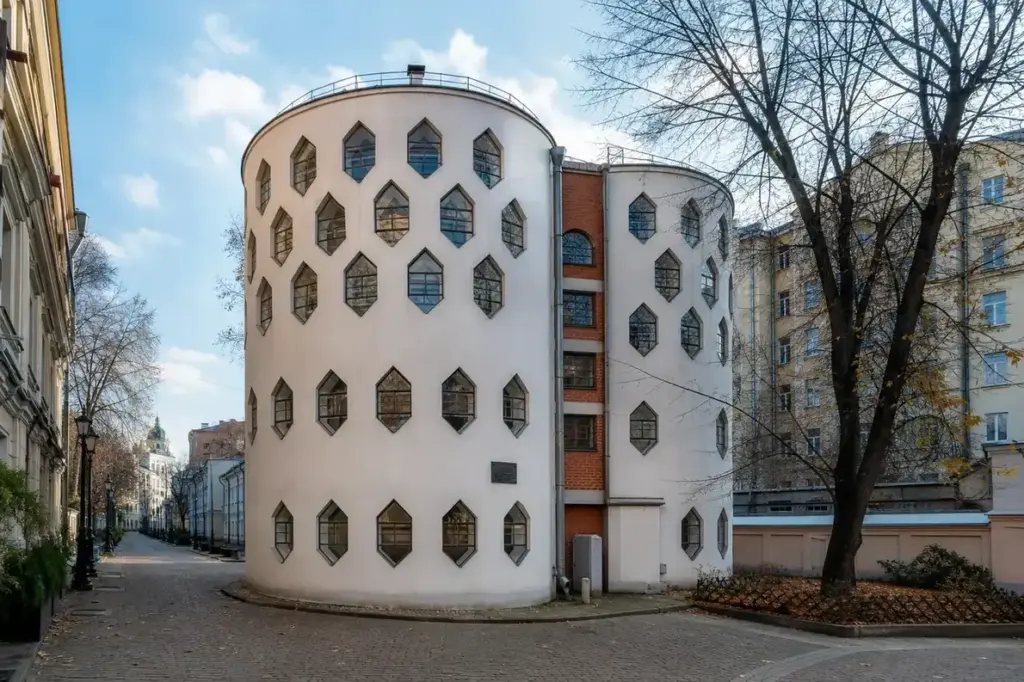
Moscow Constructivist Architecture Itinerary is designed for visitors interested in early Soviet avant-garde design and those seeking to understand how architecture served revolutionary ideals. The route assumes a steady pace over three days, combining metro travel with walking through central districts.
By the end of this itinerary, you will have seen workers’ clubs with innovative geometric auditoriums, experimental communal housing that challenged domestic life, and the distinctive personal vision of Melnikov’s cylinder house—buildings that represent a brief, extraordinary moment when architects believed design could reshape society.
Current access notice: As of October 2026: Melnikov House interiors were under restoration closure; check with the Shchusev Museum of Architecture (managing institution) before visiting, as interior access may remain limited. Exterior and garden remain accessible. Narkomfin Building is a private residential complex; view from street only. Rusakov Club (Roman Viktyuk Theater) operates as an active venue; confirm tour availability or performance schedule in advance. Other sites are viewable from public areas. Some buildings have irregular opening hours or limited visitor access; verify at official Moscow tourism sites.
Route: 7 stops, about 15.5–19 hours including walking (estimate)
Route map
At a glance: Day 1 focuses on Konstantin Melnikov's iconic works: his private house-studio and the Rusakov Club, both defining Constructivist form. Day 2 explores collective housing with the Narkomfin Building and residential complexes that embodied utopian living concepts. Day 3 visits the Zuev Workers' Club, industrial structures, and cultural buildings that demonstrate Constructivist functionalism across Moscow.
Day 1: Melnikov and the Rusakov Club
Begin at Konstantin Melnikov's house-studio, one of the only private residences built in Soviet Moscow, then move to the iconic Rusakov Club which pioneered the workers' club as architectural symbol. Both showcase Melnikov's radical geometric experiments and functionalist design. The route stays in central-west Moscow with close metro connections.
- Melnikov House Moscow – Two interlocking cylinders with 62 hexagonal windows; Constructivist manifesto completed 1929; garden and exterior always accessible; interior under restoration (check current access) (30–45 minutes)
- Pushkin Memorial Apartment on Arbat Moscow – Walk or metro to see surrounding Arbat district architecture (20 minutes nearby)
- Roman Viktyuk Theater (former Rusakov House of Culture) – Konstantin Melnikov 1927–29; three protruding amphitheater sectors; performances and guided tours available (45 minutes–1 hour)
- Teatralnaya Metro Station – Ornate stalinist design offering architectural contrast to Constructivism (10 minutes)
- Krasnaya Presnya Park Moscow – Relax near Arbat after morning of geometric intensity (20–30 minutes)
Tip: The Melnikov House exterior is best photographed in late afternoon when light catches the hexagonal windows. Book any theater tour in advance. The Rusakov Club is an active theater—check event schedules before visiting.
Day 2: Experimental Housing and Communal Vision
Dedicate the day to understanding how Constructivism reimagined domestic life through collective housing. The Narkomfin Building and related residential complexes embodied utopian ideals—shared kitchens, communal spaces, and new forms of family. These buildings lie slightly north and east, requiring metro connections but repaying the journey with rare glimpses into avant-garde social theory built in stone and steel.
- Narkomfin Building – Moisei Ginzburg and Ignaty Milinis 1928–30; transitional experimental house with communal dining, gymnasium, library; observe maisonette units and hanging walkway from street; exterior viewable (30–45 minutes)
- Novinskiy Boulevard – Walk the boulevard to see surrounding early-Soviet residential context (20 minutes)
- Higher Learning District (near Novinsky) – Additional early residential Constructivist blocks in vicinity (20–30 minutes)
- Tsentozoyuz Building (Moscow Constructivist Center) – Le Corbusier design completed 1936; geometric forms; check current exhibitions or access (30–45 minutes)
- Botanichesky Sad MCC Station – Modernist transport node reflecting Constructivist-era infrastructure principles (10 minutes)
Tip: The Narkomfin can only be seen from the street and courtyard as it remains residential; respect inhabitants' privacy. Combine this day with a stop at a Russian museum to understand the social theory behind these buildings. Late afternoon is best for photography along Novinsky Boulevard.
Day 3: Workers' Clubs, Industrial Form, and Spread of the Movement
Explore how Constructivism spread across Moscow through cultural and industrial buildings. The Zuev Workers' Club showcases Ilya Golosov's dynamic geometric language, while other stops demonstrate Constructivism's reach into warehouses, garages, and administrative buildings. This day covers more ground but traces the full scope of the movement.
- Zuev Workers' Club (Kluby Zueva) – Ilya Golosov 1927–29; bold pink facade, stacked rectangular forms, glass rotunda; landmark Constructivist statement on workers' leisure; exterior visible from street (20–30 minutes)
- Bakhmetevsky Bus Garage – Konstantin Melnikov innovative curvilinear design; historic transportation structure; industrial Constructivism; viewable exterior (15–20 minutes)
- Moscow Constructivist Center or Architecture Museum (Tsentrozoyuz or Shchusev) – Dedicated exhibition space; provides context across the day's sites (45 minutes–1 hour)
- Khodynskoye Pole Park Moscow – Early-Soviet recreational space reflecting the movement's vision of public leisure and social functions (20–30 minutes)
- Metro stations from 1930s–1950s – Brief walk through one of the earliest lines to see how Constructivist principles entered public transit infrastructure (15 minutes)
Tip: Day 3 covers the widest geographic spread; plan metro routes before starting. The Bakhmetevsky Garage may have limited access—confirm beforehand. End near a central metro station for evening exploration. Many Constructivist buildings remain in residential or active use; respect privacy and observe from public areas.
Moscow Vibes Tips
- Constructivism dominated only 1920s–early 1930s before Stalin's Socialist Realism took over. Many buildings were never completed or were demolished. Learn the period dates (1927–1932 for major works) to understand what you're seeing and recognize the dramatic stylistic break that followed.
- Bring a camera with a wide lens or use a smartphone's panorama mode. The geometric forms and proportions of these buildings reveal themselves fully at a distance or from across a street, not up close. Hexagonal windows of the Melnikov House, the protruding sectors of the Rusakov Club, and the curved lines of the Bakhmetevsky Garage all play with perspective.
- Do not assume all bold geometric buildings from this era are Constructivist. Socialist Realism and Stalinist neoclassicism appeared simultaneously from the early 1930s onward and look radically different. Compare the severe functionality of a workers' club with the ornamental grandeur of a Stalin-era building to understand the ideological shift.
- Many Constructivist buildings remain in working use—as offices, theaters, housing, or cultural centers. Respect signs indicating private areas. Photography from the street is always permitted, but interior access may be restricted. Always ask permission before photographing through windows or entering courtyards.
- Winter months (November–February) offer dramatic angular light but can make walking tours uncomfortable. Spring and autumn provide better light and comfort for extended walking between sites. Some buildings are harder to photograph in deep summer shadow; early morning or late afternoon is best.
- Several sites are genuinely difficult to reach by foot from one another. Plan metro routes in advance using your phone's map app and the official Moscow Metro map. The three-day structure groups sites geographically to minimize travel time. Don't try to cram all sites into one day.
Explore Nearby Moscow Constructivist Architecture Itinerary
Sights near Moscow Constructivist Architecture Itinerary
 Pashkov House Moscow · typical visit: About 20 to 30 minutes3 min on foot from Borovitskaya metro
Main image: AI-generated illustration. It may not show the place exactly as it looks.
 Kotelnicheskaya Embankment Building Moscow · typical visit: About 30 minutes to 1 hour14 min on foot from Taganskaya metro, Open 24 hours
Main image: AI-generated illustration. It may not show the place exactly as it looks.
Related guides
 10 Best Places for Russian Architecture in Moscow: Domes and Palaces
Main image: AI-generated illustration. It may not show the place exactly as it looks.
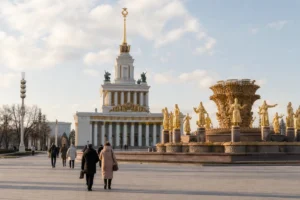 10 Best Places for Soviet History in Moscow: Museums, Metro and Space
Main image: AI-generated illustration. It may not show the place exactly as it looks.
 15 Best Museums in Moscow: Art, History and Space Picks
Main image: AI-generated illustration. It may not show the place exactly as it looks.
 How to navigate Moscow offline with maps and translation apps
Main image: AI-generated illustration. It may not show the place exactly as it looks.
Browse more: All Itineraries · All Themed Routes
FAQ
What is Constructivism in architecture?
Constructivism was a Soviet avant-garde movement (1920s–early 1930s) rejecting traditional decoration and emphasizing function, industrial materials (steel, glass, concrete), and bold geometric forms. Constructivists believed architecture could reshape society by improving how people lived and worked. It ended abruptly when Stalinist Socialist Realism took over in the mid-1930s.
Can I visit the interiors of these buildings?
Limited access. Melnikov House management (Shchusev Museum) periodically opens interiors but was undergoing restoration as of October 2026; call or check their website first. Rusakov Club (now a theater) allows guided tours and performances. Narkomfin is private housing; view from the street only. Most others are visible as exteriors from public areas. Museums and cultural centers may allow entry during events or exhibitions.
Which is the most important Constructivist building to see?
The Melnikov House and Narkomfin Building are most famous globally. Melnikov House is a unique private residence and architectural manifesto. Narkomfin embodies the movement's utopian vision of collective living. The Rusakov Club is equally essential for understanding how Constructivism entered public cultural life. All three are necessary for a complete picture.
Is it worth seeing Constructivist buildings, or should I prioritize museums and cathedrals?
Yes, if architecture interests you or you want to understand Soviet history visually. These buildings—designed by major architects and embodying revolutionary ideals—remain stunning and rare worldwide. They offer direct insight into 1920s-30s Soviet society. First-time Moscow visitors should prioritize the Kremlin and major museums, but architecture enthusiasts should dedicate at least a day to this route.
Are there Constructivist buildings outside central Moscow I should know about?
Yes. The Bakhmetevsky Bus Garage and some industrial structures lie on the city's edges. This itinerary covers central sites reachable by metro. If you have extra time, ask at your hotel or a tourism office about suburban Constructivist factories, workplaces, or residential blocks. Some require special tours to access.
How do I distinguish Constructivism from Socialist Realism?
Constructivism (1920s–early 1930s): severe, functional, geometric, minimal decoration, industrial materials, experimental forms. Socialist Realism (1930s onward): ornamental, classical elements, monumental scale, decorative sculpture, symmetrical. Compare the stark geometry of the Rusakov Club with the ornate grandeur of Stalin's neoclassical buildings to see the dramatic shift.
Do I need a guide for this itinerary?
No, but a specialist architectural guide enriches understanding. Self-guided visits are possible; use this itinerary, a city map, and your phone's translation app. For deeper knowledge of social history and design concepts, a guide familiar with Soviet architecture is invaluable. Book in advance if you choose this option.
Can I photograph these buildings?
Yes, from public spaces. Photography is generally permitted from streets, parks, and public plazas. Interior photography policies depend on the specific venue or institution managing the building. Always ask permission before photographing people or entering restricted areas. Avoid blocking traffic or trespassing on private property.
Discover More of Moscow with Our Travel Tips
Get practical Moscow travel tips, new destination guides and useful updates on attractions, opening hours and prices. Plan your visit with clear, helpful information delivered to your inbox.
Moscow Vibes is a one-person project. A coffee keeps it going

Take this guide with you
Get a free PDF of this guide to print or read offline: key facts, tips and a map link on a few clean pages.
Report an issue on this page
Paying for your trip: please read
Payments and bookings between Russia and many other countries are currently restricted. In practice, cards issued in the EU, the UK, the US and several other countries often cannot be used in Russia, Russian cards usually cannot be used abroad, and some booking platforms, airlines and payment providers limit or pause their services for Russia. The situation changes frequently.
We do not give legal or financial advice, and this site does not encourage anyone to break any rule that applies to them. Whatever you plan, you are responsible for following the laws and regulations that apply to you, including those of your country of residence and citizenship.
Many travelers still organise their stay without problems. It is worth asking your bank or payment provider what is currently possible, contacting hotels, tour operators and carriers directly about the payment methods they accept, and checking which services are open to customers from your country. Clarify payment, cancellation and refund terms before you commit to a booking, and keep your plans flexible.
Partner links on this site may not be available in every country, and prices, availability and rules in our guides can differ from what you see when you book.
How we research and update our guides
About this guide: AI assistance and accuracy
This guide is created with the help of AI and is based on official sources where available. Mistakes can still happen. Opening hours, prices, rules and other details are given to the best of our knowledge as of the date shown and can change without notice. It offers general recommendations only, not professional, legal or travel advice. Please confirm important details with the official source before you travel; you are responsible for your own plans and decisions.
* Affiliate link: as an Amazon Associate we earn from qualifying purchases at no extra cost to you.