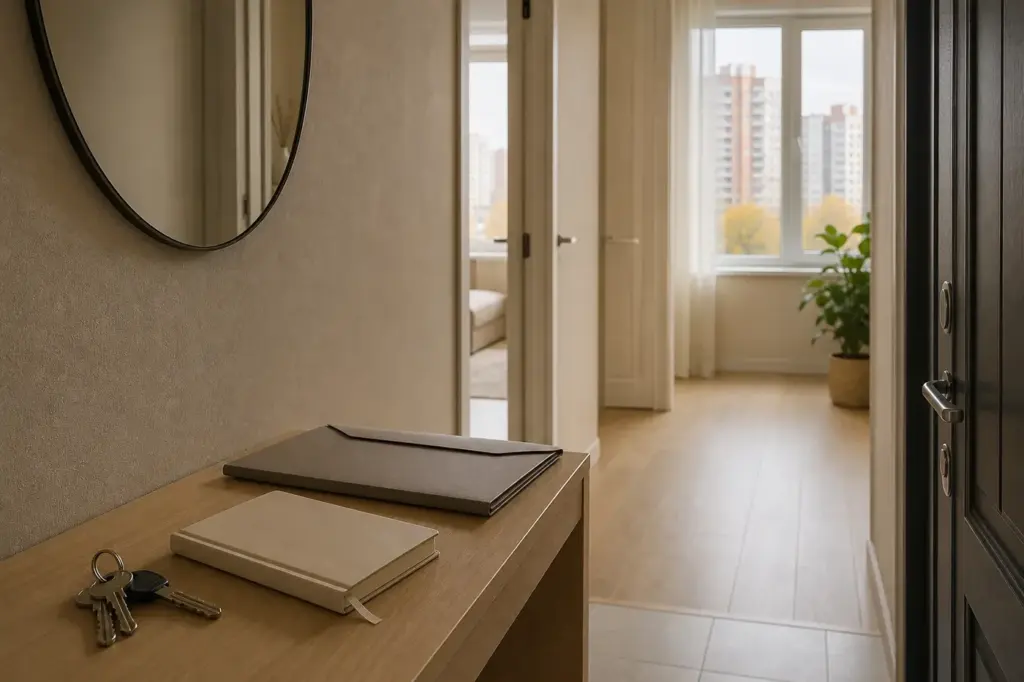
Use this moving-in checklist for Moscow when you are about to collect the keys to a flat. Before handover, ask the owner or housing provider who receives the utility bills, who will submit meter readings and who will handle any required migration notification. At the flat, record the opening readings and condition together. Those records give you a starting point when the first bills arrive.
The steps cover private rentals, serviced apartments and institutional housing. The information reflects official guidance as of November 2026. Utility procedures vary by building and provider. Registration requirements can change and depend on your nationality, status and address. Confirm them with the territorial office of the Russian Ministry of Internal Affairs or, for Amina, the Moscow Migration Centre. This is general information, not legal advice.
Quick answer: Before collecting the keys, agree who handles utility bills and registration. Record the flat’s condition and meters at handover, then follow the filing and billing dates. Costs depend on the agreement and address.
At a Glance
| Total time | Allow a handover visit and time to check the first billing cycle. Confirm the registration deadline before moving and book any internet installation separately. |
|---|
What You Need Before You Start
- Signed tenancy agreement or accommodation confirmation
- Full address, including building, entrance and flat number
- Handover record and inventory
- Latest utility statements or relevant account details
- Access to water and electricity meters, where fitted
- Contact details for the owner, building manager and providers
- Passport, visa details and migration card if applicable
- Contact details of the person responsible for any arrival notification
Compare Your Options
| Option | Duration | Price | Notes |
|---|---|---|---|
| Private flat with owner-managed utility accounts | From handover through the tenancy | The owner receives the statements and submits readings or shares the applicable details with the tenant. Agree how readings and bills will be exchanged, and who handles any required registration filing. | |
| Private flat with tenant-paid utility items | According to the billing cycle and tenancy agreement | The tenant pays the items assigned in the agreement using the provider or account instructions. Confirm what access the owner can give you and how the parties will reconcile charges that cover more than one occupancy period. | |
| Serviced apartment or hotel-style accommodation | According to the booking and service terms | Ask which utilities and services are included. Confirm whether the operator files arrival notifications as an accommodation provider and how it makes the accepted record available to you. | |
| University or employer-arranged housing | According to the accommodation arrangement | Ask the institution to identify the person responsible for keys, charges, repairs and address paperwork. Check whether its responsibilities differ if it referred you to a private owner. |
₽ budget · ₽₽ moderate · ₽₽₽ upscale · ₽₽₽₽ splurge. Price levels are estimates compared with typical prices for visitors.
Step-by-Step Instructions
Step 1: Settle responsibilities before collecting the keys
Go through the tenancy agreement or housing terms with the owner or accommodation provider. Identify who receives each bill, who pays it and who sends the meter readings. Ask which charges are included in rent and which are reconciled separately. Discuss registration in the same conversation. If a landlord, university or employer will handle it, ask what they need from you and when they want the documents.
Tip: Put a name and contact beside each responsibility so you know whom to ask if the first bill or filing confirmation is missing.
Step 2: Record the condition at handover
Walk through the flat with the person handing it over. Test door and window locks, taps, lights and the appliances included in the inventory. Record existing marks, broken fittings and any repairs the owner has agreed to make. List the keys and access devices for the flat, building entrance and any shared facilities you need. Get both parties to acknowledge the handover record and keep the agreed photos with it.
Tip: Test the intercom from the entrance if you expect deliveries or an installation technician.
Step 3: Take the opening meter readings
Locate the water and electricity meters that serve the flat. Record the date, the displayed values and enough of each meter’s serial number to match it with the utility account. Where an electricity meter shows more than one tariff register, record each displayed register separately. Identify hot and cold water from the meter or account details. If a meter is in a locked cabinet or common area, ask the owner how readings are obtained.
Busy rides ahead? Wireless earbuds could be useful on the way.
Tip: Take one photograph of the reading and another wide enough to show which meter it belongs to.
Step 4: Match each service to its bill
Ask to see the latest statements for the address. Some Moscow homes use a Unified Payment Document, known as an EPD, for several housing and utility charges. Electricity or other services can have separate accounts. Note which provider issued each statement, the billing period and the account identifier. Compare the end of the previous occupancy with your handover date and document how the owner will deal with any existing balance.
Tip: Keep the first bill that spans your move-in date so you can refer back to the way it was divided.
Step 5: Confirm the registration route and deadline
Work out which address procedure applies to your status. Under the ordinary migration notification procedure, the receiving party normally files. Hotels normally handle their own guests, while a private flat requires you to determine which filing route applies. The usual notification deadline for a private stay under the standard rules is seven working days from arrival at the place of stay, subject to exceptions. Ask the migration authority about your case before relying on that timetable.
Settling into the room? Earplugs may be a useful extra.
Tip: Give the authority both the date you entered Russia and the date you arrived at the flat if they differ.
Step 6: Complete the filing and keep the result
Give the responsible filer the requested documents and the date you actually moved in. For an ordinary arrival notification, ask for the accepted detachable section or applicable electronic confirmation. Eligible Amina participants should follow the Moscow Migration Centre’s app instructions and report their current living address through the app. If you hold a residence permit, ask the territorial migration office whether registration at the place of residence or another address procedure applies.
Tip: Check the address and document details on the accepted record while the filer is still available to help correct them.
Step 7: Set up the meter reporting routine
Confirm where each reading goes and who has access to the relevant account. Moscow’s Electronic Home guidance describes adding the financial account and meter numbers for an address before submitting readings. A provider with a separate account can have its own submission channel and reporting dates. If the owner keeps the account, send them the readings on the agreed schedule and ask how you will know they were submitted.
Long journey ahead? A carry-on suitcase may make the trip a little easier.
Tip: Set one reminder per provider if the reporting windows differ.
Step 8: Arrange internet and save the building contacts
Ask whether the existing internet connection is active, whose name it is in and whether the service can continue after you move in. If you need a new connection, confirm coverage at the exact flat and check access to any shared wiring cabinet. Identify the building’s management organisation and the contact for faults affecting the property. Moscow’s Electronic Home service provides information about buildings and their management organisations.
Tip: Before a technician visits, ask who can open the building’s service spaces if the installation requires access.
Step 9: Reconcile the first bills
When the first statements arrive, compare the address, billing period and recorded readings with the handover and the agreement. Separate charges for measured consumption from recurring building or service charges. Ask the owner or provider about a line you cannot reconcile before deciding which amount applies to your tenancy. Keep the statement, the explanation and evidence of payment together so later months can be checked on the same basis.
Packing for the flight? A face moisturizer could be useful.
Tip: Check whether a balance was carried forward from before the tenancy when the first statement looks higher than expected.
Common Mistakes to Avoid
- Accepting keys without recording the opening readings and condition. Complete the handover before belongings obscure existing defects.
- Assuming every charge comes on the EPD. Ask whether electricity, internet or another service is billed separately.
- Using a meter number or reading from another flat. Match the serial number to the account before submitting.
- Treating a signed tenancy agreement as an accepted arrival notification. Retain the confirmation for the procedure that applies.
- Assuming a move from a hotel to a flat leaves your address paperwork settled. Check the requirements for the new address.
- Arranging installation without confirming building access. Find out whether the owner or manager must let the technician in.
Tickets, Payment and Booking
Ask the owner or housing provider for the latest statements and the official provider details for the flat. Check each bill’s account, period and recipient before paying. If the owner pays the provider and you reimburse the owner, agree how you will receive the underlying statement and record the reimbursement. Use the provider’s official payment channel if the agreement assigns the bill directly to you.
For internet, request installation or account changes through the provider serving the building. Ask which charges cover installation, equipment or recurring service and who keeps or returns any rented equipment. If the provider requires the owner’s consent or presence, confirm that before taking an appointment.
Moscow Vibes Tips
- Save a copy of the handover record somewhere accessible to both parties. Use the agreed photographs if a defect is discussed after move-in.
- Ask how the flat receives building notices. The owner or manager can point out the usual place for planned outages, maintenance visits or changes to entrance access.
- Ask the owner to show you any accessible water shut-off valves and electrical panel at handover. Save the building fault contact where you can find it offline.
- Record each access device by purpose, including the building entrance, mailbox and any shared gate. Test them before the person handing over the flat leaves.
- If another person in your household handles bills or readings, share the schedule and the meter locations so they can take over when you travel.
Keep reading
Next steps



FAQ
Does the EPD include all the charges for my flat?
The EPD combines several housing and utility charges where it is used. Ask to see the latest document for your address and compare it with any separate provider statements. Use those records and your agreement to identify which items you owe and which the owner or accommodation provider handles.
Should I transfer the utility accounts into my name?
Check your tenancy agreement and ask each provider what it allows for that address. An owner can keep the account and share statements or readings with the tenant. If you will take over a service or sign a separate contract, ask the provider what proof of identity, occupancy or owner consent it needs.
What if I cannot submit a meter reading?
Check whether the provider’s submission window is open and whether the meter number matches the account. Contact the account holder or provider if the reading is rejected, especially after a meter replacement. Keep a dated photo or written record of the value and ask how it can be added to the account.
What should I do if the first bill includes a previous balance?
Send the statement to the owner with the start date and opening readings in your handover record. Ask the owner or provider to identify the period that produced the balance and confirm which charges relate to your tenancy. Keep any written reconciliation and payment record with the documents for that month.
Can I use the registration from my hotel after moving to a private flat?
The move changes where you actually stay. Before leaving the hotel, ask the new receiving party or the migration authority which filing applies at the flat and when it is due. Keep the hotel’s confirmation available in case the new filer needs it to establish the dates and addresses of your stay.
Does paying utilities prove migration registration?
Utility statements show billing activity at an address. For migration registration, keep the accepted arrival notification or other result for the procedure that applies to your status. If someone asks for proof of where you are registered, ask which document and format they need, especially if the result was issued electronically.
What if I move with a partner or children?
Tell the accommodation provider who will live at the address and check each person’s paperwork. Deadlines or the route can differ by nationality, age and immigration status. Before moving in, ask which documents each person needs and whether the receiving party will provide a separate confirmation for everyone who requires one.
Who should I contact if the flat has no heating or water?
Check whether the fault affects your flat or a wider part of the building. Tell the owner and use the building manager’s or provider’s official fault contact as appropriate. Give the full address, describe what is affected and note when it began. Ask for a reference if the service records the report.
Discover More of Moscow with Our Travel Tips
Get practical Moscow travel tips, new destination guides and useful updates on attractions, opening hours and prices. Plan your visit with clear, helpful information delivered to your inbox.
Moscow Vibes is a one-person project. A coffee keeps it going
Not legal advice. This is general information for visitors. Rules on visas, entry, registration, customs and similar matters change often and can depend on your nationality. Check the official source and, if in doubt, ask your embassy or a qualified adviser.
More in this section: Living in Moscow
Get a free PDF of this guide to print or read offline: key facts, tips and a map link on a few clean pages.
Take this guide with you
About this page
Report an issue on this page
Paying for your trip: please read
Payments and bookings between Russia and many other countries are currently restricted. In practice, cards issued in the EU, the UK, the US and several other countries often cannot be used in Russia, Russian cards usually cannot be used abroad, and some booking platforms, airlines and payment providers limit or pause their services for Russia. The situation changes frequently.
We do not give legal or financial advice, and this site does not encourage anyone to break any rule that applies to them. Whatever you plan, you are responsible for following the laws and regulations that apply to you, including those of your country of residence and citizenship.
Many travelers still organise their stay without problems. It is worth asking your bank or payment provider what is currently possible, contacting hotels, tour operators and carriers directly about the payment methods they accept, and checking which services are open to customers from your country. Clarify payment, cancellation and refund terms before you commit to a booking, and keep your plans flexible.
Partner links on this site may not be available in every country, and prices, availability and rules in our guides can differ from what you see when you book.
How we research and update our guides
About this guide: AI assistance and accuracy
This guide is created with the help of AI and is based on official sources where available. Mistakes can still happen. Opening hours, prices, rules and other details are given to the best of our knowledge as of the date shown and can change without notice. It offers general recommendations only, not professional, legal or travel advice. Please confirm important details with the official source before you travel; you are responsible for your own plans and decisions.
* Affiliate link: as an Amazon Associate we earn from qualifying purchases at no extra cost to you.