
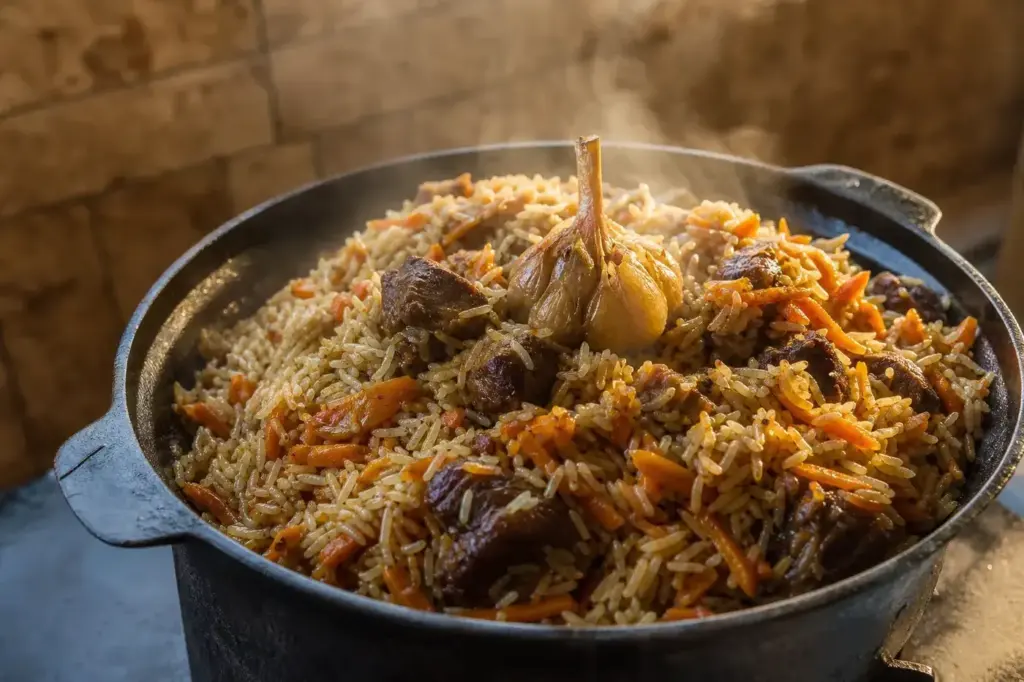
Plov appeals to visitors and cooks interested in Central Asian cuisine, one-pot meals and shared dining. After preparing plov at home, you’ll understand why it has been enjoyed for centuries across Russia and Uzbekistan. The recommended approach is the traditional method: brown the meat, cook it with aromatic vegetables, then add rice to absorb all the flavors in one pot.
This guide walks you through making beef plov (паловое блюдо с говядиной) for 3–4 people using straightforward ingredients you can find anywhere. The total time is about 2–2.5 hours, mostly hands-off simmering.
Quick answer: Brown cubed beef with onions and carrots in oil, braise until tender, then spread rice on top and simmer until cooked through. Traditionally finished with whole garlic cloves and spices like cumin and coriander. Total time: 2–2.5 hours, including resting. Cost level: ₽₽
At a Glance
| Type | Dishes |
|---|---|
| Local name | Плов |
| Origin | Central Asia, especially Uzbekistan and Tajikistan; now popular throughout Russia |
| Servings | 3–4 people |
| Total time | 2–2.5 hours |
| Difficulty | Medium |
History and Story of Plov (Плов)
Uzbek plov is a traditional rice dish made with meat, julienned carrots, onions, garlic, rice and cumin powder, and is regarded as the national dish of Uzbekistan. Pilaf is believed to have originated in Persia and was spread throughout Central Asia along migration and trade routes in the ancient Silk Road. Many consider 10th-century Central Asian scholar Ibn Sina (Avicenna) the “father of plov,” as he wrote down the recipe for what he called palov osh.The dish became officially identified as Uzbek by Soviet mythmakers in the 1950s; after that, plov became the one Central Asian dish widely known in Russia and has stayed popular as the region’s cuisine has become more broadly available. In 2016, UNESCO declared the plov culture of Uzbekistan and Tajikistan an intangible cultural heritage of humanity—not merely the recipe, but the culture, because plov is inseparable from sharing and is traditionally eaten from one large communal platter.
Ingredients
- 500–700 g beef chuck or stew meat, cut into 1-inch cubes
- 300 g long-grain rice (basmati or similar)
- 3–4 medium carrots, peeled
- 2 medium onions
- 60 ml neutral oil
- 1 whole garlic head
- 2 teaspoons ground cumin
- 1 teaspoon ground coriander
- 3–4 bay leaves
- Salt and black pepper to taste
- 1 liter water or beef stock
How Plov (Плов) Is Made
Step 1: Heat oil and brown the meat
Pour oil into a large, heavy-bottomed pot or Dutch oven over medium-high heat. Once hot, add beef cubes and brown them on all sides without stirring constantly, about 7–8 minutes. Work in batches if needed. This caramelization develops flavor.
Tip: Do not crowd the pot; give the meat space to brown rather than steam.
Step 2: Cook onions until soft
Reduce heat to medium. Add finely chopped onions to the browned meat, stirring occasionally. Cook for 5 minutes until onions soften and turn translucent. Season with 1 teaspoon salt and a pinch of black pepper.
Tip: Scrape any browned bits from the bottom of the pot into the onions—these add depth.
Step 3: Add carrots and spices
Cut carrots into matchsticks (julienne). Add them to the pot along with 2 teaspoons cumin, 1 teaspoon coriander, and bay leaves. Stir well and cook for 5 minutes. The spices should become fragrant.
Tip: If using whole cumin and coriander seeds instead of ground, lightly toast them in a dry pan first to release their oils.
Step 4: Braise the meat
Add 1 liter of water or beef stock. Bring to a boil, then cover the pot and reduce heat to low. Simmer for 1 hour until beef is tender. The liquid should reduce slightly.
Tip: Do not stir during cooking; this allows the layers to develop and flavors to concentrate.
Step 5: Add rice
Spread rice (rinsed and drained) evenly over the cooked meat and vegetables. Do not stir. Trim the top of a whole garlic head and place it on top of the rice. Pour 4 cups boiling water and add 1.5 teaspoons salt. Bring to a boil.
Tip: Use whole garlic cloves rather than minced; they perfume the dish without overwhelming it.
Step 6: Cook rice and rest
Once boiling, cover the pot and reduce heat to the lowest setting. Cook for 30 minutes until most water is absorbed and rice is tender. Turn off heat, keep covered, and let rest for 15–20 minutes without lifting the lid.
Tip: A traditional test: the plov is ready when oil shines at the bottom of the pot.
Step 7: Mix and serve
Gently stir the plov with a fork to combine meat, rice, and vegetables. Serve hot from the pot or, traditionally, turned out onto a large shared platter.
Tip: In Central Asia, plov is eaten from one communal platter (lagan), reinforcing its role as a dish for sharing.
Variants
- Lamb plov: made with fatty lamb cuts instead of beef, the traditional Uzbek version
- Chicken plov: a quicker version using chicken thighs or breast
- Vegetarian plov: made with chickpeas and extra carrots instead of meat
- Fish plov: using firm white fish, common in regions with river access
- Fergana Valley plov: significantly spicier with more chili and black pepper
- Bukhara plov: layers cooked separately and assembled in the pot
- Plov with raisins or barberries: sweet-savory variation with dried fruit
- Plov with quince: seasonal autumn version with quince fruit instead of or alongside carrots
Common Mistakes to Avoid
- Stirring the rice while it cooks: This breaks the grains and creates a mushy texture. Let it cook undisturbed until water is absorbed.
- Using short-grain or low-quality rice: Plov requires a long-grain rice that can absorb liquid without turning to mush. Basmati and similar varieties work best.
- Skipping the browning step: Browning meat and vegetables develops caramelized flavors essential to authentic plov. Do not skip this stage.
- Adding cold water instead of boiling water to the rice: Cold water will cause the temperature to drop and cooking time to stretch. Always use boiling or hot water.
- Not resting the finished dish: The 15–20 minute rest allows the rice to finish cooking from residual heat and makes it easier to mix. Serving immediately results in mushy or undercooked rice.
- Overcrowding or cooking only for one or two people: Plov traditionally serves a crowd and tastes better in larger batches, as ingredients meld better and the dish stays moist.
How to Order and Eat It
Plov is served hot, typically on a large communal platter or in individual bowls. Eat it with a fork or spoon. It is not served with separate sides; the carrots, meat, rice and spices are all cooked together. A simple yogurt or cucumber-tomato salad on the side complements the richness. Tea is the traditional beverage. In formal settings, plov is often the centerpiece of a banquet, preceded by soups and salads and followed by kebabs and dessert.
To order: Пловское блюдо с говядиной, пожалуйста. [Plovskoye blyudo s govyadinoy, pozhaluysta.]
Diet and Allergens
- Contains beef
Where to Try Plov (Плов)
 Uryuk Uzbek, Caucasian, European
Main image: AI-generated illustration. It may not show the place exactly as it looks.
 Uzbekistan Uzbek, Arab, Pan-Asian, Azerbaijani
Main image: AI-generated illustration. It may not show the place exactly as it looks.
Moscow Vibes Tips
- Devzira rice from Uzbekistan, if you can find it, is the gold standard: its amber color and ability to absorb liquid without turning mushy make it ideal. Basmati is an excellent substitute.
- Use the largest carrot as a grated base layer beneath the meat; this distributes carrots evenly and adds sweetness to the cooking liquid. Reserve thin-sliced carrots for layering on top.
- Do not limit plov to two people: the traditional saying goes, "Plov is never cooked for two." It genuinely tastes better when made for at least 3–4 people, as the ingredients integrate better and flavors deepen.
- If your pot lid does not seal well, lay a damp cloth under the lid during the rice-cooking stage. This traps steam and ensures even cooking without excess evaporation.
- Taste a grain of rice at the 25-minute mark to judge doneness. Central Asian cooks judge readiness by looking for a faint shine of oil at the pot's bottom, rather than by strict timing.
Where to Find Plov (Плов) in Moscow
Related guides
 10 Best Places to Try Russian Food in Moscow: Classics and Canteens
Main image: AI-generated illustration. It may not show the place exactly as it looks.
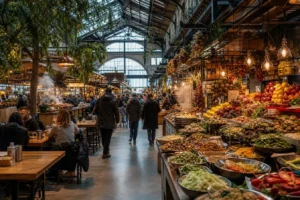 10 Best Food Markets and Food Halls in Moscow: Where to Eat Indoors
Main image: AI-generated illustration. It may not show the place exactly as it looks.
 Patriarch’s Ponds Moscow: Pond, Bulgakov Sites and Walking Tips11 min on foot from Mayakovskaya metro, Open 24 hours
Main image: AI-generated illustration. It may not show the place exactly as it looks.
 Hermitage Garden Moscow: Free Entry, Three Theaters and Jazz8 min on foot from Tsvetnoy Bulvar metro, Open 24 hours
Main image: AI-generated illustration. It may not show the place exactly as it looks.
Browse more: All Food & Drink · All Other
FAQ
What is the difference between plov, pilaf and osh?
Plov, pilaf and osh are the same dish with different names. Plov (плов) is the Russian-influenced term used across Central Asia and Russia. Osh or palov is the original Uzbek and Tajik word. Pilaf and pilau are terms used in Persian, Turkish and South Asian cooking traditions for related but sometimes differently prepared rice dishes.
Is plov Uzbek or Russian?
Plov originated in Central Asia, especially Uzbekistan and Tajikistan, where it is the national dish. It became widely adopted in Russia during the Soviet era and is now considered a classic Russian comfort food, though its roots and primary identity remain Central Asian.
Can I make plov with chicken instead of beef or lamb?
Yes. Chicken plov is faster (total time 1.5 hours) and lighter. Use chicken thighs or breast cut into cubes. Brown the chicken first, then follow the same method; reduce the braising time to 30–40 minutes since chicken cooks faster than beef.
Why is my plov mushy or watery?
Mushy rice usually results from stirring during cooking or using too much water. Watery plov comes from not allowing the water to evaporate fully. Use the correct rice-to-water ratio (1 part rice to 1.3–1.4 parts water), do not stir once rice is added, and keep the heat low during the final stage so water reduces gradually.
What type of rice is best for plov?
Long-grain rice like basmati or devzira (the traditional Uzbek variety) works best. These grains absorb liquid and swell without becoming mushy. Avoid short-grain or sticky rice, which will turn the dish into a paste.
Can I make plov in advance or reheat it?
Yes. Plov reheats well. Cool it, store it in the refrigerator up to 3 days, and reheat gently in a covered pot with a splash of water to restore moisture. Some cooks argue plov tastes even better the next day as flavors deepen.
Is plov typically spicy?
Traditional plov is not spicy; it relies on warm spices like cumin and coriander for flavor. However, some regional variations, especially from the Fergana Valley, include significant heat from chili or black pepper. Add spice to taste if you prefer a warmer dish.
What does plov typically contain?
Traditional plov contains beef or lamb, long-grain rice, carrots, onions, garlic, cumin, coriander, bay leaves, oil and salt. Many regional versions add barberries, raisins, chickpeas, quince or fresh herbs. It is a one-pot meal with no separate sides, though salad and tea are common accompaniments.
Discover More of Moscow with Our Travel Tips
Get practical Moscow travel tips, new destination guides and useful updates on attractions, opening hours and prices. Plan your visit with clear, helpful information delivered to your inbox.
Moscow Vibes is a one-person project. A coffee keeps it going

Take this guide with you
Get a free PDF of this guide to print or read offline: key facts, tips and a map link on a few clean pages.
Report an issue on this page
Paying for your trip: please read
Payments and bookings between Russia and many other countries are currently restricted. In practice, cards issued in the EU, the UK, the US and several other countries often cannot be used in Russia, Russian cards usually cannot be used abroad, and some booking platforms, airlines and payment providers limit or pause their services for Russia. The situation changes frequently.
We do not give legal or financial advice, and this site does not encourage anyone to break any rule that applies to them. Whatever you plan, you are responsible for following the laws and regulations that apply to you, including those of your country of residence and citizenship.
Many travelers still organise their stay without problems. It is worth asking your bank or payment provider what is currently possible, contacting hotels, tour operators and carriers directly about the payment methods they accept, and checking which services are open to customers from your country. Clarify payment, cancellation and refund terms before you commit to a booking, and keep your plans flexible.
Partner links on this site may not be available in every country, and prices, availability and rules in our guides can differ from what you see when you book.
How we research and update our guides
About this guide: AI assistance and accuracy
This guide is created with the help of AI and is based on official sources where available. Mistakes can still happen. Opening hours, prices, rules and other details are given to the best of our knowledge as of the date shown and can change without notice. It offers general recommendations only, not professional, legal or travel advice. Please confirm important details with the official source before you travel; you are responsible for your own plans and decisions.
* Affiliate link: as an Amazon Associate we earn from qualifying purchases at no extra cost to you.