
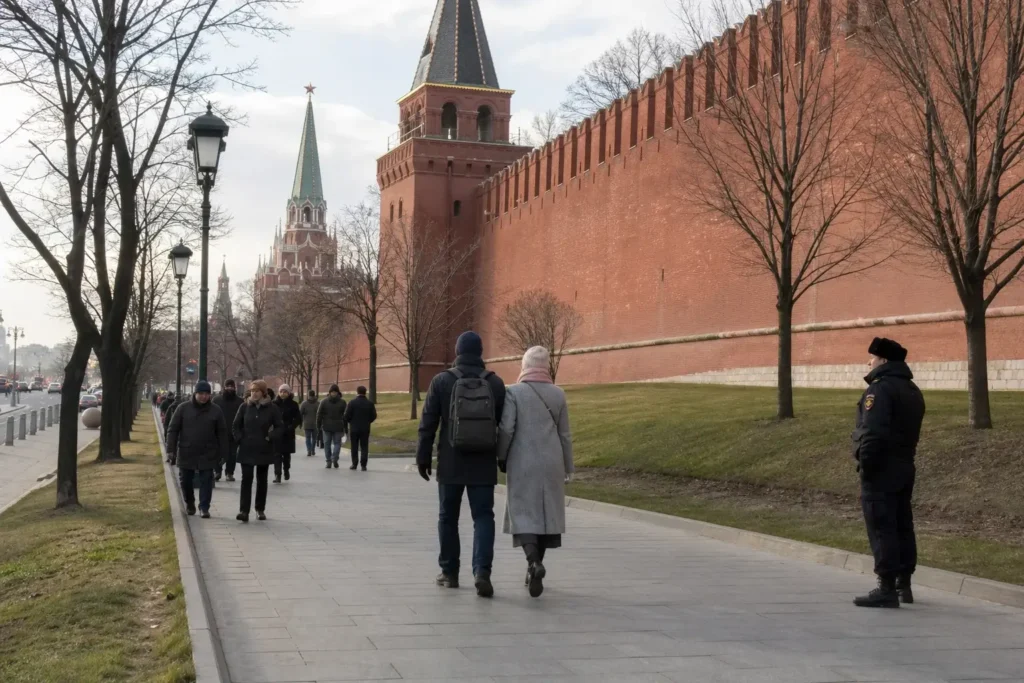
This guide explains how to avoid common scams in Moscow for travelers from abroad. Crowded central streets and major sights attract both pickpockets and opportunists, and scams often repeat the same patterns: pressure in the moment, requests for your documents or money, and unclear payment “extras.”
The practical approach is straightforward: use official taxis and official sellers, keep your passport and wallet to yourself during any street “check,” never pay a “fine” on the street, and verify totals before you pay—especially in restaurants.
Quick answer: Use official transport (app/official taxi desk), keep your passport and wallet to yourself during any street “check,” never pay a “fine” on the spot, guard your bag in crowds, and verify menu prices and the bill before paying.
At a Glance
| Total time | A few minutes of preparation before you go out; vigilance throughout the visit |
|---|---|
| Typical cost | No cost; scams reported in guides range from small overcharges to losing cash and documents |
| Last updated | October 7, 2026 |
What You Need Before You Start
- Your passport and a photocopy, with the embassy's emergency number saved on your phone
- Only the cash you need for the day, since foreign bank cards are reported not to work in Russia
- A taxi app or the official taxi desk, rather than offers from touts
- A bag with zips, worn in front of you in crowds
- A calm refusal ready for strangers' offers
Compare Your Options
| Option | Duration | Price | Notes |
|---|---|---|---|
| Fake police check | A few minutes | An on-the-spot fine or a cash demand | Scammers may present a badge and ask to see your passport and valuables, then pressure you to pay immediately. Ask for ID details and insist on going to a police station; do not hand over your wallet or money. |
| Unlicensed taxi arranged by touts | At the start or end of a trip | Inflated flat rates | People may wait near transit hubs and offer rides at an agreed price that turns out higher than expected. Order a taxi via an app or the official taxi desk instead of accepting roadside offers. |
| Restaurant overcharging | At the end of the meal | A bill above the menu prices | In tourist-heavy areas, the bill can be padded beyond the printed menu. Avoid street invitations, check the menu prices, and read the bill line by line. |
| Pickpockets | In a crowd | Cash, phone, or documents | Most reports point to busy places: packed metro trains/platforms and major sights. Keep your bag zipped and in front of you, especially in dense areas. |
| Street offers and fake guides | Any time a stranger approaches you | Overcharges added at the end | Be cautious with requests for photos, unofficial “helpers,” and invitations to buy tours or tickets through strangers. Use official sellers for tours and related services. |
Step-by-Step Instructions
Step 1: Prepare before you go out
Carry your passport with you, and keep an extra photocopy somewhere separate. Save your embassy emergency contact and the main emergency number in your phone before going out. Carry only the cash you need for the day, and keep the rest elsewhere so a lost wallet is less damaging.
Tip: If someone insists on “checking” your papers outside an official setting, don’t hand over your wallet—pause and verify what they’re asking.
Step 2: Use official transport
Use a taxi ordered through an app or from an official taxi desk, rather than accepting rides from people who approach you near arrival points. Before entering, confirm the vehicle details against what the app shows (if applicable).
Tip: Never accept a lift from someone who approaches you at the moment you’re trying to leave a transit area.
Step 3: Handle a street “police check” calmly
If someone claims to be police and asks to see your passport and wallet, treat it as a red flag. Ask to see proper identification, do not hand over your wallet or pay money, and insist on going to the nearest police station.
Tip: Don’t argue in the street—keep your tone calm, repeat your request to go to a station, and move toward people or a public service point.
Step 4: Check menus and bills
Restaurant scams typically happen at the point of payment. Choose places yourself, check that the menu shows printed prices, and read the bill carefully before paying. If the total doesn’t match what you expected from the menu, ask for clarification before paying.
Tip: If anything looks off, ask them to re-check the bill immediately rather than paying and disputing later.
Step 5: Guard your belongings in crowds
Pickpockets often work when people are distracted. In crowded sights and on busy metro cars, keep your bag zipped and in front of you. Avoid letting your phone stay in open view in dense areas, especially near escalators and platform edges.
Tip: If you feel someone is too close, shift your position and create space.
Step 6: Decline strangers’ offers
If a stranger offers help, tickets, tours, or “special access,” be skeptical—especially if they want quick decisions. Politely decline and use official sellers for tours, cruises, and tickets instead of buying from people who approach you.
Tip: A short, calm refusal is enough; don’t get pulled into side conversations.
Step 7: Know what to do if it happens
If you experience theft or harassment, move to a public, well-lit area and contact emergency services. Then contact your embassy and your insurance, and keep any receipts or police/incident reference information you can obtain.
Tip: Take note of what happened and any identifying details while they’re still fresh.
Common Mistakes to Avoid
- Handing over your passport or wallet to someone who claims to be police.
- Paying a demanded “fine” on the street.
- Accepting a taxi or “ride” arranged by people who approach you at the station or arrival area.
- Letting a stranger send you to a restaurant and then paying without checking the bill.
- Carrying all cash and documents together.
- Using your phone with your back to a crowd or near escalators.
- Paying for tours or tickets arranged by touts instead of official sellers.
Tickets, Payment and Booking
No booking is involved.
For money and documents, stick to official channels: use taxis ordered through an app or an official taxi desk, pay restaurant bills only after checking the printed menu prices and the bill, and use official sellers for tickets and tours.
As for cards vs. cash, rules can vary in practice and payment reliability can change—carry a practical backup amount in rubles.
Helpful Links
Compare hotel pricesSearch flights
Advertisement: these are partner links. If you book or buy through them, we may earn a commission at no extra cost to you.
Moscow Vibes Tips
- Many reported scams rely on pressure and speed. When someone asks for urgent action (money now, papers now), slow down and insist on going to an official station or using an official service.
- Distractions can be used to reduce your awareness—if someone bumps you, crowds your space, or creates a commotion, keep a hand on your bag and check it after the interaction.
- If a restaurant or service involves extra charges, the simplest defense is to verify the menu prices and the bill total before paying.
- For transit and sights, the easiest improvement is physical control: bag in front, zippers closed, and phone use minimized in the densest moments.
Explore Nearby How to avoid common tourist scams in Moscow
Sights near How to avoid common tourist scams in Moscow
 Red Square Moscow · typical visit: 1–2 hours for the square, 3–5 hours with St Basil's and one museum
Main image: AI-generated illustration. It may not show the place exactly as it looks.
Related guides
 How to take a safe taxi from a Moscow airport: Desks, Apps and Cash
Main image: AI-generated illustration. It may not show the place exactly as it looks.
 How to use taxi apps in Moscow: Yandex Go, Cash Payment and Safety
Main image: AI-generated illustration. It may not show the place exactly as it looks.
 How to find a pharmacy and get medical help in Moscow: Key Numbers
Main image: AI-generated illustration. It may not show the place exactly as it looks.
 How to register your stay in Moscow as a foreign visitor: Deadlines
Main image: AI-generated illustration. It may not show the place exactly as it looks.
Browse more: All Etiquette and Safety · All How-To
FAQ
Is Moscow safe for tourists?
Violent crime against tourists is uncommon, but petty theft and scams do happen in crowded areas, especially around major sights and on public transport.
What is the fake police scam?
Scammers may claim to be police, ask to see your passport, and pressure you to hand over valuables or pay a “fine” on the spot. Do not pay or hand over your wallet—ask to be taken to a police station and verify their identity.
Which taxis are safer to use?
Use taxis ordered through an app or through official taxi desks rather than rides arranged by people who approach you.
Where are pickpockets most likely to work?
In crowded places—busy metro platforms and trains, and around major sights—keep your bag in front of you and zipped.
Should I pay a fine on the street?
No. If anyone demands money as a “fine” outside an official setting, treat it as a red flag and insist on going to the nearest police station.
How do I avoid restaurant overcharging scams?
Pick a restaurant yourself (not via street invitations), check that the menu has printed prices, and read the bill line by line before paying.
What number do I call in an emergency?
Call 112. In some situations, 102 may be used for police from a mobile phone—confirm what’s appropriate for your case.
What if I lose my passport?
Contact your embassy for guidance on next steps; they can help with documents needed to return home.
Discover More of Moscow with Our Travel Tips
Get practical Moscow travel tips, new destination guides and useful updates on attractions, opening hours and prices. Plan your visit with clear, helpful information delivered to your inbox.
Moscow Vibes is a one-person project. A coffee keeps it going
Last updated: October 7, 2026.
How we research and update our guides
About this guide: AI assistance and accuracy
This guide is created with the help of AI and is based on official sources where available. Mistakes can still happen. Opening hours, prices, rules and other details are given to the best of our knowledge as of the date shown and can change without notice. It offers general recommendations only, not professional, legal or travel advice. Please confirm important details with the official source before you travel; you are responsible for your own plans and decisions.
International sanctions affect payments between Russia and many other countries. In practice, cards issued in the EU, the UK, the US and several other countries often do not work in Russia, Russian cards usually do not work abroad, and some booking platforms, airlines and payment providers limit or suspend their services for Russia. The situation changes frequently. We do not give legal or financial advice, and this site does not encourage anyone to break or circumvent sanctions. Whatever you plan, you are responsible for following the laws and regulations that apply to you, including those of your country of residence and citizenship. Many travelers still organise their stay lawfully. It is worth asking your bank or payment provider what is currently permitted, contacting hotels, tour operators and carriers directly about the payment methods they accept, and checking which services are open to customers from your country. Clarify payment, cancellation and refund terms before you commit to a booking, and keep your plans flexible. Partner links on this site may not be available in every country, and prices, availability and rules in our guides can differ from what you see when you book.Paying for your trip: please read
Report an issue on this page

Take this guide with you
Get a free PDF of this guide to print or read offline: key facts, tips and a map link on a few clean pages.