

Visiting an Orthodox church in Moscow is a profound way to experience the city’s spiritual heritage, but it requires knowing how to show respect. This guide prepares you for how to visit Orthodox churches in Moscow respectfully—from proper dress to behaviour during services. The key is preparation: bring a headscarf if you’re a woman, wear modest clothing that covers shoulders and knees, and keep your voice low and movements slow inside the church.
Whether you’re sightseeing during quiet hours or attending a service, understanding Orthodox traditions will enrich your visit and prevent unintentionally offending worshippers. Most churches are free to enter, and many have spare headscarves or wraps at the entrance if you arrive unprepared. A visit usually takes 20–60 minutes depending on whether you attend a full liturgy or simply explore the interior.
Quick answer: In most Moscow churches, a female visitor can wear pants and no scarf as a casual visitor, but if visiting during services, a skirt below the knees and a head scarf is expected. Wear modest clothing that covers shoulders and knees and remove hats when entering. You can freely attend an Orthodox mass as a tourist; the faithful stand the entire time, and the atmosphere is one of deep concentration and silence. Typical visit duration is 20–60 minutes; full liturgies last around 90 minutes.
At a Glance
| Total time | 20–60 minutes for sightseeing; 90 minutes for a full Sunday liturgy |
|---|---|
| Typical cost | free |
What You Need Before You Start
- Head scarf or shawl for women (many churches provide spares at the entrance)
- Modest clothing (long sleeves, shoulders and knees covered)
- Cash or card for candles and small donations
- Phone on silent or switched off
- Comfortable shoes (you will stand for long periods)
Compare Your Options
| Option | Duration | Price | Notes |
|---|---|---|---|
| Sightseeing during non-service hours | 20–30 minutes | Free | Visit when the church is open but no service is taking place. Dress code is more relaxed; many churches allow casual visitors without headscarves. You can see the interior, light candles, and photograph freely. Best for first-time visitors or those short on time. Most Moscow churches are open Tuesday–Sunday 10:00–18:00; check individual schedules. |
| Attending a Sunday Divine Liturgy | 90 minutes plus waiting time | Free | You can freely attend an Orthodox mass as a tourist; the faithful stand the entire time, and the atmosphere is one of deep concentration and silence. Dress code is strict (women must wear skirts and headscarves). Arrive 30–40 minutes early to find space. Sunday liturgies are held in the main church upstairs. Most churches begin at 09:00–10:00 Sunday morning. Requires full adherence to etiquette rules. |
| Weekday liturgy or vespers | 30–60 minutes | Free | Weekday masses move to lower chapels. Monday to Friday Divine Liturgy is typically 08:00–09:00, and Vespers at 17:00. Fewer people than Sunday; quieter atmosphere. Dress code still applies but slightly less formal. Good for experiencing services without the crowds. Times vary by church; check ahead. |
| Guided tour with monastery visit | 2–4 hours | ₽₽ | Join an organized tour of a major monastery such as Danilov Monastery or Novodevichy. Tours typically include background on Orthodox traditions, architecture, and history. Guide explains etiquette and behaviour. Best for deeper understanding but less spontaneous than independent visits. Book in advance through hotels or tour operators. |
| Evening vigil service (Saturday) | 2–3 hours | Free | Saturday evening vigils take place upstairs in the main cathedral. Longer than weekday services but shorter than Sunday. Beautiful chanting and candle lighting. Strict dress code applies. Evening light creates impressive photographs of the interior. Usually begins at 17:00–18:00. |
₽ budget · ₽₽ moderate · ₽₽₽ upscale · ₽₽₽₽ splurge. Price levels are estimates compared with typical prices for visitors.
Step-by-Step Instructions
Step 1: Check opening hours and service times
Check the calendar on the church's official website before you go, as access may be restricted during major religious services, especially Sunday liturgies and Easter or Christmas. Many churches are open daily, but hours vary. If you want to attend a service rather than sightsee, Sunday liturgies and major feast services are held in the main church, weekday masses move to lower chapels, and Saturday evening vigils take place upstairs.
Tip: Major Moscow churches like the Cathedral of Christ the Saviour publish detailed weekly schedules online; use these to plan your visit timing.
Step 2: Prepare your clothing before you enter
Women should cover shoulders and knees; a scarf over the head is advised when approaching icons. Men should wear trousers or long pants and avoid sleeveless tops. Men must enter with their head uncovered; hats and hoods of all types must be taken off before entering. Women must have their heads covered, and many use a headscarf. If you arrive without a headscarf, you will find headscarves and skirts hanging in the narthex for the use of female visitors.
Tip: Pack a lightweight scarf in your bag that you can quickly tie on; many churches have them at the entrance, but supply is unpredictable, especially during busy times.
Step 3: Enter through the narthex and pass through security if present
When you enter a church you usually go through the narthex, a sort of vestibule where information about the church and the times of divine services are displayed. At major churches like the Cathedral of Christ the Saviour, on entering you'll go through a metal-detector arch and an X-ray for bags. There can be a queue at peak times; budget 5–15 minutes. Ask staff if you're unsure about photography or behaviour rules.
Tip: Arrive at least 10 minutes early if attending a service, and 20 minutes early at major cathedrals to allow for security.
Step 4: Light a candle when entering (if not during certain service moments)
It is a pious Orthodox tradition to light candles for personal petitions when entering the church. Most parishes have designated candle stands or holders for these candles. However, it is not proper to light candles during the Little and Great Entrances, when the priest is censing the icons, during the homily, or during the reading of the Epistle or Gospel. A church shop in the narthex sells candles and small icons and crosses, as well as Orthodox Christian literature.
Tip: If you arrive after the service has begun, observe whether people are standing or sitting before lighting a candle; if standing, wait until they sit.
Step 5: Stand and observe quietly during services
The faithful stand the entire time, the atmosphere is one of deep concentration and silence. During the liturgy, tourists should not wander around or take photos; if you go in, stay in a discreet area and respect the rite. Avoid talking in the nave and refrain from using phones; social etiquette prefers silence and solemnity to preserve the mood of worship. Do not walk around the church when the royal doors are open or during the Eucharistic Canon. If you must move to the other side, walk behind the priest from the side of the narthex. You should not stand with your back toward the Altar.
Tip: If you feel faint from standing, the narthex has chairs; it is acceptable to step out without drawing attention.
Step 6: Venerate icons respectfully; do not touch them without permission
Do not touch relics or icons without permission. When you enter the church, it is traditional to venerate the icons. Candlestands are placed in front of particularly significant icons throughout Orthodox churches, with special stands in front of the four principle icons on the iconostasis: the icon of Christ, the Theotokos, John the Baptist and the temple's patron. You can light candles here and pray quietly, but observe others before approaching unfamiliar areas.
Tip: Watch what other worshippers do; if they bow or cross themselves, you may do the same respectfully or simply observe.
Step 7: Follow rules about photography
Inside the main church, photos of religious services are not allowed. Photos are permitted at the observation deck and in the museum, during guided tours. If you're unsure, ask the staff at the entrance. Photography during services is discouraged; if you need a shot, ask permission at the door. Photographers should not use flash, walk around quickly or casually since all this distracts others from prayer.
Tip: Most churches allow exterior photographs freely; focus on the building's exterior and architectural details if interior photography is restricted.
Step 8: Exit quietly; do not leave early during services
Leaving church before the Dismissal is rude and deprives you of a blessing. Worship has a beginning and an end. To leave immediately after Communion is to treat church like a fast food restaurant where you come and go as you please. When exiting, move slowly and quietly without drawing attention. The narthex is an acceptable place to wait if you need to leave early.
Tip: If you arrive late for a service, try not to interrupt the Liturgy with your entrance.
Common Mistakes to Avoid
- Not bringing a headscarf if you're a woman: Many visitors assume they don't need one during quiet hours, then encounter a service or are turned away by staff. Pack a lightweight scarf always.
- Wearing bright or fashionable clothing: Festive or bright garments are discouraged to keep the focus on prayer and the precious icons. Neutral, subdued colors are more respectful and blend better with the worshipping community.
- Taking flash photographs or loud shutter sounds: Even where photography is technically allowed, there is no official ban on photographs inside a church, but this can distract or annoy churchgoers, especially if you use a flash or everyone hears the typical sounds of the shutter. Someone can order you to put the camera away.
- Standing with your back to the altar: You should not stand with your back toward the Altar. Position yourself to face it or stand to the side. This is seen as disrespectful to Orthodox tradition.
- Arguing with church staff about rules: You shouldn't irritate the parishioners. Even if you know you're right and they are not—for example, there is no official ban on photographs, but this can annoy churchgoers. Someone can order you to put the camera away. Be respectful. The worst thing is to start arguing.
- Leaving or entering during key moments: Follow the rules for entering late: not during readings, sermons, or Entrances. Wait in the narthex if you arrive during these moments. Similarly, avoid leaving during prayers, Communion distribution, or the final Dismissal.
- Touching icons or relics: Do not touch relics or icons without permission. Observe worshippers first to see which icons are approached for veneration and how they are touched.
Tickets, Payment and Booking
Most Orthodox churches in Moscow are free to enter and do not require advance booking for sightseeing. However, if you plan to attend a service, arriving early (20–30 minutes) is essential to find space, as major churches fill quickly on Sundays and feast days.
Candles and donations: Church shops sell candles and small icons and crosses. Candles are inexpensive; visitors typically light them as an offering. Small donations at the entrance or after lighting candles are appreciated but not required. Cash (Russian rubles) is preferred, though some larger churches accept cards.
Guided tours and tickets: Many monasteries and cathedral museums sell tickets for guided tours and access to museums or observation decks (e.g., the Cathedral of Christ the Saviour offers paid access to its observation deck with Kremlin views). Book these directly at the church or through its official website.
Moscow Vibes Tips
- Visit major cathedrals like the Cathedral of Christ the Saviour on a weekday morning before 11:00 to avoid crowds and security queues. Weekday services are shorter (30–40 minutes) and easier to observe respectfully.
- Bring a small donation of small-denomination rubles if you light candles or want to support the church. Many churches rely on donations for maintenance and restoration. Even small amounts are meaningful.
- If you do not speak Russian, observe how other worshippers behave—when they cross themselves, bow, or venerate icons. Following their lead is more respectful than asking questions inside the church. Staff in the narthex can answer questions before or after services.
- During major Orthodox holidays (Easter, Christmas, Trinity), churches are packed and services are longer. Unless you specifically want this experience, avoid these dates for a more peaceful visit.
- The Church of the Transfiguration (lower chapel) in the Cathedral of Christ the Saviour is smaller, quieter, and less crowded than the main cathedral, making it ideal if you're visiting during a service but want a more intimate experience.
- Many churches have printed information (in English) at the entrance explaining basic etiquette and service structure. Ask at the narthex or entrance if you're unsure about any rule.
Explore Nearby How to visit Orthodox churches in Moscow respectfully
Sights near How to visit Orthodox churches in Moscow respectfully
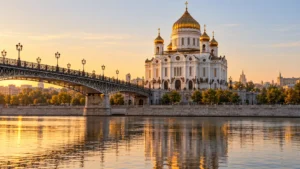 Cathedral of Christ the Saviour Moscow · typical visit: 45 minutes to 1.5 hours; about 1 hour 20 minutes for the full guided tour2 min on foot from Kropotkinskaya metro, Open daily 10:00–18:00
Main image: AI-generated illustration. It may not show the place exactly as it looks.
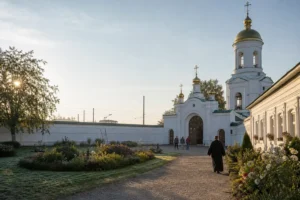 Danilov Monastery Moscow · typical visit: About 1 to 1.5 hours7 min on foot from Tulskaya metro
Main image: AI-generated illustration. It may not show the place exactly as it looks.
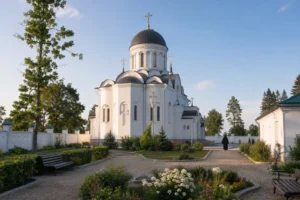 Marfo-Mariinsky Convent Moscow · typical visit: About 1 to 1.5 hours6 min on foot from Polyanka metro, Open daily 07:40–20:00
Main image: AI-generated illustration. It may not show the place exactly as it looks.
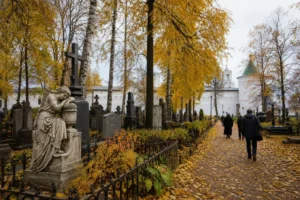 Novodevichy Cemetery Moscow · typical visit: About 1.5 to 2 hours7 min on foot from Luzhniki MCC Station metro, Open daily 09:00–19:00
Main image: AI-generated illustration. It may not show the place exactly as it looks.
Related guides
 Red Square and Moscow Kremlin Walking Itinerary: Route and Timings
Main image: AI-generated illustration. It may not show the place exactly as it looks.
 Zamoskvorechye and Tretyakov Gallery Walking Itinerary: Route and Tips
Main image: AI-generated illustration. It may not show the place exactly as it looks.
 Moscow Jewish Heritage Walking Itinerary: History, Synagogues and Museums
Main image: AI-generated illustration. It may not show the place exactly as it looks.
 Lefortovo Park and German Quarter Walking Itinerary: Two Days of Imperial Moscow
Main image: AI-generated illustration. It may not show the place exactly as it looks.
 Donskoy and Danilov Monasteries Walking Itinerary: Two Centuries of Russian Spiritual History
Main image: AI-generated illustration. It may not show the place exactly as it looks.
Browse more: All Etiquette and Safety · All How-To
FAQ
Do I have to attend a service to visit an Orthodox church?
No. Most churches are open for sightseeing during non-service hours. Check the posted opening hours or call ahead. Sightseeing visits take 20–30 minutes and have a more relaxed dress code, though modesty is still important.
Can I take photographs inside an Orthodox church?
It depends. During services, photography is generally not allowed or is restricted. Photography during services is discouraged; if you need a shot, ask permission at the door. During non-service hours, ask staff. Exterior photographs are usually freely permitted.
What is the dress code for women?
In most Moscow churches, a female casual visitor can wear pants and no scarf. If visiting during services, a skirt below the knees and a head scarf is expected. Shoulders and knees must always be covered. Many churches have spare headscarves and skirts at the entrance if you're unprepared.
Do I need to remove my shoes inside an Orthodox church?
No. Shoes stay on in Orthodox churches (unlike mosques). Just ensure your footwear is clean and respectful (no beach sandals or athletic shoes with loud soles).
Can I receive Communion if I attend a service?
Only members of the Orthodox Christian Church who share a common faith and practice a specific spiritual discipline may participate in the Church's sacraments and receive Holy Eucharist. Non-Orthodox visitors observe but do not participate in Communion.
How long is a typical Orthodox service?
The faithful stand the entire time during the liturgy. A typical Sunday liturgy lasts around ninety minutes. Weekday services are usually 30–60 minutes. The total time can vary.
Do I need cash to visit an Orthodox church?
Entry to most churches is free, so cash is not required for entry. However, if you want to light a candle or make a donation, bring small-denomination rubles. Some larger churches accept cards, but cash is safer.
What should I do if I'm unsure about a rule or make a mistake?
Stay calm and respectful. Church staff and worshippers are usually patient with visitors. If someone corrects you, accept the correction gracefully without arguing. Be respectful. The worst thing is to start arguing. You can also ask questions at the narthex entrance before or after services.
Discover More of Moscow with Our Travel Tips
Get practical Moscow travel tips, new destination guides and useful updates on attractions, opening hours and prices. Plan your visit with clear, helpful information delivered to your inbox.
Moscow Vibes is a one-person project. A coffee keeps it going
Looking for more on this? Kizhi Island: Wooden Domes and Open-Air Museum (Russia Vibes)

Take this guide with you
Get a free PDF of this guide to print or read offline: key facts, tips and a map link on a few clean pages.
Report an issue on this page
Paying for your trip: please read
Payments and bookings between Russia and many other countries are currently restricted. In practice, cards issued in the EU, the UK, the US and several other countries often cannot be used in Russia, Russian cards usually cannot be used abroad, and some booking platforms, airlines and payment providers limit or pause their services for Russia. The situation changes frequently.
We do not give legal or financial advice, and this site does not encourage anyone to break any rule that applies to them. Whatever you plan, you are responsible for following the laws and regulations that apply to you, including those of your country of residence and citizenship.
Many travelers still organise their stay without problems. It is worth asking your bank or payment provider what is currently possible, contacting hotels, tour operators and carriers directly about the payment methods they accept, and checking which services are open to customers from your country. Clarify payment, cancellation and refund terms before you commit to a booking, and keep your plans flexible.
Partner links on this site may not be available in every country, and prices, availability and rules in our guides can differ from what you see when you book.
How we research and update our guides
About this guide: AI assistance and accuracy
This guide is created with the help of AI and is based on official sources where available. Mistakes can still happen. Opening hours, prices, rules and other details are given to the best of our knowledge as of the date shown and can change without notice. It offers general recommendations only, not professional, legal or travel advice. Please confirm important details with the official source before you travel; you are responsible for your own plans and decisions.
* Affiliate link: as an Amazon Associate we earn from qualifying purchases at no extra cost to you.