
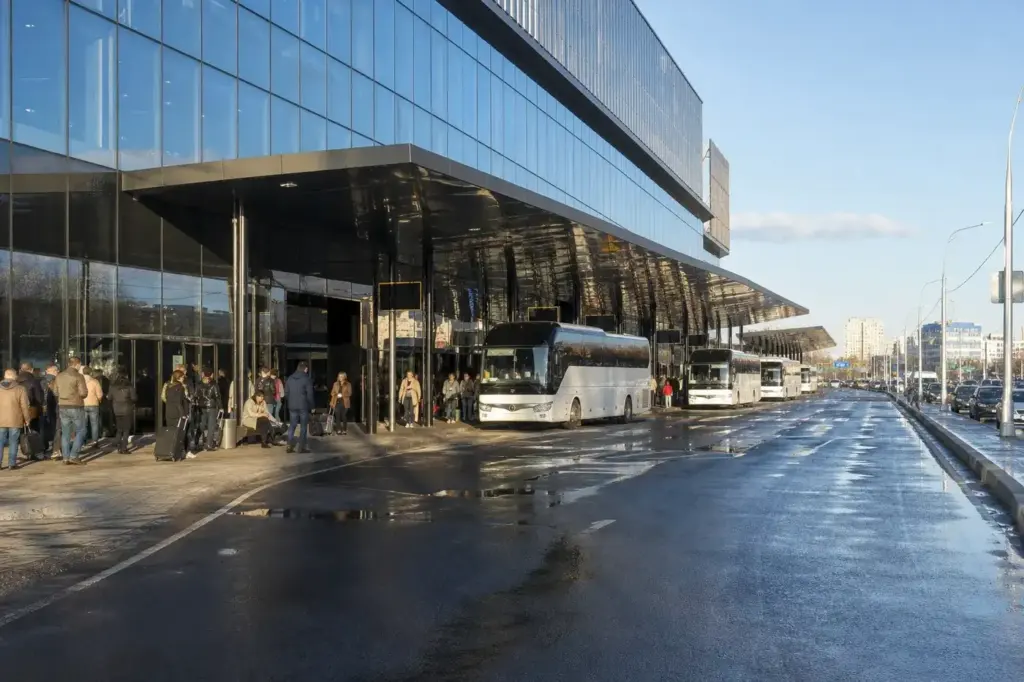
Moscow Central Bus Station (Центральный автовокзал) is the city’s main departure point for intercity and long-distance buses across Russia, Belarus, Ukraine and Central Asia. Located in northeast Moscow near Shchyolkovskaya metro station, it handles about 25,000 passengers daily.
The rebuilt terminal, which opened in 2020, combined the bus station with shops and service facilities. It replaced the 1971 original building that no longer met modern safety and comfort standards. The original structure was designed by architect Rochegov.
Quick Facts
| Russian name | Центральный автовокзал |
|---|---|
| Type | Transport hub |
| Built / opened | 1971 |
| Architect(s) | Rochegov |
| Address | Schyolkovskoye Highway, 75, Moscow, 105122 Google MapsApple MapsYandex Maps2GIS |
| District | Golyanovo |
| Metro | Shchyolkovskaya (Line 3, 320 m walking distance, follow signs from the station) |
| Opening hours | Daily 05:00-00:00 |
| Best time to visit | Weekday mornings (6–10 AM) and early afternoons are quieter; Friday evenings and Sunday afternoons are very crowded. Winter travel can be delayed by snow and ice; allow extra time. Book ahead during Russian holidays (New Year, May holidays) when routes fill quickly. |
| Website | mosgortrans.ru/av/tsentralniy |
Why Visit Moscow Central Bus Station?
If you’re heading beyond Moscow by bus—to the golden-ring towns of Vladimir, Suzdal or Yaroslavl, to Tver, or to destinations across the former Soviet republics—this is where most long-distance routes depart. The station serves about 40% of Russia’s intercity bus traffic from Moscow, making it the primary hub for budget and mid-range bus travel.
The modern 2020 terminal is more comfortable than older bus stations: it has a waiting hall, luggage facilities, ticket offices, shops and cafes, and is directly connected to metro transport.
Highlights of Moscow Central Bus Station
Main Ticket Hall
The central selling point for long-distance bus tickets across Russia and the CIS. Ticket windows serve dozens of routes; sellers can advise on schedules and destinations. The hall is designed for fast processing of large passenger volumes.
Tip: Arrive 30–45 minutes before your scheduled departure, earlier for peak times (mornings, weekends). Crowds are heaviest Friday evenings and Sunday afternoons.
Self-Service Kiosks
Modern electronic terminals let you check schedules, buy e-tickets and print boarding passes without queuing at a window. The system operates in Russian but is intuitive. E-tickets can also be purchased online.
Tip: Print e-tickets before boarding; having a digital-only ticket may cause issues with some bus operators.
Luggage and Baggage Area
Secure luggage storage below the main platform level allows you to store bags before a long journey or between connections. Operated as a paid service.
Tip: Label bags clearly with your name and phone number. Storage fees depend on duration.
Station Café and Food Court
Small café and fast-food outlets serve coffee, sandwiches and snacks. Prices are slightly higher than nearby street cafés but reasonable for a terminal.
Tip: Buy water and snacks for your journey; long-distance buses may stop for food, but it's safer to bring your own.
Passenger Waiting Hall
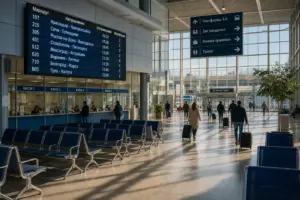
Large air-conditioned waiting area with seating, departure boards showing routes and times, and clearly marked platforms for different bus operators. The 2020 renovation made it significantly more pleasant than the cramped original building.
Tip: Check the departure board or ask staff if unsure which platform your route leaves from—operators sometimes change bays.
Shopping and Service Facilities
In addition to the terminal, the complex includes shops and services reflecting modern transit hub design. These serve travelers waiting for buses.
Tip: Small shops sell snacks, magazines and toiletries; prices are typical for transportation hubs, so shop earlier if budget-conscious.
Atmosphere
The modern terminal has the organized, efficient feel of post-2020 transport infrastructure in Moscow: bright lighting, clear signage in Russian and English, smooth floors and glass surfaces. It’s busy but not chaotic. The main hall hums with quiet announcements and ticket-counter chatter.
Passengers are a mix: tourists heading for day trips to the Golden Ring, Russian families visiting relatives in other regions, and business travelers. Morning hours (6–9 AM) are hectic; midday quieter; evenings (5–11 PM) busy again.
Unlike the cramped, aging 1971 building it replaced, the rebuilt terminal feels modern and functional, though it can feel impersonal. There is a café area where passengers wait or chat.
History of Moscow Central Bus Station
Moscow Central Bus Station opened in 1971 to a design by architect Rochegov, serving the city’s growing intercity bus traffic during the Soviet era. For decades it was the sole major hub for buses heading to the Soviet republics and the Russian periphery.
By the 1990s and 2000s, the original structure had aged poorly. The building could not safely handle the surge in bus traffic after the Soviet Union’s collapse and the opening of routes to new destinations. A major reconstruction in 1997 extended its life, but by the 2010s, safety and comfort standards had fallen dangerously behind.
In January 2017, Moscow’s Architecture Committee approved a plan for a new modern terminal. Demolition began in June 2017. Construction faced delays—completion was first expected in late 2018, then 2019, then pushed to early 2020. The new building finally opened in October 2020, celebrating with officials including Moscow’s mayor. The rebuilt terminal combined the bus station with commercial and service facilities, replacing the cramped original single-purpose structure with a modern transport hub.
Tickets and Payment at Moscow Central Bus Station
Where to buy: Tickets are sold at ticket windows in the station hall during opening hours. You can also buy online via the terminal’s official website, the Moscow Metro app, or third-party booking sites.
Online booking: Most routes allow online booking and e-ticket purchase a few days to weeks in advance. Check the official terminal website (mos.ru or mosgortrans.ru) to see when seats become available for your travel dates.
On the day: Same-day tickets can be purchased at ticket windows, but availability may be limited on popular routes. Arrive at least 30–45 minutes before departure.
What to bring: You must present a valid ID (passport for foreigners) to board. If you purchased an e-ticket online, print it out; have a digital copy as a backup.
Payment: Only Russian rubles accepted. Pay online via a Russian-issued bank card during booking or at the station in cash; cards issued outside Russia do not work. Note that concession fares (pensioners, students, children) exist but change frequently; ask at the ticket window for the current rules. See the official terminal website for the complete ticket guide and current pricing.
How to Get to Moscow Central Bus Station
By metro: Take Line 3 (dark blue line, Sokolnicheskaya line) to Shchyolkovskaya station, the final stop in northeast Moscow. Exit and follow signs to the bus terminal.
From the metro station: The walk takes about 8–10 minutes. Head northeast on Schyolkovskoye Highway (Щелковское шоссе); the bus station entrance is clearly marked. The route is downhill and straightforward.
By taxi or ride-hailing: Give the driver the address: Schyolkovskoye Highway, 75 (Щелковское шоссе, 75). From central Moscow (Red Square, hotels near Kremlin), allow 30–40 minutes in light traffic, up to 1 hour during rush hours.
Note: Avoid unofficial taxis at the metro exit. Use Yandex Taxi, Uber, or request one from your hotel; these are safer and prices are fixed by meter before pickup.
Accessibility
The 2020 rebuilt terminal includes wheelchair access, accessible restrooms, and elevators to the luggage area. Assistance for passengers with reduced mobility is available; ask staff upon arrival. The walk from Shchyolkovskaya metro station is level but long (about 350 m); the metro exit does have steps but also elevators.
Food Nearby
The terminal has an on-site café with coffee, sandwiches and light meals. On Schyolkovskoye Highway near the station entrance are small kiosks and fast-food outlets selling drinks and snacks. Walk back toward Shchyolkovskaya metro for more options; the streets nearby have ordinary Russian cafés and shops typical of a residential northeast Moscow neighborhood.
What to Bring
Bring a printed copy of your e-ticket (or have a clear photo) and a valid passport. For long journeys, bring water, snacks and entertainment (book, tablet, phone charger). Wear comfortable shoes. In winter, dress warmly for the walk from metro. Buses may be unheated or overheated; bring a light layer you can adjust.
Photography Rules
Photography is permitted in the public areas of the terminal for personal use. Do not use professional equipment or tripods. Do not photograph other passengers closely or take pictures inside buses without asking the driver. Some operators have their own photo policies.
Family Suitability
The station is suitable for families traveling by bus. The waiting area is clean and air-conditioned; restrooms are available. Strollers are permitted in the main hall and on buses. Children under 5 often travel free or at reduced fares on long-distance routes; check with the operator. The walk from metro is long but flat. Buses are generally family-friendly on daytime routes; overnight buses may have limited sleeping comfort.
Moscow Vibes Tips
- Use the official mos.ru or mosgortrans.ru website to compare routes and prices before visiting the station. This saves time and often reveals cheaper or faster options than booking on the spot.
- Arrive earlier than you think necessary on Friday evenings and Sunday afternoons when the station is packed. Queues for popular routes can be 15–20 minutes long.
- Keep your ticket and ID visible and accessible; staff and police sometimes check before boarding. If you lost your e-ticket, go to the ticket window immediately—most operators will reissue for a small fee or free.
- Don't buy from touts or unofficial 'helpers' outside the station or near metro offering cheap tickets. Only official operators sell legitimate tickets.
- For long journeys (8+ hours), splurge on a premium or semi-luxury bus if available; they have larger seats, onboard toilets and sometimes snacks. Budget buses are cramped on overnight routes.
Explore Nearby Moscow Central Bus Station
Metro stations near Moscow Central Bus Station
 Shchyolkovskaya Metro Station – about 200 m away (~3 min walk)Open daily 05:30–01:00
Main image: AI-generated illustration. It may not show the place exactly as it looks.
Related guides
 How to get from Moscow to Yaroslavl: Train, Timing and Practical Tips
Main image: AI-generated illustration. It may not show the place exactly as it looks.
 How to get from Moscow to Nizhny Novgorod by train: Tickets and Travel Guide
Main image: AI-generated illustration. It may not show the place exactly as it looks.
 How to get from Moscow to Kazan by train: Booking, Stations and Cabins
Main image: AI-generated illustration. It may not show the place exactly as it looks.
 How to buy intercity bus tickets in Moscow: Online and at terminals
Main image: AI-generated illustration. It may not show the place exactly as it looks.
Browse more: More in Golyanovo · All Airports & Transport · All Other Hubs
FAQ: Moscow Central Bus Station
Do I need to book in advance?
For popular routes (to Vladimir, Tver, Yaroslavl) and on weekends, booking 2–3 days ahead is wise. Buses to small towns can often be booked same-day. Overnight routes in summer and around Russian holidays fill quickly; book weeks ahead if traveling then.
What if my bus is delayed or cancelled?
Ask the ticket window staff immediately. Most operators will rebook you on the next bus or offer a refund. Keep your ticket and any communications. If delays exceed 2–3 hours, the operator may provide a voucher for refreshments.
Can foreigners buy tickets here?
Yes. You need a valid passport and can pay in cash (rubles) or card. Staff speak basic English; booking online beforehand is easier if you don't speak Russian.
How early should I arrive?
Arrive 30–45 minutes before departure on weekdays, 45–60 minutes on weekends. The bus may leave a few minutes early if full; missing your departure means rebooking at the end of the queue.
Is luggage checked or charged separately?
Most intercity buses include one large bag (15–20 kg) free in the trunk. Extra bags or overweight luggage may incur a fee; check with your operator when booking. Storage lockers in the terminal are available for paid short-term storage.
Which destinations are most frequent from here?
The Golden Ring towns (Vladimir, Suzdal, Kostroma), Tver, Yaroslavl, and Nizhny Novgorod have multiple daily departures. Buses also serve St. Petersburg, the far regions (Kazan, Ufa, Yekaterinburg) and some CIS countries (Belarus, Ukraine, Kazakhstan). Check the schedule board or website.
Can I eat or sleep in the station while waiting?
The café and waiting area are available during opening hours (5 AM–midnight). The station is not 24-hour and closes at midnight; overnight wait is not recommended. Check your bus departure time.
Is the station wheelchair accessible?
Yes, the 2020 terminal has wheelchair ramps, elevators and accessible restrooms. The walk from Shchyolkovskaya metro is long (about 350 m) but level. Ask staff for assistance upon arrival.
Discover More of Moscow with Our Travel Tips
Get practical Moscow travel tips, new destination guides and useful updates on attractions, opening hours and prices. Plan your visit with clear, helpful information delivered to your inbox.
Moscow Vibes is a one-person project. A coffee keeps it going

Take this guide with you
Get a free PDF of this guide to print or read offline: key facts, tips and a map link on a few clean pages.
Report an issue on this page
Paying for your trip: please read
Payments and bookings between Russia and many other countries are currently restricted. In practice, cards issued in the EU, the UK, the US and several other countries often cannot be used in Russia, Russian cards usually cannot be used abroad, and some booking platforms, airlines and payment providers limit or pause their services for Russia. The situation changes frequently.
We do not give legal or financial advice, and this site does not encourage anyone to break any rule that applies to them. Whatever you plan, you are responsible for following the laws and regulations that apply to you, including those of your country of residence and citizenship.
Many travelers still organise their stay without problems. It is worth asking your bank or payment provider what is currently possible, contacting hotels, tour operators and carriers directly about the payment methods they accept, and checking which services are open to customers from your country. Clarify payment, cancellation and refund terms before you commit to a booking, and keep your plans flexible.
Partner links on this site may not be available in every country, and prices, availability and rules in our guides can differ from what you see when you book.
How we research and update our guides
About this guide: AI assistance and accuracy
This guide is created with the help of AI and is based on official sources where available. Mistakes can still happen. Opening hours, prices, rules and other details are given to the best of our knowledge as of the date shown and can change without notice. It offers general recommendations only, not professional, legal or travel advice. Please confirm important details with the official source before you travel; you are responsible for your own plans and decisions.
* Affiliate link: as an Amazon Associate we earn from qualifying purchases at no extra cost to you.