
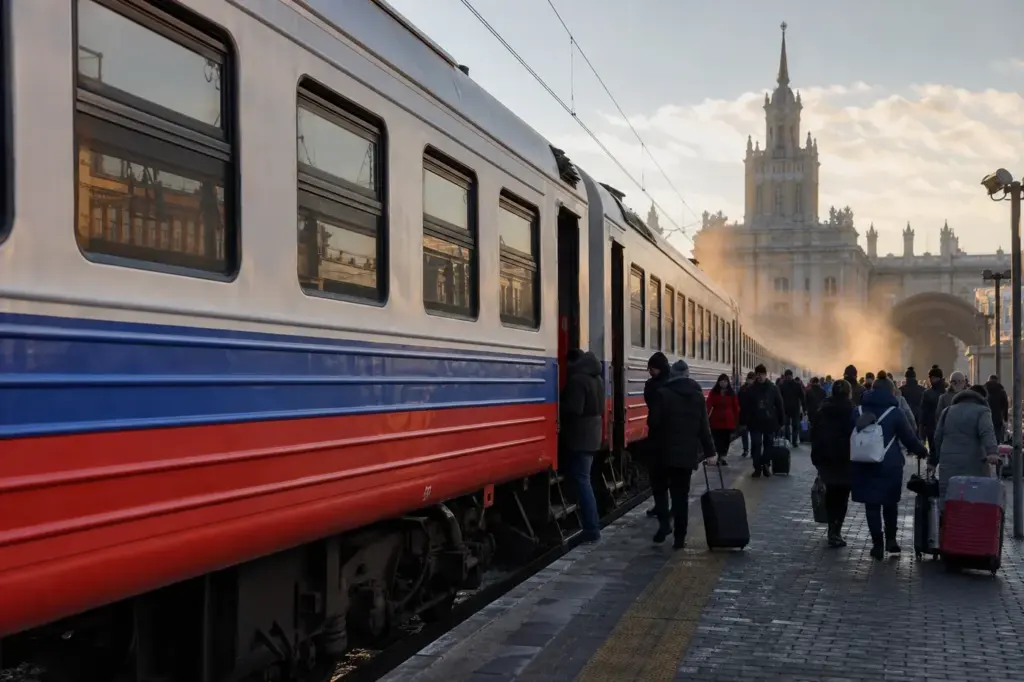
The legendary Rossiya (Russian Railways train 001/002) runs on the Trans-Siberian rail route from Moscow to Vladivostok, the longest in the world. The train operates year-round with daily departures and was fully renovated in 2020 with air-conditioned carriages, power outlets in every compartment, USB ports, individual safes, and hot showers in every carriage.
The continuous journey takes approximately six days and two hours, passing through eight time zones and crossing the Ural Mountains, the West Siberian Plain, and the southern edge of Lake Baikal, the deepest lake on Earth. Visitors board from Moscow’s Yaroslavsky Station and have the choice of multiple cabin classes across 146 stops along the route.
Quick answer: Rossiya Train (001/002) – Premium Direct Service (6 days 2 hours (approximately 144–147 hours), ₽₽₽). 2 more ways compared below.
Quick Facts
| Russian name | Поезд Россия |
|---|---|
| Type | Railway station |
| Built / opened | 1913 |
| Address | Komsomolskaya Square, Moscow Google MapsApple MapsYandex Maps2GIS |
| District | Krasnaya Presnya |
| Metro | Komsomolskaya (Line 5, Exit toward Yaroslavsky Station, about 5 min walk) Komsomolskaya (Line 6, Exit toward Yaroslavsky Station, about 5 min walk) |
| Best time to visit | The Rossiya operates year-round with daily departures. Summer (May–September) offers the best light and landscape views, particularly around Lake Baikal and the southern sections. Winter (December–February) brings dramatic snow scenes but shorter daylight hours. Spring and autumn offer fewer crowds and clearer skies. Book months in advance for summer travel; winter and shoulder seasons have more availability but colder compartments on older trains. |
How to Get to and from Trans-Siberian Railway: Rossiya Train from Moscow to Vladivostok
| Option | Duration | Price | Notes |
|---|---|---|---|
| Rossiya Train (001/002) – Premium Direct Service | 6 days 2 hours (approximately 144–147 hours) | ₽₽₽ | Operates daily with air-conditioned carriages, power outlets, USB ports, individual safes, and hot showers in every carriage. Meals are included in first and second-class tickets. First class is a private double sleeper; second class is a four-berth compartment; third class is a 9-berth open carriage. Most comfortable and fastest option for the full journey. |
| Train 061/062 – Standard Service | 7 nights (approximately 156–162 hours) | ₽₽ | Operates 3 times a week, slightly older carriages than Rossiya but a bit faster. Offers first and second-class compartments and third-class open berths. Less expensive than the Rossiya; no guaranteed English-speaking attendants. Good budget option if the Rossiya is fully booked. |
| Train 100/099 – Budget Longer Service | Approximately 7–8 days | ₽ | Operates once every two days with second-class soft sleepers and third-class hard sleepers. The most economical option but older rolling stock and longer journey time due to additional stops. No restaurant car; food purchased at stations or from the platform vendor network. |
₽ budget · ₽₽ moderate · ₽₽₽ upscale · ₽₽₽₽ splurge. Price levels are estimates compared with typical prices for visitors.
Why Visit Trans-Siberian Railway: Rossiya Train from Moscow to Vladivostok?
The week-long journey is highly favored among adventure-seekers who want to see the genuine, diverse and breathtaking beauty of Russia. The Rossiya offers the most famous and direct way to cross the world’s longest railway, with the train passing through some of Russia’s most significant cities including Yaroslavl, Yekaterinburg, Novosibirsk, Irkutsk, and Ulan-Ude before reaching the Pacific coast. The Rossiya is recognized as a tourist train with English-speaking car attendants and meals included in tickets for 1st and 2nd class. This is travel at its most immersive—a continuous experience of the Russian landscape, people, and the scale of the continent.
Highlights of Trans-Siberian Railway: Rossiya Train from Moscow to Vladivostok
Departure from Yaroslavsky Station
Moscow Yaroslavsky train station is where the Moscow-Vladivostok route begins. The station is a historic railway terminus in central Moscow with distinctive architecture. Passengers should arrive at least 1–2 hours before departure for luggage check and seat assignment. The station is served by the Komsomolskaya metro station (Lines 5 and 6), a short walk away.
Tip: Arrive early to familiarize yourself with the station and find your carriage. Porters are available to help with luggage, though the narrow stairs and doorways on Russian trains can be tight.
Cabin Classes and Comfort
The renovated Rossiya features air-conditioned carriages, power outlets in every compartment, USB ports, individual safes, and hot showers in every carriage. The first-class compartments (deluxe sleepers) and second-class compartments (soft sleepers) are the main options for comfort. Each comes with bedding, a small table, and door locks. A standard, cheaper third-class option with hard sleepers is also available.
Tip: Book higher classes well in advance, especially for summer travel. Second class is a good balance of comfort and value for most travelers. Window seats allow constant viewing of the Siberian landscape.
The Transition Through Time Zones
The journey crosses eight time zones. As the train moves eastward, travelers experience the progression from Moscow Standard Time through to Vladivostok's timezone. Clocks aboard run on Moscow time throughout the journey, though staff will announce local times at major stops. This shift in daylight and time creates a unique rhythm to the journey, with dawn arriving progressively later each morning.
Tip: Set your watch to Moscow time and check local times when the train stops. Many travelers adjust slowly to the time change rather than all at once, allowing their bodies to adapt naturally as they travel east.
Major Stops and Sightseeing Opportunities
Vladimir, founded in the 12th century, is known for its white medieval stone architecture; travellers on the slower route via Yaroslavl can see that historic city, also on UNESCO's list. The train stops at 146 places along the route. Key stops include Yekaterinburg (Siberia's gateway), Novosibirsk (major Siberian city), and Irkutsk (gateway to Lake Baikal). Most major stops allow 20–30 minutes for stretching and purchasing food; some allow 1–2 hours.
Tip: Plan 1–2 day stopovers at Irkutsk or Ulan-Ude to avoid the fatigue of seven days continuous travel. Note that if you exit the train without explicitly extending your ticket at a stop, you cannot board a later train on the same ticket.
Dining and Food Onboard
The Rossiya features a restaurant car with meals included in first- and second-class tickets. The restaurant car serves hot meals, tea, and coffee throughout the day. For third-class passengers, food purchases are cheaper at platform vendors at stops or from the train's small shop. Russian-style meals dominate—pelmeni (dumplings), borscht, and bread are typical offerings.
Tip: Bring snacks and a refillable water bottle. The restaurant car can be crowded and slow during peak hours; mid-morning or mid-afternoon is quieter. Bread and dried fruits available at stations are good backup options.
Lake Baikal and the Southern Route
The journey crosses the southern edge of Lake Baikal, the deepest lake on Earth. This moment, usually around hour 75–80, is a highlight for many travelers. The train runs along or near the lake shore for a dramatic section, offering stunning views of water and forest. Early morning or late evening light on the lake is particularly beautiful.
Tip: Be awake and at your window around 3–4 am Moscow time on the fourth day to catch the best views of Lake Baikal. The light is often clearest at dawn; bring a good camera. Some travelers get out at Irkutsk to spend a day at the lake before rejoining another train.
Platform Interactions and Cultural Exchange
At each stop—sometimes lasting 20 minutes to 2 hours—locals sell food, souvenirs, and crafts from the platform. These stops are valuable moments for getting off the train, stretching, and interacting with Russian provincial life. Vendors offer hot pies, fresh fruit, dairy products, and regional specialties that differ by location. The rhythm of boarding and departure creates a genuine social atmosphere among passengers and staff.
Tip: Keep cash in small denominations for platform vendors. Don't wander far from the train during stops. Valuables left unattended in compartments are generally safe, but traveling compartment-mates are trustworthy—the experience builds community quickly.
Cabin Etiquette and Social Life
Traveling in a shared sleeper compartment with strangers creates a unique social experience. Provodnitsa (attendants) maintain order and provide fresh linens, tea, and assistance. Many travelers form friendships during the journey, sharing meals, stories, and observations about the landscape. English-speaking car attendants are available on the Rossiya. The compartment becomes its own small community for seven days.
Tip: Be respectful of compartment-mates' sleep and privacy. Learn a few Russian phrases; attendants and fellow passengers appreciate the effort. If you're an anxious sleeper or prefer privacy, first class (single or double occupancy) is worth the cost.
Atmosphere
Boarding the Rossiya at Yaroslavsky Station is a sensory experience—the vast platform echoes with announcements in Russian, porters load luggage onto narrow stairs, and compartment numbers are called out. Once aboard, the train fills with a mix of Russian families visiting relatives, adventure travelers from around the world, and businesspeople. The narrow corridors and intimate compartments create unexpected friendships.
The rhythm of the journey is meditative. Hours pass with the landscape slowly changing—birch forests give way to industrial zones, then vast steppes, then mountains. The rocking of the train, the clatter of wheels on rails, and the hiss of air brakes become background music. Meal times in the restaurant car bring the social life forward; otherwise, travelers spend hours gazing from their windows, reading, or dozing. At night, the compartments fall silent. In the early mornings, travelers gather at windows for the best light and views.
The train itself smells of metal, hot brakes, and tea. The air is cool in climate-controlled cars, warm near the heating pipes. Platform stops inject energy—vendors shouting, passengers rushing, the smell of hot pies and fresh bread. By day four or five, most travelers have settled into the rhythm, and the train feels less like transport and more like a temporary home suspended in time and space.
History of Trans-Siberian Railway: Rossiya Train from Moscow to Vladivostok
The Trans-Siberian Railway was built 1891–1916 and is the longest railway in the world. The route was conceived in the late 19th century to connect Moscow with Russia’s Far East, opening trade routes and consolidating Russian control over vast eastern territories.
The Rossiya train service itself began operations in 1913, making it one of the oldest continuously running long-distance rail services in the world. Originally called the Siberian Express, it has become the flagship service of the Trans-Siberian route. The train has carried travelers through decades of Russian history—from tsarist times through the Soviet era to the present day.
The Rossiya was fully renovated in 2020, replacing much older Soviet-era rolling stock with modern air-conditioned carriages while maintaining the essential character of the journey. Despite technical improvements, the route and stops have remained largely unchanged, preserving the historical experience of crossing Russia by rail.
Tickets and Payment at Trans-Siberian Railway: Rossiya Train from Moscow to Vladivostok
Tickets generally go on sale 45 days in advance. The official Russian Railways website (RZD.ru) no longer accepts Visa or Mastercard. There are still ways to buy tickets through alternative services.
Official booking methods:
- Authorized third-party agencies: RussianTrain.com, Tutu.ru, and similar authorized resellers accept international credit cards and provide English-language support. They issue real official e-tickets, not vouchers, and charge a service fee.
- At Yaroslavsky Station: Ticket offices are on the ground floor; staff speak limited English. Bring your passport and be prepared to specify exact dates and cabin class.
- From Moscow hotels: Many hotels offer train ticket booking as a concierge service, usually with a markup.
When booking, provide your full name and passport number exactly as written in your passport. You can only buy tickets outright, not reserve them, and your name and passport number are printed on the ticket. Tickets purchased online should be collected before boarding or printed if electronic tickets are issued. Note that prices for Russian citizens and concessions differ from international visitor rates. Check the official Russian Railways website (eng.rzd.ru) for all ticket categories and current policies.
How to Get to Trans-Siberian Railway: Rossiya Train from Moscow to Vladivostok
From central Moscow to Yaroslavsky Station:
- Metro: Komsomolskaya station (Red Line 5 or Brown Line 6). Exit and follow signs to Yaroslavsky Station (Yaroslavlyky Vokzal); the station is a 5–10 minute walk downhill from the metro exit. The platforms are clearly marked by train number above each section.
- Taxi: From anywhere in Moscow center, a taxi to Yaroslavsky Station costs moderate to upscale (₽₽–₽₽₽). Journey time is 20–40 minutes depending on traffic and time of day. Be cautious of unofficial taxis; use official apps (Yandex Taxi, Uber) or request a taxi through your hotel.
- Walking: Yaroslavsky Station is located at Komsomolskaya Square in the Krasnaya Presnya district. If arriving by another railway station, local connecting trains serve between Moscow’s major stations (Belorussky, Paveletsky, and others); journey time is typically 15–25 minutes.
Accessibility
Modern Rossiya carriages feature designated compartments with wheelchair-accessible facilities, though the train's narrow doors and steep external steps present challenges. The train has a special compartment equipped for people in wheelchairs. Passengers with mobility issues should book first-class compartments, which are lower and more accessible. Onboard attendants assist elderly and disabled passengers. Toilets are available at the end of each carriage; showers are in dedicated cars. Travelers requiring assistance should contact the booking agent in advance.
Food Nearby
At Yaroslavsky Station, the station building has a small café and kiosk for last-minute snacks before boarding. Once on the train, the restaurant car serves meals (included for first and second-class). For third-class passengers, food is purchased from platform vendors at stops or from the small shop onboard. Hot pies, bread, milk, cheese, and fresh fruit are available at almost every stop. Major cities like Yekaterinburg, Novosibirsk, and Irkutsk have longer stops (1–2 hours) allowing time to visit station restaurants or nearby shops.
What to Bring
Comfortable clothes for sitting; layers (compartments can be cool at night, overheated during the day). A pillow and blanket (provided, but personal ones may be more comfortable), toiletries, medications, reading materials, and a camera. Modern Rossiya cars have individual compartment showers and hot water, so minimal towels needed. Bring small bills for platform vendors. A universal power adapter is useful (USB ports are standard on renovated cars). No restrictions on luggage size, but compartments are compact; one large suitcase per person fits under the bunk. Security checks at boarding are routine; arrive with your passport ready.
Photography Rules
Photography is permitted throughout the journey and from compartments. The train does not restrict personal photography for travel documentation. Bringing a tripod or using it from the window is acceptable for landscape shots. Flash photography is discouraged in shared compartments to avoid disturbing fellow travelers. Mobile coverage is intermittent in remote regions; download maps and photos beforehand.
Family Suitability
The Rossiya is family-friendly for children aged 8 and older. Younger children may find the journey monotonous in later days. First and second-class compartments are more comfortable for families than open third-class berths. The long daylight hours in summer allow children to enjoy views. Platform stops provide relief from confinement. Infants travel with one accompanying adult at reduced rates. Strollers are impractical onboard due to narrow corridors, but children can move freely within their carriage under supervision. Older children enjoy the social atmosphere and the adventure; plan activities and books for quiet periods.
Moscow Vibes Tips
- Book second-class compartments for the best balance of comfort, cost, and social experience. You'll have two other travelers in your compartment, but first class can feel isolating, and third class is crowded and noisy.
- Bring a small gift or snack to share with your compartment-mates on the first evening—chocolate, coffee, or fruit from your home country. This breaks the ice and creates friendships that make the seven days far richer.
- Don't book the full journey straight through without stops unless you're very experienced with extended train travel. Breaking the journey for 1–2 days in Irkutsk (to see Lake Baikal) or Ulan-Ude transforms a grueling marathon into a genuine adventure.
- Ignore online rumors about 'border passport controls.' The Rossiya only crosses Russia; no international borders. Russian customs and passport control happen only at departure from Moscow.
- Set your watch to Moscow time and keep it there throughout. The provodnitsa (attendant) and announcement clocks all use Moscow time, which can be confusing when local solar time diverges by 8 hours, but it makes logistics simpler.
- Wake early to see Lake Baikal (typically around 3–4 am Moscow time on day four). Many travelers sleep through it; being alert gives you one of the highlights of the entire journey.
Explore Nearby Trans-Siberian Railway: Rossiya Train from Moscow to Vladivostok
Metro stations near Trans-Siberian Railway: Rossiya Train from Moscow to Vladivostok
 Komsomolskaya Metro Stationabout 250 m away (~4 min walk)
Main image: AI-generated illustration. It may not show the place exactly as it looks.
 Ploshchad Tryokh Vokzalov MCD Station – about 500 m away (~8 min walk)Open 24 hours
Main image: AI-generated illustration. It may not show the place exactly as it looks.
 Krasnoselskaya Metro Stationabout 800 m away (~13 min walk)
Main image: AI-generated illustration. It may not show the place exactly as it looks.
Sights near Trans-Siberian Railway: Rossiya Train from Moscow to Vladivostok
 Moscow Transport Museum – about 600 m away (~10 min walk) · typical visit: About 2 to 3 hours12 min on foot from Baumanskaya metro, Open daily 10:00–20:00
Main image: AI-generated illustration. It may not show the place exactly as it looks.
 Bauman Garden Moscow – about 850 m away (~14 min walk) · typical visit: About 1 to 1.5 hours10 min on foot from Krasnye Vorota metro, Open daily 06:00–00:00
Main image: AI-generated illustration. It may not show the place exactly as it looks.
 Apothecary Garden Moscow – about 1.7 km away (~27 min walk) · typical visit: About 1.5 to 2.5 hours7 min on foot from Prospekt Mira metro, Open daily 10:00–19:00
Main image: AI-generated illustration. It may not show the place exactly as it looks.
Train stations and river piers near Trans-Siberian Railway: Rossiya Train from Moscow to Vladivostok
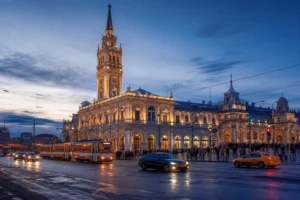 Kazansky Railway Terminalabout 250 m away (~4 min walk)
Main image: AI-generated illustration. It may not show the place exactly as it looks.
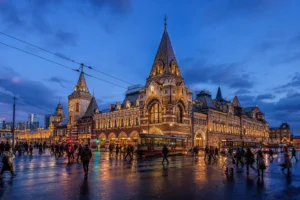 Yaroslavsky Railway Terminalabout 250 m away (~4 min walk)
Main image: AI-generated illustration. It may not show the place exactly as it looks.
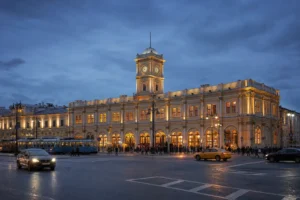 Leningradsky Railway Terminalabout 300 m away (~5 min walk)
Main image: AI-generated illustration. It may not show the place exactly as it looks.
Restaurants and cafes near Trans-Siberian Railway: Rossiya Train from Moscow to Vladivostok
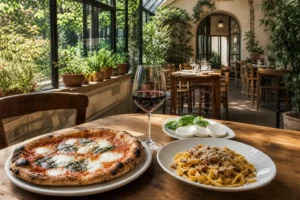 +39 Trattoria & Pizzeria – about 600 m away (~10 min walk)12 min on foot from Komsomolskaya metro, Open daily 12:00–23:00
Main image: AI-generated illustration. It may not show the place exactly as it looks.
Related guides
 How to book Russian train tickets online from Moscow: Your complete guide
Main image: AI-generated illustration. It may not show the place exactly as it looks.
 How to transfer between Moscow railway stations: Metro, taxi and timing
Main image: AI-generated illustration. It may not show the place exactly as it looks.
 How to apply for a Russian e-visa for Moscow: Official Steps and Requirements
Main image: AI-generated illustration. It may not show the place exactly as it looks.
 How to get from Moscow to Yaroslavl: Train, Timing and Practical Tips
Main image: AI-generated illustration. It may not show the place exactly as it looks.
 How to get from Moscow to Nizhny Novgorod by train: Tickets and Travel Guide
Main image: AI-generated illustration. It may not show the place exactly as it looks.
Browse more: More in Krasnaya Presnya · All Airports & Transport · All Railway Stations
FAQ: Trans-Siberian Railway: Rossiya Train from Moscow to Vladivostok
Is the Rossiya train for tourists only, or do regular Russians travel on it?
The Rossiya is a regular passenger service used by Russians traveling for work, family visits, and leisure. It is not a dedicated tourist train, but it is recognized internationally and attracts many foreign travelers. Compartments are shared among whoever books them, so you may travel with Russians, other internationals, or a mix. This mix is part of the authentic experience.
Do I need a visa to take the Rossiya train from Moscow to Vladivostok?
Yes, you need a Russian visa to enter Russia and board the train in Moscow. The journey stays entirely within Russian territory and does not cross international borders, so only one visa is required. Consult your country's Russian embassy or consulate for visa requirements and processing times.
Can I get off the train at stops like Irkutsk and then board another train later?
Only if your original ticket explicitly states the stopover or if you extend it at the station before boarding the later train. If you exit without arranging this in advance, your ticket becomes invalid for later trains, and you'll need to purchase a new ticket. Plan and book stopovers clearly when you book your original journey.
What's included in first, second, and third-class tickets?
First class includes a private double sleeper with toilet and shower access, meals, and tea service. Second class includes a four-berth compartment, meals, tea, and linens. Third class (platzkartny) is an open 9-berth carriage with basic amenities, no private compartment, and no meals included. Toilets and washbasins are shared.
Is the food onboard good, and is it safe to eat?
The restaurant car serves standard Russian meals (soups, pelmeni, bread, tea, coffee) and is generally safe and clean. First and second-class tickets include meals; they're adequate but not haute cuisine. Third-class passengers can purchase from the restaurant or, more affordably, from platform vendors at stops. All food is safe; Russians have been eating station food for over a century.
How do I stay clean during seven days on the train?
Modern Rossiya compartments have showers in designated cars. Schedule your shower time with the provodnitsa (attendant); showers are usually available during stops or scheduled times. Washbasins in compartments allow daily washing. The train provides fresh linens and towels. Older trains (061/062, 100/099) have fewer showers; plan ahead.
Can I buy tickets at Yaroslavsky Station without booking in advance?
Yes, you can buy tickets at the station's ticket windows if seats are available, but this is risky during peak seasons (May–September). Tickets are cheaper if booked online 45 days in advance; last-minute station purchases may be significantly more expensive or not available. International visitors are advised to book through authorized agencies beforehand.
What happens if I miss my train departure?
If you miss your departure, your ticket is typically forfeited unless you contact the booking agency or Russian Railways beforehand to rebook. There is no refund policy for no-shows. Arrive at Yaroslavsky Station 1–2 hours before departure to allow time for check-in, security, and finding your carriage.
Discover More of Moscow with Our Travel Tips
Get practical Moscow travel tips, new destination guides and useful updates on attractions, opening hours and prices. Plan your visit with clear, helpful information delivered to your inbox.
Moscow Vibes is a one-person project. A coffee keeps it going
Looking for more on this? Journey: Cihangir Cafe for Breakfast, Pizza and Late Evenings (Istanbul Vibes)

Take this guide with you
Get a free PDF of this guide to print or read offline: key facts, tips and a map link on a few clean pages.
Report an issue on this page
Paying for your trip: please read
Payments and bookings between Russia and many other countries are currently restricted. In practice, cards issued in the EU, the UK, the US and several other countries often cannot be used in Russia, Russian cards usually cannot be used abroad, and some booking platforms, airlines and payment providers limit or pause their services for Russia. The situation changes frequently.
We do not give legal or financial advice, and this site does not encourage anyone to break any rule that applies to them. Whatever you plan, you are responsible for following the laws and regulations that apply to you, including those of your country of residence and citizenship.
Many travelers still organise their stay without problems. It is worth asking your bank or payment provider what is currently possible, contacting hotels, tour operators and carriers directly about the payment methods they accept, and checking which services are open to customers from your country. Clarify payment, cancellation and refund terms before you commit to a booking, and keep your plans flexible.
Partner links on this site may not be available in every country, and prices, availability and rules in our guides can differ from what you see when you book.
How we research and update our guides
About this guide: AI assistance and accuracy
This guide is created with the help of AI and is based on official sources where available. Mistakes can still happen. Opening hours, prices, rules and other details are given to the best of our knowledge as of the date shown and can change without notice. It offers general recommendations only, not professional, legal or travel advice. Please confirm important details with the official source before you travel; you are responsible for your own plans and decisions.
* Affiliate link: as an Amazon Associate we earn from qualifying purchases at no extra cost to you.