
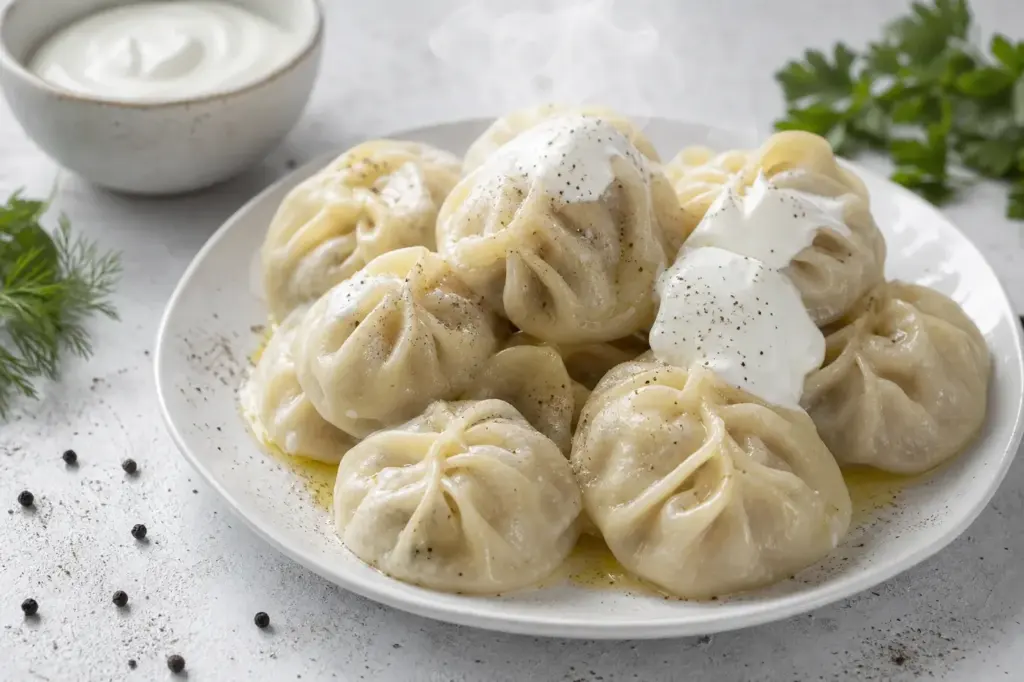
Manti are Central Asian steamed dumplings that have become beloved throughout Russia and post-Soviet countries. If you want to learn how to make manti dumplings at home, this guide walks you through the entire process—from rolling thin dough to shaping and steaming these juicy parcels.
Making manti is a social activity often done with family or friends. The dish takes about 1.5 to 2 hours total, including dough resting time. The recommended option is the Uzbek-style steamed version, which is larger than Turkish manti and traditionally filled with lamb or beef.
Quick answer: Roll and cut thin dough into squares, fill each with spiced minced meat and onions, fold into small pockets, then steam in a tiered steamer for 30–40 minutes. Total time: 1.5–2 hours. Cost is budget-friendly for homemade preparation.
At a Glance
| Type | Dishes |
|---|---|
| Local name | Манты |
| Origin | Central Asia (Kazakhstan, Uzbekistan, Kyrgyzstan) |
| Servings | 2–4 servings |
| Total time | 1.5–2 hours (includes dough resting) |
| Difficulty | Medium |
History and Story of Manti (Манты)
Manti is a type of dumpling found in Turkish, Uyghur and Central Asian cuisines, but also found in West Asia, South Caucasus, and the Balkans. Manti is also consumed throughout post-Soviet countries, where the dish spread from the Central Asian republics.The dish has roots tracing back to Central Asian Turks, who created the dumplings as a portable meal during their migrations. Manti dumplings are believed to have originated in Central Asia, specifically in the region that is now modern-day Kazakhstan, Uzbekistan, and Kyrgyzstan. The dish has a rich history that dates back to the ancient Silk Road.By the medieval period, manti had become established in Central Asia, particularly in the cities of Bukhara and Samarkand. The earliest written Ottoman mantı recipe appears in a 15th-century cookbook written by Muhammed bin Mahmud Shirvani. The version in Shirvani’s book is a steamed dumpling with a minced lamb and crushed chickpeas filling spiced with cinnamon and flavored with vinegar.
Ingredients
- 300 g all-purpose flour
- 1 egg
- 120 ml water
- 1 teaspoon salt
- 400 g ground beef or lamb
- 2 large onions, finely diced
- 1 teaspoon black pepper
- 1 teaspoon salt (for filling)
- 2 tablespoons vegetable oil
How Manti (Манты) Is Made
Step 1: Make the dough
In a bowl, combine flour and salt. Add the egg and water gradually, mixing with your hands until a stiff dough forms. Transfer to a floured surface and knead for about 5 minutes until smooth. Cover with a damp cloth and let rest for at least 1 hour—this makes the dough easier to roll thin.
Tip: Resting time is essential; it relaxes the gluten and makes rolling much easier.
Step 2: Prepare the filling
While the dough rests, combine ground meat, finely diced onions, black pepper, salt, and oil in a bowl. Mix gently with your hands until just combined—the onions will release moisture as the manti cook, keeping them tender and juicy inside.
Tip: Do not overmix; large pieces of onion are better than a paste.
Step 3: Roll out the dough
Divide the dough into two portions. Working with one at a time, roll it on a floured surface into a very thin circle—thin enough to see through. The dough should be about 1/16 inch thick. Dust with flour as needed to prevent sticking.
Tip: Thin dough ensures delicate dumplings. If the dough resists, let it rest under a towel for a few minutes.
Step 4: Cut into squares
Using a sharp knife or pizza cutter, cut the rolled dough into 2-inch squares. Save all the scraps—you can gather them, knead them into a ball, rest, roll out again, and cut more squares.
Tip: A pizza cutter works faster than a knife and makes cleaner edges.
Step 5: Fill and shape
Place a generous tablespoon of filling in the center of each square. Be careful not to let the filling touch the edges. Pinch together two opposite corners above the filling, then pinch the other two corners together to create a small pouch with a hole at the top. The sealed edges should be firm.
Tip: If edges are dry, moisten them lightly with a wet finger before pinching to ensure they seal.
Step 6: Steam the manti
Arrange the sealed manti on the greased levels of a tiered steamer (mantovarka or mantyshnitsa). Fill the base pot with water, bring it to a boil, place the steamer tiers on top, cover, and steam for 30–40 minutes. The dumplings are done when the dough is tender and no longer raw-looking.
Tip: If you don't have a tiered steamer, you can place a colander or perforated metal bowl over a pot of boiling water as a makeshift steamer.
Variants
- Uzbek Manti are typically larger and often served with a rich broth.
- Turkish Manti are often topped with yogurt and garlic sauce, highlighting a different culinary tradition.
- Vegetarian options are available, with fillings ranging from pumpkin, lentils, and spinach.
- The ancient Bukharian Jewish community in Central Asia are known for large intricately shaped manti, generously filled with meat and always steamed—never boiled. There's also a dairy version of Bukharian manti that's filled with cheese and served with yogurt.
Common Mistakes to Avoid
- Rolling the dough too thick—it should be nearly transparent so the steam cooks it through.
- Overfilling each square—excess filling prevents proper sealing and causes the dumplings to fall apart.
- Letting filling touch the dough edges—moisture will prevent sealing; keep edges clean and pinch firmly.
- Not resting the dough long enough—this makes it hard to roll thin without tearing.
- Steaming without enough water in the base—the pot can dry out and the dumplings won't cook properly.
How to Order and Eat It
Manti are traditionally served hot, straight from the steamer. Manti is served topped with butter, sour cream or an onion sauce. Manti is served with butter, sour cream, or a special onion sauce or garlic sauce. If you buy manti as street food in Kazakhstan or Kyrgyzstan, they often come sprinkled with hot red pepper powder. Eat each dumpling whole or break it open carefully to avoid the steam inside. The filling should be hot and juicy.
To order: Манты, пожалуйста [Manti, pozhaluysta]
Where to Try Manti (Манты)
 Uryuk Uzbek, Caucasian, European
Main image: AI-generated illustration. It may not show the place exactly as it looks.
 Uzbekistan Uzbek, Arab, Pan-Asian, Azerbaijani
Main image: AI-generated illustration. It may not show the place exactly as it looks.
Moscow Vibes Tips
- Prepare the dough ahead and refrigerate it overnight. This actually improves texture and makes it easier to roll. Remove from the fridge 30 minutes before rolling.
- Make manti in batches with others if possible. One person rolls and cuts while another shapes—the process goes faster and is more enjoyable.
- Once shaped but before steaming, you can freeze manti on a tray and then transfer to freezer bags. They keep for 2–3 months and can be steamed directly from frozen, adding only 10–15 minutes to cooking time.
- If you don't have traditional spices, ground cumin can be added to the filling (about 1/2 teaspoon). Traditionally some regional versions include it; others skip it entirely.
- Check water level in the steamer base halfway through cooking and add more if needed. The base pot must never run dry.
Where to Find Manti (Манты) in Moscow
Related guides
 10 Best Places to Try Russian Food in Moscow: Classics and Canteens
Main image: AI-generated illustration. It may not show the place exactly as it looks.
 10 Best Food Markets and Food Halls in Moscow: Where to Eat Indoors
Main image: AI-generated illustration. It may not show the place exactly as it looks.
 15 Best Things to Do in Moscow with Kids: Circus, Space and Parks
Main image: AI-generated illustration. It may not show the place exactly as it looks.
 Moscow Food Tour: Russian Cuisine and Local Specialties: One-Day Route
Main image: AI-generated illustration. It may not show the place exactly as it looks.
Browse more: All Food & Drink · All Other
FAQ
What is the difference between manti and pelmeni?
Manti and pelmeni are both filled dumplings, but they differ in origin, size, and cooking method. Manti are Central Asian, typically larger, and steamed in a special tiered steamer. Pelmeni are Russian, smaller, and boiled in water or broth. Manti have a more delicate, thin dough; pelmeni are thicker.
Can I boil manti instead of steaming?
Yes, though steaming is traditional in Central Asia. If you boil manti, bring a large pot of salted water to a boil, gently drop them in, and cook until they float plus 2–3 minutes more. They may be softer than steamed versions.
What meat works best for manti?
In Kazakhstan, lamb is the preferred filling due to its deep flavor, but beef is also common, especially in urban areas. Ground pork is sometimes used in some regions, though lamb and beef are traditional.
Do I need a special steamer?
Manti are steamed in a multi-level metal steamer called mantovarka, mantyshnitsa (Russian terms for manti cooker), manti-kazan or manti-kaskan (manti pot). These are available in Asian markets, but a colander placed over a pot of boiling water also works as a makeshift steamer.
How long do homemade manti last in the fridge?
Cooked manti keep in the refrigerator for 2–3 days in an airtight container. Reheat by steaming for 5–10 minutes, or microwave gently with a damp paper towel. Uncooked shaped manti can be frozen for 2–3 months.
Typically contains gluten?
Yes, manti dough is made with wheat flour and typically contains gluten. Gluten-free flour can be substituted, though the dough will be less elastic and more fragile during rolling and shaping.
Is there a vegetarian version?
Health-conscious options for vegetarians are also available, with fillings ranging from pumpkin, lentils, and spinach. Some cooks mix pumpkin or potatoes with spices as the primary filling.
How do I store uncooked manti?
After shaping, place uncooked manti on a floured tray and freeze until solid, then transfer to freezer bags. They keep frozen for 2–3 months. Steam directly from frozen, adding 10–15 minutes to the cooking time. Do not refrigerate uncooked manti for more than a few hours, as the filling will begin to leach moisture.
Discover More of Moscow with Our Travel Tips
Get practical Moscow travel tips, new destination guides and useful updates on attractions, opening hours and prices. Plan your visit with clear, helpful information delivered to your inbox.
Moscow Vibes is a one-person project. A coffee keeps it going
Looking for more on this? Beef Stroganoff: Authentic Russian Recipe and Cooking Method (Russia Vibes)

Take this guide with you
Get a free PDF of this guide to print or read offline: key facts, tips and a map link on a few clean pages.
Report an issue on this page
Paying for your trip: please read
Payments and bookings between Russia and many other countries are currently restricted. In practice, cards issued in the EU, the UK, the US and several other countries often cannot be used in Russia, Russian cards usually cannot be used abroad, and some booking platforms, airlines and payment providers limit or pause their services for Russia. The situation changes frequently.
We do not give legal or financial advice, and this site does not encourage anyone to break any rule that applies to them. Whatever you plan, you are responsible for following the laws and regulations that apply to you, including those of your country of residence and citizenship.
Many travelers still organise their stay without problems. It is worth asking your bank or payment provider what is currently possible, contacting hotels, tour operators and carriers directly about the payment methods they accept, and checking which services are open to customers from your country. Clarify payment, cancellation and refund terms before you commit to a booking, and keep your plans flexible.
Partner links on this site may not be available in every country, and prices, availability and rules in our guides can differ from what you see when you book.
How we research and update our guides
About this guide: AI assistance and accuracy
This guide is created with the help of AI and is based on official sources where available. Mistakes can still happen. Opening hours, prices, rules and other details are given to the best of our knowledge as of the date shown and can change without notice. It offers general recommendations only, not professional, legal or travel advice. Please confirm important details with the official source before you travel; you are responsible for your own plans and decisions.
* Affiliate link: as an Amazon Associate we earn from qualifying purchases at no extra cost to you.