
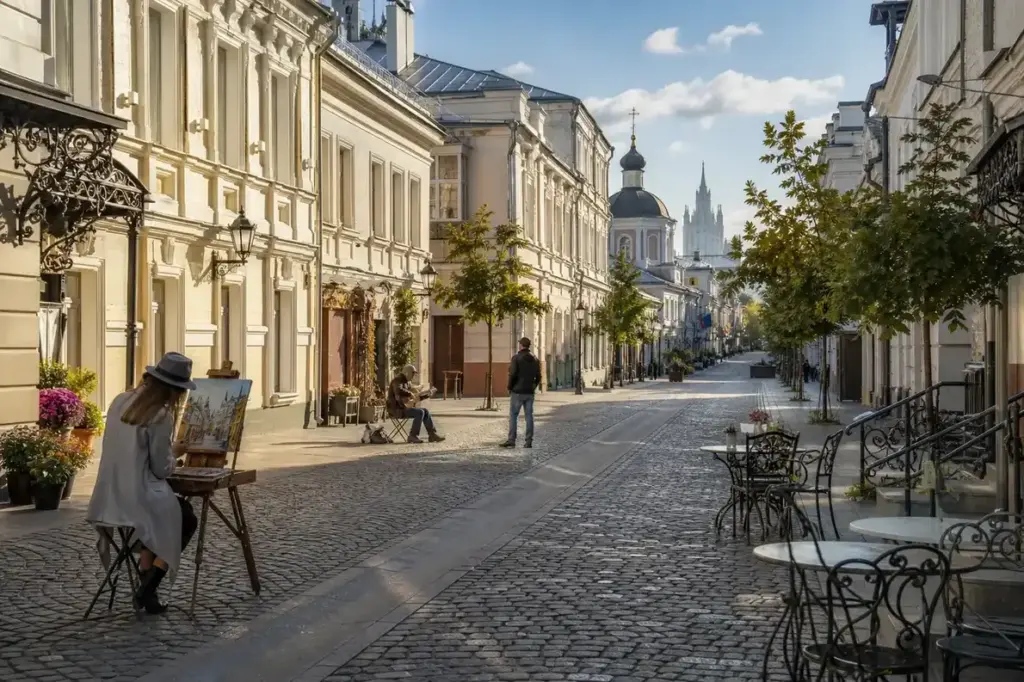
Whether this is your first visit or you’re returning to explore beyond the obvious landmarks, understanding Moscow’s neighborhoods is the key to feeling the city’s pulse. This guide covers ten distinct districts that showcase everything from grand tsarist mansions to avant-garde Soviet architecture, intimate literary squares to bustling cultural hubs.
Each neighborhood has its own rhythm, architecture, and story. Instead of rushing between museum checkboxes, spend time walking the side streets, stopping at cafés, and noticing the details—the courtyards, the façades, the sounds. This is how you discover what makes 10 best neighborhoods to explore in Moscow worth your time.
At a Glance
| # | Place | Best for | Good to know |
|---|---|---|---|
| 1 | Red Square & Kitay-Gorod | Historic heart of Moscow | Central Moscow, metro stations Okhotny Ryad and Teatralnaya. Free to explore the squares and lanes; Kremlin and specific sites require paid entry. |
| 2 | Arbat | Pedestrian cultural avenue | West of the Kremlin; metro Smolenskaya, Arbatskaya, or Pushkinskaya. Free to walk; museums charge paid entry. |
| 3 | Zamoskvorechye | Riverside merchant quarter | South bank of Moskva River; metro Kropotkinskaya or Novokuznetskaya. Free to explore lanes; museums require paid entry. |
| 4 | Tverskoy District | Central boulevard and theaters | North of Red Square; metro Tverskaya, Teatralnaya, or Pushkinskaya. Walking between metro stations is key; free to explore, paid for theaters and museums. |
| 5 | Presnensky & Moscow-City | Modern skyline and exhibition hub | Northwest of the Kremlin; metro Mayakovskaya, Belorusskaya, or Krasny Oktyabr. Free to explore and walk through parks; specific venues and exhibitions charge entry. |
| 6 | Basmanny & Khokhlovka | Bohemian lanes and street art | North of Red Square, metro Krasnyye Vorota or Komsomolskaya. Free to explore; venues and cafés charge for food and entry. |
| 7 | Patriarch Ponds & Prechistenka | Literary Moscow and mansions | Northwest of the Kremlin; metro Mayakovskaya or Smolenskaya. Free to explore; museums charge entry. |
| 8 | Tagansky District & Taganka Square | Theater and riverfront culture | East of the Kremlin; metro Tagansko-Krasnopresnenskaya (Taganskaya). Free to explore; theater and specific venues charge entry. |
| 9 | Khamovniki & Cathedral of Christ the Savior | Sacred and sporting landmarks | South of central Moscow; metro Kropotkinskaya or Biblioteka Imeni Lenina. Cathedral and convent are free to enter but have dress codes and rules; viewing the Luzhniki requires access to events. |
| 10 | VDNKh & Exhibition Park | Soviet grandeur and seasonal arts | Northeast Moscow; metro VDNKh. Free to walk the grounds; specific pavilions and exhibitions charge entry. |
| 11 | Dorogomilovo & Arc de Triomphe | Western residential quarter | West of central Moscow; metro Kievskaya or Smolenskaya. Free to explore; minimal tourist infrastructure. |
How We Chose
These neighborhoods were selected based on the following criteria:
- Verified as operating and accessible to visitors as of October 2026
- Each has distinct architectural character, historical significance, or contemporary cultural appeal
- Multiple attractions or experiences within walking distance
- Metro connections or walkability from central Moscow
- Representative of different eras and styles: medieval, merchant, tsarist, avant-garde, Soviet, and contemporary
- Suitable for walking explorations of at least 1–2 hours
1. Red Square & Kitay-Gorod – Historic heart of Moscow
The symbolic center where medieval Moscow begins. Red Square faces St. Basil's Cathedral and the Kremlin, while Kitay-Gorod behind the square is Moscow's oldest neighborhood, a warren of narrow lanes hiding ancient churches, cathedrals, and the GUM department store. Walk past the Lenin Mausoleum, explore hidden courtyards north of the square, and discover churches tucked into alleyways that few tourists find.
Good to know: Central Moscow, metro stations Okhotny Ryad and Teatralnaya. Free to explore the squares and lanes; Kremlin and specific sites require paid entry.
Tip: Arrive early morning (7–9 am) to see Red Square nearly empty; by 10 am it fills with tour groups. The best light for photography is 8–10 am from the north side.
2. Arbat – Pedestrian cultural avenue
Moscow's most famous street as a continuous pedestrian walk where street artists, musicians, and portrait painters work daily. The lane is lined with cafés, souvenir stalls, and bookshops. Side streets reveal Art Nouveau mansions, literary museums (Pushkin, Gogol), and theaters. Both Old Arbat (pedestrianized) and New Arbat (1960s boulevard) offer different atmospheres, but most visitors focus on the pedestrian stretch.
Good to know: West of the Kremlin; metro Smolenskaya, Arbatskaya, or Pushkinskaya. Free to walk; museums charge paid entry.
Tip: New Arbat feels rushed and commercial; venture into side streets like Starokonyushenny or Kropotkinsky to find quieter courtyards and galleries. Avoid mid-afternoon when the street is most crowded.
3. Zamoskvorechye – Riverside merchant quarter
South of the Kremlin across the Moscow River, this district retains the character of 18th- and 19th-century merchant Moscow. Narrow, winding lanes feel untouched by Soviet-era construction; wooden buildings and old churches survive here more than elsewhere. Home to the State Tretyakov Gallery, historic house museums, and Gorky Central Park. Walking here is stepping back in time.
Good to know: South bank of Moskva River; metro Kropotkinskaya or Novokuznetskaya. Free to explore lanes; museums require paid entry.
Tip: Start at the Tretyakov Gallery or Cathedral of Christ the Savior, then explore on foot south and east into the quiet lanes. The neighborhood is best appreciated on foot, not by transit.
4. Tverskoy District – Central boulevard and theaters
Tverskaya Prospekt is Moscow's main artery north from Red Square, lined with grand hotels, restaurants, and flagship stores. The district also contains the Bolshoi Theatre, literary squares, and tree-lined garden passages. This area feels grander and more formal than Arbat, with official Moscow built in the 19th and Soviet eras alongside contemporary commerce.
Good to know: North of Red Square; metro Tverskaya, Teatralnaya, or Pushkinskaya. Walking between metro stations is key; free to explore, paid for theaters and museums.
Tip: Teatralnaya Square behind the Bolshoi is worth lingering in; the historic gardens and theaters cluster here. Walk down the side streets off Tverskaya (like Kamergersky) to escape the boulevard noise.
5. Presnensky & Moscow-City – Modern skyline and exhibition hub
This district shows contemporary Moscow. Moscow-City is the glossy financial district with modern towers; Presnensky around it mixes 19th-century industrial buildings now converted to galleries and studios with Soviet-era blocks. The district is less about sightseeing and more about understanding how Moscow is rebuilding. Krasnaya Presnya Park offers green space and river views.
Good to know: Northwest of the Kremlin; metro Mayakovskaya, Belorusskaya, or Krasny Oktyabr. Free to explore and walk through parks; specific venues and exhibitions charge entry.
Tip: Visit Moscow-City's observation decks for 360-degree views, but book ahead online. The area is best visited in daylight to see the architecture clearly.
6. Basmanny & Khokhlovka – Bohemian lanes and street art
This neighborhood northeast of the Kremlin is known for independent coffee shops, artist courtyards, and creative energy. Khokhlovka specifically has become Moscow's small bohemian quarter with narrow lanes, galleries, boutiques, and casual eateries. Old industrial buildings and 19th-century townhouses now house studios. It feels less polished than central areas but more authentically lived-in.
Good to know: North of Red Square, metro Krasnyye Vorota or Komsomolskaya. Free to explore; venues and cafés charge for food and entry.
Tip: Khokhlovka is best on weekends when the neighborhood is livelier. Search for the 'art neighborhood' plaques marking converted courtyards and galleries; most are tucked away.
7. Patriarch Ponds & Prechistenka – Literary Moscow and mansions
This quiet corner northwest of the Kremlin centers on Patriarch Ponds, a small tree-lined square with a pond and traffic-restricted streets. The surrounding lanes (Prechistenka, Starokonyushenny) showcase Russian aristocratic mansions in Art Nouveau and classicist styles, many now museums or cultural centers. The neighborhood feels exclusive and serene, a refuge from the city's bustle. Literary history haunts these streets.
Good to know: Northwest of the Kremlin; metro Mayakovskaya or Smolenskaya. Free to explore; museums charge entry.
Tip: Visit the pond in early evening when light softens the facades and locals stroll. The Leo Tolstoy Estate Museum is the area's main cultural draw; allow time for it.
8. Tagansky District & Taganka Square – Theater and riverfront culture
East of the Kremlin between two rivers, Tagansky is home to the famous Taganka Theatre, a cultural landmark. The district mixes 19th-century merchant buildings with Soviet-era structures and contemporary cafés. The embankment offers river walks. This area is less visited by tourists but offers authentic Moscow life—locals shopping, children playing, street life continuing as it has for decades.
Good to know: East of the Kremlin; metro Tagansko-Krasnopresnenskaya (Taganskaya). Free to explore; theater and specific venues charge entry.
Tip: Check if the Taganka Theatre has performances; attending a show is a uniquely Moscow experience. The district is better for evening walks and dinner than daytime sightseeing.
9. Khamovniki & Cathedral of Christ the Savior – Sacred and sporting landmarks
South of the Kremlin and west of Zamoskvorechye, this district centers on the Cathedral of Christ the Savior, the tallest Orthodox church in the world. Nearby sits the Novodevichy Convent, a UNESCO site with ancient walls and burial grounds. Luzhniki Stadium hosts sporting events. The area blends the sacred with the modern, old convents with contemporary sports venues, offering contrast and history in a compact area.
Good to know: South of central Moscow; metro Kropotkinskaya or Biblioteka Imeni Lenina. Cathedral and convent are free to enter but have dress codes and rules; viewing the Luzhniki requires access to events.
Tip: The Cathedral's interior is stunning but requires modest dress; visit on a weekday morning to avoid crowds and services. The Novodevichy grounds are peaceful for walking.
10. VDNKh & Exhibition Park – Soviet grandeur and seasonal arts
North of central Moscow, this vast Soviet-era exhibition park showcases Stalinist architecture: grand pavilions, fountains, and sculptures celebrating Soviet achievements. It's a living museum of ideological design. Today it hosts seasonal exhibitions, performance spaces, restaurants, and markets. The architecture itself is the attraction—the scale, the ambition, the utopian vision frozen in stone and steel.
Good to know: Northeast Moscow; metro VDNKh. Free to walk the grounds; specific pavilions and exhibitions charge entry.
Tip: Visit early morning to see the park emptier and light better. The central avenue and fountain are dramatic at dawn. Bring comfortable shoes; the park requires at least 2–3 hours to appreciate.
11. Dorogomilovo & Arc de Triomphe – Western residential quarter
West of the Kremlin, this quieter neighborhood contrasts sharply with central Moscow's bustle. It contains the Moscow Arc de Triomphe (the Triumphal Gate), a 19th-century neoclassical monument. The district is largely residential with tree-lined streets, parks, and local life. It's where Muscovites live, not tour, giving visitors a sense of everyday Moscow away from the main thoroughfares.
Good to know: West of central Moscow; metro Kievskaya or Smolenskaya. Free to explore; minimal tourist infrastructure.
Tip: Combine a visit to Dorogomilovo with a walk to the Kremlin via the embankment for riverside views. This is a neighborhood for experiencing Moscow as residents do, not as a tourist site.
Moscow Vibes Tips
- The Moscow Metro Circle Line connects most major neighborhoods. Use it to jump between districts efficiently, but always explore on foot once you arrive—neighborhoods reveal themselves only through walking.
- Many courtyards and side streets are unlocked and free to enter. Don't stay on main avenues; the city's character lives in the lanes and courtyards most tourists miss.
- Neighborhood character changes drastically by time of day. Early morning (7–9 am) shows real Moscow—deliveries, locals, quiet streets. By 10 am, tourists and commercial activity dominate central areas.
- Museums and churches often close on Mondays or have reduced hours. Check official sites before planning your visits; wasted trips waste precious exploring time.
- Dress code rules apply to Orthodox churches and cathedrals: shoulders covered, no short skirts or transparent clothing, and remove hats indoors. Zamoskvorechye and Khamovniki have several active churches where these rules matter.
- Many neighborhoods lack clear signage; download an offline map app before exploring. Street names in Russian and English help, but having a map on your phone prevents frustration.
Explore Nearby 10 Best Neighborhoods to Explore in Moscow
Sights near 10 Best Neighborhoods to Explore in Moscow
 Novodevichy Convent Moscow · typical visit: 1.5–2 hours for the convent; 3–4 hours with the cemetery9 min on foot from Sportivnaya metro, Open daily 10:00–17:20
Main image: AI-generated illustration. It may not show the place exactly as it looks.
Related guides
 2 Days in Moscow: Weekend Itinerary: Red Square to Sparrow Hills
Main image: AI-generated illustration. It may not show the place exactly as it looks.
 Moscow in Winter: One-Day Sightseeing Itinerary
Main image: AI-generated illustration. It may not show the place exactly as it looks.
 10 Best Places for Ballet and Classical Music in Moscow: Venues and Performances
Main image: AI-generated illustration. It may not show the place exactly as it looks.
 15 Best Museums in Moscow: Art, History and Space Picks
Main image: AI-generated illustration. It may not show the place exactly as it looks.
 Moscow in Spring: Gardens and Riverside Walks Itinerary: One-Day Route
Main image: AI-generated illustration. It may not show the place exactly as it looks.
Browse more: All Culture Lists · All Guides
FAQ
Do I need to book tickets in advance to explore neighborhoods?
No. Walking through neighborhoods and enjoying the architecture, streets, and parks is free and requires no booking. Only specific museums, churches, and paid attractions (like the Kremlin or observation decks) require tickets purchased in advance or on-site.
How much time should I spend in each neighborhood?
Budget 1–2 hours per neighborhood for a good walk and coffee stop. Core areas like Red Square, Arbat, and Zamoskvorechye warrant 2–3 hours. VDNKh and larger parks need 3–4 hours. You cannot rush these spaces and appreciate them.
Which neighborhoods are best for first-time visitors to Moscow?
Start with Red Square & Kitay-Gorod for historical orientation, then Arbat for character and walking culture, then Zamoskvorechye for riverside calm. These three give a balanced sense of Moscow's layers. Add Tverskoy for central life and one quieter area (Patriarch Ponds or Dorogomilovo) for contrast.
Are neighborhoods safe to walk around at night?
Central neighborhoods—Arbat, Red Square, Tverskoy, Zamoskvorechye—are well-lit and busy enough in evenings. Quieter areas like Dorogomilovo or Prechistenka are safe but feel emptier after dark. Use common sense; stick to main streets, avoid isolated lanes late at night, and use metro after 11 pm.
Can I visit all ten neighborhoods in one day?
No. You can briefly visit 3–4 in a day if you rush, but neighborhoods deserve time. A realistic pace is 2–3 neighborhoods per day with proper walking and a meal. Spread them over 4–5 days for a real feel.
Do I need a guide to explore neighborhoods, or can I go alone?
You can absolutely explore alone with a map or offline app. Neighborhoods are walkable and well-marked. Guides help with history and insider details, but for simple walking and observing, solo exploration works perfectly and feels more authentic.
Which neighborhood is best for shopping and eating?
Arbat has the most tourist-focused shops and cafés. Tverskoy has flagship stores and upscale restaurants. Basmanny & Khokhlovka offer independent cafés and boutiques. Zamoskvorechye has quiet restaurants and galleries. Each has different feels; choose based on mood.
Are any neighborhoods currently closed or under construction?
As of October 2026, all listed neighborhoods are open for visiting. Always check local news or official Moscow tourism sites before your trip for any temporary closures or construction affecting walkability.
Discover More of Moscow with Our Travel Tips
Get practical Moscow travel tips, new destination guides and useful updates on attractions, opening hours and prices. Plan your visit with clear, helpful information delivered to your inbox.
Moscow Vibes is a one-person project. A coffee keeps it going

Take this guide with you
Get a free PDF of this guide to print or read offline: key facts, tips and a map link on a few clean pages.
Report an issue on this page
Paying for your trip: please read
Payments and bookings between Russia and many other countries are currently restricted. In practice, cards issued in the EU, the UK, the US and several other countries often cannot be used in Russia, Russian cards usually cannot be used abroad, and some booking platforms, airlines and payment providers limit or pause their services for Russia. The situation changes frequently.
We do not give legal or financial advice, and this site does not encourage anyone to break any rule that applies to them. Whatever you plan, you are responsible for following the laws and regulations that apply to you, including those of your country of residence and citizenship.
Many travelers still organise their stay without problems. It is worth asking your bank or payment provider what is currently possible, contacting hotels, tour operators and carriers directly about the payment methods they accept, and checking which services are open to customers from your country. Clarify payment, cancellation and refund terms before you commit to a booking, and keep your plans flexible.
Partner links on this site may not be available in every country, and prices, availability and rules in our guides can differ from what you see when you book.
How we research and update our guides
About this guide: AI assistance and accuracy
This guide is created with the help of AI and is based on official sources where available. Mistakes can still happen. Opening hours, prices, rules and other details are given to the best of our knowledge as of the date shown and can change without notice. It offers general recommendations only, not professional, legal or travel advice. Please confirm important details with the official source before you travel; you are responsible for your own plans and decisions.
* Affiliate link: as an Amazon Associate we earn from qualifying purchases at no extra cost to you.