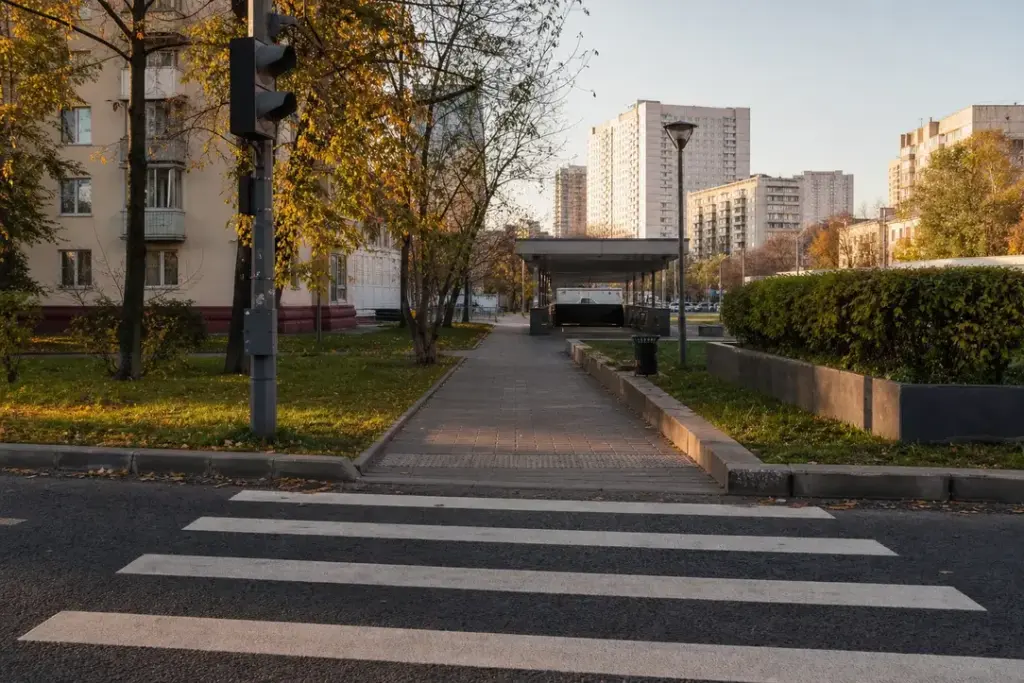
Metro access and commute are worth testing before choosing a home in Moscow. Two flats listed near the same station can offer different walks if one sits across a wide avenue or behind a courtyard gate. A longer walk to a direct line can also work better than a short walk that leads to a difficult transfer. This guide gives you 12 checks to apply to addresses you are considering.
Start with your most frequent destination and compare journeys from the actual building entrance. Then test the return route and an alternative for days when your schedule changes. The network and accessibility information reflects official guidance as of November 2026. Routes, entrances and assistance arrangements can change. Confirm the current details with Moscow Metro or Moscow Transport before relying on them for a move.
At a Glance
| # | Place | Best for | Good to know |
|---|---|---|---|
| 1 | Door-to-Door Journey Time | Measure the whole trip | Use the Moscow Transport journey planner for an estimate, then time the walk at both ends. |
| 2 | The Correct Metro Entrance | Find your actual entrance | At Sokolniki or another multi-entrance station, compare the exits on the official map against the proposed address. |
| 3 | A Direct Metro Line | Fewer transfers each day | Trace the full line on the Moscow Metro map and confirm the direction of travel. |
| 4 | Big Circle Line Transfers | Cross-town commute option | Use Prospekt Vernadskogo as a comparison point if a southwest address can reach either line. |
| 5 | Kuntsevskaya Metro Station | Several lines, one address | At Kuntsevskaya, time access to the specific platform each household member would use. |
| 6 | Moscow Central Circle Connections | Check the outdoor link | For the Dubrovka and Kozhukhovskaya connection, check the signed street route and allow for the outdoor walk. |
| 7 | Moscow Central Diameters | Rail beyond the Metro | Compare departure times and stopping points in the official planner before treating an MCD station as your main connection. |
| 8 | Step-Free Access and Passenger Assistance | Check the complete path | Use Moscow Transport’s accessibility information and ask the Passenger Mobility Centre about the complete route. |
| 9 | The Walk Between Home and Station | Test the last stretch | At Filyovsky Park Metro or another candidate station, walk from the usual exit to the exact residential entrance. |
| 10 | A Bus or Tram as a Feeder | Compare the extra leg | Use the exact bus or tram stop and the onward Metro platform when timing the route. |
| 11 | Late and Early Return Journeys | Match your real hours | Check each leg for your actual weekday and weekend travel times using the official service information. |
| 12 | A Backup Route for Each Household Member | Keep another workable route | Save a primary and a backup route for each regular destination and compare both from the proposed address. |
How We Chose
The checks are ordered around decisions that are hard to reverse after signing for a flat. Start with the main commute, then examine walking access, transfers and alternatives. Station examples illustrate how to read the network. They are based on published Moscow Transport information and the Moscow Metro map.
- Test a real address. Use the entrance you would walk out of and the door you need to reach.
- Compare repeatable journeys. Measure at the hours you expect to travel.
- Check barriers. Look for stairs, exposed walks, wide crossings and gates.
- Assess the household. A route should work for the people and trips that will depend on it.
1. Door-to-Door Journey Time – Measure the whole trip
Time the full journey from the prospective home to the door you need to reach. Include the wait to cross busy roads, the walk down to the platform, any transfer and the final stretch after the destination station. If the building is a large office complex or campus, use the entrance you will actually use. Record each part separately so you can see where a second address saves time.
Good to know: Use the Moscow Transport journey planner for an estimate, then time the walk at both ends.
Tip: Put the building entrance and the workplace entrance into the planner as separate pins.
2. The Correct Metro Entrance – Find your actual entrance
An estate listing may measure to a station name or map pin, while your route depends on a particular entrance. At Sokolniki, for example, Moscow Transport identifies numbered exits for the Big Circle Line service centre. Use official entrance information to find the approach that suits your journey. Walk there from the building and check whether you need a pedestrian crossing, an underpass or an extra turn around the block.
Busy rides ahead? A card holder could be useful on the way.
Good to know: At Sokolniki or another multi-entrance station, compare the exits on the official map against the proposed address.
Tip: Walk in both directions. One-way gates or pedestrian approaches can change where you come out.
3. A Direct Metro Line – Fewer transfers each day
Compare a flat on a direct line with any candidate that requires a change. Novye Cheryomushki and Kitay-Gorod both have service on the Kaluzhsko-Rizhskaya Line, so a journey between them can be made without changing trains. At each end, include the walk between the station and the actual address. A direct ride is particularly worth testing if the competing route depends on a long interchange or tight arrival time.
Good to know: Trace the full line on the Moscow Metro map and confirm the direction of travel.
Tip: Time the direct route on a weekday alongside the route that looks shorter on the map.
4. Big Circle Line Transfers – Cross-town commute option
The Big Circle Line can help when your workplace or school lies across the city and a route through central Moscow would add a change. At Prospekt Vernadskogo, the Big Circle Line connects with the Sokolnicheskaya Line. Compare that route with the direct or central alternative for your specific destination. A transfer marker on the map tells you where lines meet. Time the walk between platforms before counting the connection as a daily advantage.
Good to know: Use Prospekt Vernadskogo as a comparison point if a southwest address can reach either line.
Tip: Test the return interchange too. The route may feel different when walking against the weekday flow.
5. Kuntsevskaya Metro Station – Several lines, one address
Moscow Transport lists Kuntsevskaya on the Big Circle, Arbatsko-Pokrovskaya and Filyovskaya lines. That makes the area worth checking for a household whose members travel in different directions. Use the actual building address and follow each person’s route from the street to the platform they need. The walking distance to the first entrance does not tell you how long it takes to reach every line in the complex.
Travelling by train, bus or plane? A tablet could come in handy.
Good to know: At Kuntsevskaya, time access to the specific platform each household member would use.
Tip: Check the route for both the shortest and the most dependable connection during your travel window.
6. Moscow Central Circle Connections – Check the outdoor link
The Moscow Central Circle is a surface orbital rail line. Its connections to the Metro can involve a walk outside. Moscow Transport, for example, describes street-level wayfinding between Dubrovka on the Central Circle and Kozhukhovskaya Metro. If a flat is advertised near both networks, test the paths separately. A route with a clear pavement and simple crossing may work better for a daily journey than one that looks closer on the diagram.
Good to know: For the Dubrovka and Kozhukhovskaya connection, check the signed street route and allow for the outdoor walk.
Tip: If the connection will be part of your morning commute, observe how long the crossings take at that hour.
7. Moscow Central Diameters – Rail beyond the Metro
The Moscow Central Diameters, or MCD, are cross-city suburban rail lines shown alongside the Metro on the official map. Consider them when an address lies close to a rail platform and your destination is convenient to the same corridor or a useful interchange. Check the actual service and stopping pattern at the time you will travel. Use the railway entrance in your route calculation, especially where a Metro station shares the same name.
Good to know: Compare departure times and stopping points in the official planner before treating an MCD station as your main connection.
Tip: Save the rail platform and the Metro entrance separately when the station names look similar.
8. Step-Free Access and Passenger Assistance – Check the complete path
Check every segment if you use a wheelchair, travel with a stroller or need to avoid stairs. A suitable entrance matters only if you can also reach the required platform, make the transfer and exit at the destination. Moscow Metro’s Passenger Mobility Centre publishes assistance information for eligible passengers. Give it the exact stations, transfers and entrances when checking a commute. Include the pavement and building entrance at both ends in your own assessment.
Exploring on foot all day? T-shirts could be worth having.
Good to know: Use Moscow Transport’s accessibility information and ask the Passenger Mobility Centre about the complete route.
Tip: Ask about your usual equipment and transfer. An answer about the station alone may leave one segment unresolved.
9. The Walk Between Home and Station – Test the last stretch
Walk the route from the flat to the station at the time you would normally leave. Look at crossings, steps, slopes, underpasses and access through any courtyard. In an area such as Filyovsky Park, distinguish the route you would use for a park walk from the one you would take for the weekday commute. If a shortcut depends on a gate, identify a public-street route and see how much time it adds.
Good to know: At Filyovsky Park Metro or another candidate station, walk from the usual exit to the exact residential entrance.
Tip: Repeat the walk after dark if you often return late, paying attention to crossings and courtyard access.
10. A Bus or Tram as a Feeder – Compare the extra leg
A flat outside your preferred walking distance can still be practical if a feeder service connects it to the right metro line. Build the route in the Moscow Transport planner and check the exact stops in both directions. At the viewing, see where you would wait and how far the stop is from the station entrance. Account for the wait and the walk between services instead of comparing only time spent on the vehicle.
Cold weather ahead? A lip balm could help.
Good to know: Use the exact bus or tram stop and the onward Metro platform when timing the route.
Tip: Check the route at the end of the workday as well as in the morning. The stops may be on different streets.
11. Late and Early Return Journeys – Match your real hours
If you work shifts or return late after classes, check whether the complete journey operates when you need it. Plan backwards from the time you expect to leave the workplace, including the walk to the first station and any transfer. Use dated results where possible, since service arrangements can vary. If the last part of the regular route is unavailable at that hour, test a realistic alternative before judging the address.
Good to know: Check each leg for your actual weekday and weekend travel times using the official service information.
Tip: Confirm the last workable transfer, since the first train’s final departure is only one part of the journey.
12. A Backup Route for Each Household Member – Keep another workable route
Find an alternative for the journeys that matter most. A second metro line, an MCD station or a bus connection can be useful if it serves the same destination with an acceptable walk and wait. Give each regular traveller a separate route to check. A flat that works for one office commute might still create a difficult school run or awkward return after a late shift.
Good to know: Save a primary and a backup route for each regular destination and compare both from the proposed address.
Tip: Test the backup while you are viewing flats so you know where the stop and crossing are.
Moscow Vibes Tips
- When comparing a few flats, use the same weekday and departure time for each planner search. Otherwise a difference in service frequency can look like a difference between addresses.
- For a school or nursery run, time the stop and handover as part of the journey. A good home-to-office estimate can miss the most time-sensitive part of the morning.
- When a journey planner suggests a shortcut through a public building or shopping centre, check when that building opens and whether the route is usable in the evening.
- Record the section of the commute that bothered you most during a test trip. A crowded connection or a windy pavement can affect a daily choice even when two total times are similar.
- Check service changes before the second viewing. If an unusual closure affects your test trip, note it and compare the address again under the normal timetable.
Keep reading
Related guides


Places to see



FAQ
How far from a Moscow metro station is too far for a flat?
Set a maximum walking time that suits the people making the trip and check it from the building entrance. A level pavement with easy crossings may work better for you than a shorter route with steps. Test the walk in the conditions that matter most, especially if you often carry shopping or accompany children.
Is it better to live near an interchange or a direct line?
A direct line can suit a household with one dominant commute. An interchange can suit people who travel to several parts of Moscow or have different destinations. Compare the routes people will actually use. Count the time from the street to the platform and check how much of the network the extra connection adds to your routine.
Can an MCD station work as my main commute?
It can if the timetable matches your hours and the route serves a useful stop near work or study. Check which trains stop where you need to get off and whether the return trip works at the end of the day. Time the route from your destination platform to the street as part of the comparison.
Are Metro and Central Circle stations with similar names connected indoors?
Connections vary. Find the exact pair of stations in the official route planner and check whether the transfer directions send you along public streets. Give the walk a trial run if the connection would be part of your regular commute. A short outdoor section can affect the route when carrying luggage or travelling in icy weather.
How can I compare two flats if I am still abroad?
Ask for each building’s exact address and entrance, then plan your normal journeys in the official transport planner. Inspect the walking route on a map and ask the person showing the flat about gates, crossings and stairs. Keep the results provisional until somebody trusted can check the entrance and pedestrian route on the ground.
Should I choose a flat beside a planned metro station?
Compare the address using the services available when you expect to move in. If a future line or station matters to your longer-term plans, check announcements from Moscow Transport and keep the proposed opening separate from your current commute calculation. Ask what everyday route you can use while the published plans are still in progress.
How do I test a commute with a stroller or limited mobility?
Plan the exact entrances and changes with the official accessibility information, then check the street approach and the final destination. Ask the Passenger Mobility Centre about help if you need it. For a route you would make regularly, walk or ride it with the equipment you normally use so you can assess the complete trip.
What should I check if I commute only a few days a week?
Map the commute on your office days and compare it with the routes you will make on other days. The station matters for those office trips, while access to shops, childcare or other destinations may shape the rest of the week. Score the flat by how often each journey actually occurs in your schedule.
Discover More of Moscow with Our Travel Tips
Get practical Moscow travel tips, new destination guides and useful updates on attractions, opening hours and prices. Plan your visit with clear, helpful information delivered to your inbox.
Moscow Vibes is a one-person project. A coffee keeps it going
More in this section: Living in Moscow
Get a free PDF of this guide to print or read offline: key facts, tips and a map link on a few clean pages.
Take this guide with you
About this page
Report an issue on this page
Paying for your trip: please read
Payments and bookings between Russia and many other countries are currently restricted. In practice, cards issued in the EU, the UK, the US and several other countries often cannot be used in Russia, Russian cards usually cannot be used abroad, and some booking platforms, airlines and payment providers limit or pause their services for Russia. The situation changes frequently.
We do not give legal or financial advice, and this site does not encourage anyone to break any rule that applies to them. Whatever you plan, you are responsible for following the laws and regulations that apply to you, including those of your country of residence and citizenship.
Many travelers still organise their stay without problems. It is worth asking your bank or payment provider what is currently possible, contacting hotels, tour operators and carriers directly about the payment methods they accept, and checking which services are open to customers from your country. Clarify payment, cancellation and refund terms before you commit to a booking, and keep your plans flexible.
Partner links on this site may not be available in every country, and prices, availability and rules in our guides can differ from what you see when you book.
How we research and update our guides
About this guide: AI assistance and accuracy
This guide is created with the help of AI and is based on official sources where available. Mistakes can still happen. Opening hours, prices, rules and other details are given to the best of our knowledge as of the date shown and can change without notice. It offers general recommendations only, not professional, legal or travel advice. Please confirm important details with the official source before you travel; you are responsible for your own plans and decisions.
* Affiliate link: as an Amazon Associate we earn from qualifying purchases at no extra cost to you.